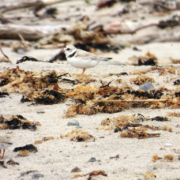
Congratulations Fishers Island! The community is pleased to announce the arrival of four Piping Plover chicks in Sanctuary of Sands on the south side of the airport runway. Please continue to leash all dogs walking in the area.

Congratulations Fishers Island! The community is pleased to announce the arrival of four Piping Plover chicks in Sanctuary of Sands on the south side of the airport runway. Please continue to leash all dogs walking in the area.
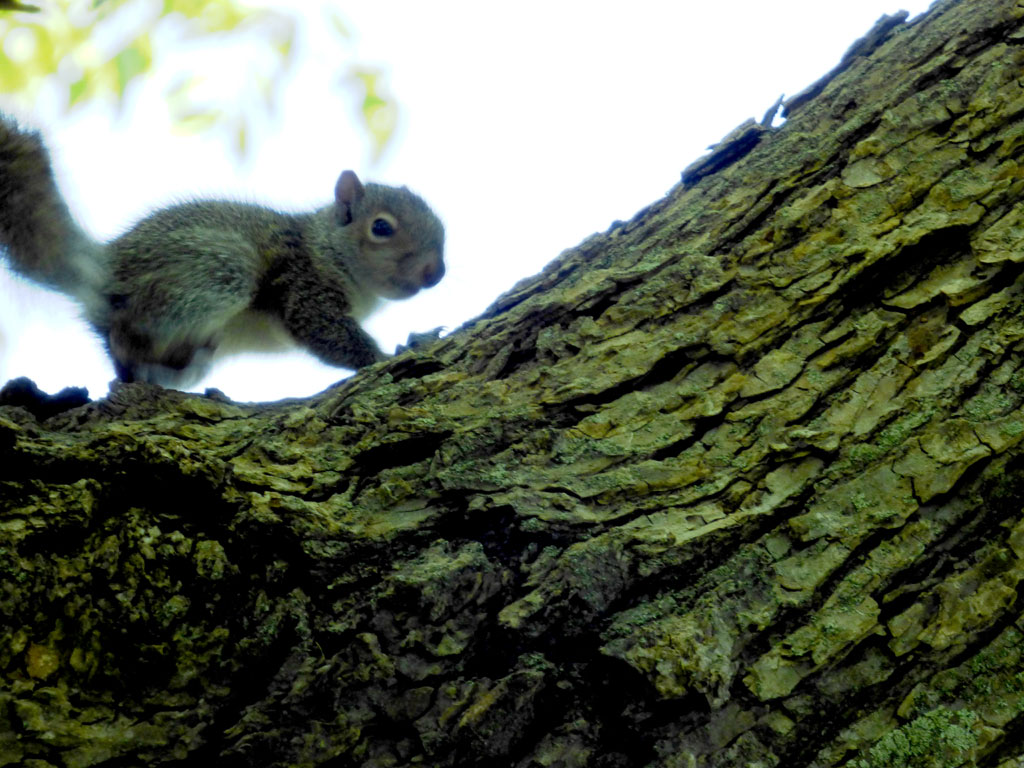
Safe under a leafy canopy, a baby Gray squirrel emerges from its comfy tree cavity to view its “big” new world: Fishers Island.
American Elm, Silver Eel Cove.
From the Field, Field Note, Justine Kibbe, May 29, 2019
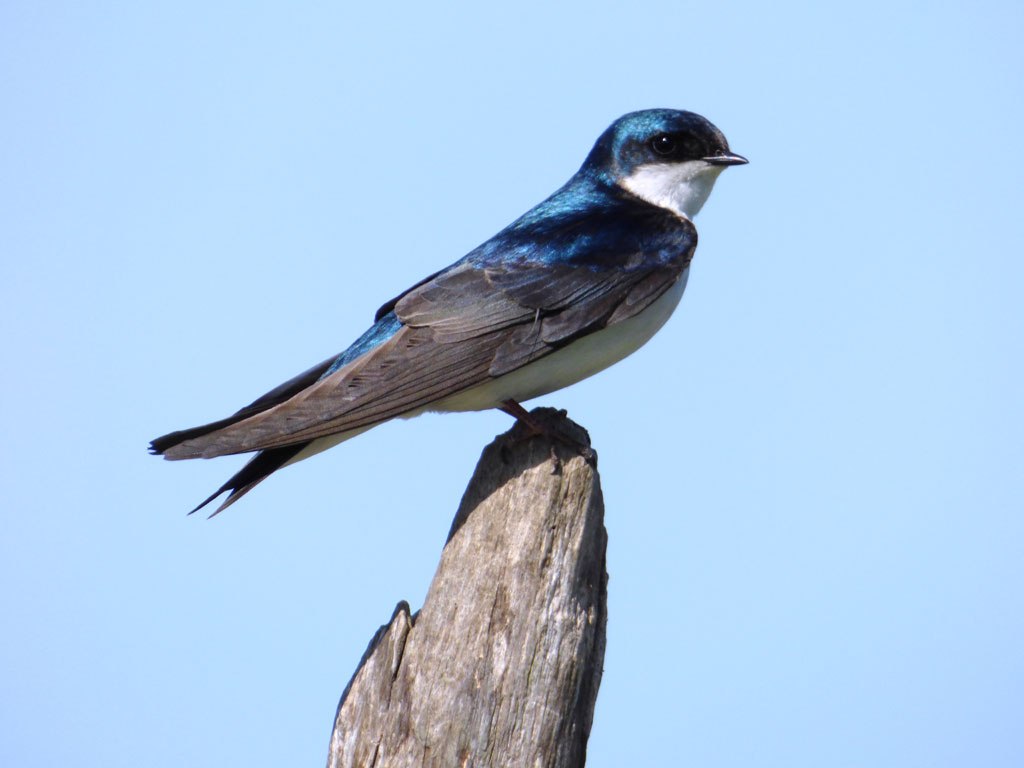
Tree Swallow. Justine Kibbe Photo
FIConservancy’s 2019 Spring Migration Bird Count took place Sun. May 19 under sunny skies. Eleven bird-watching enthusiasts traveled the Island from end to end, noting 56 species, which surpasses 2018’s record 55 observations.
Entomologist Adam Mitchell, Ph.D.*, along with the University of Delaware team of Emily Baisden and Will Aleida led the bird count. Dr. Mitchell provided a quick summary of this year’s findings:
“We had a very successful count, in spite of this spring’s weather, which was colder and wetter than usual. We observed 56 species of birds, beating last year’s spring migration count of 55 for the highest number of species reported.
“The count started strong with 11 participants heading down to Race Point, where we observed a flock of about 20 blue jays and yellow warblers among common yellowthroats foraging in the scrub for food. A red-tailed hawk sat patiently atop the Parade Grounds’ black gum tree while we proceeded with our count.
“Despite the good news, the unusual weather patterns this year led to a decrease in available habitat for many of our migrants. Colder temperatures delayed plants from ‘greening up’ (sprouting leaves), which in turn delayed the presence plant-feeding insects, an essential food source for songbirds.
“Birders have reported large congregations of birds at bird feeders, or feeding on fallow crops, to supplement the lack of food. Even though this year’s spring migration count was later than usual, many of the trees we observed were just beginning to leaf out, and the cherry trees were still in bloom.
“As we move into summer, things should return to normal, but it will be interesting to see how the birds on Fishers Island respond to this delay later in the season.”
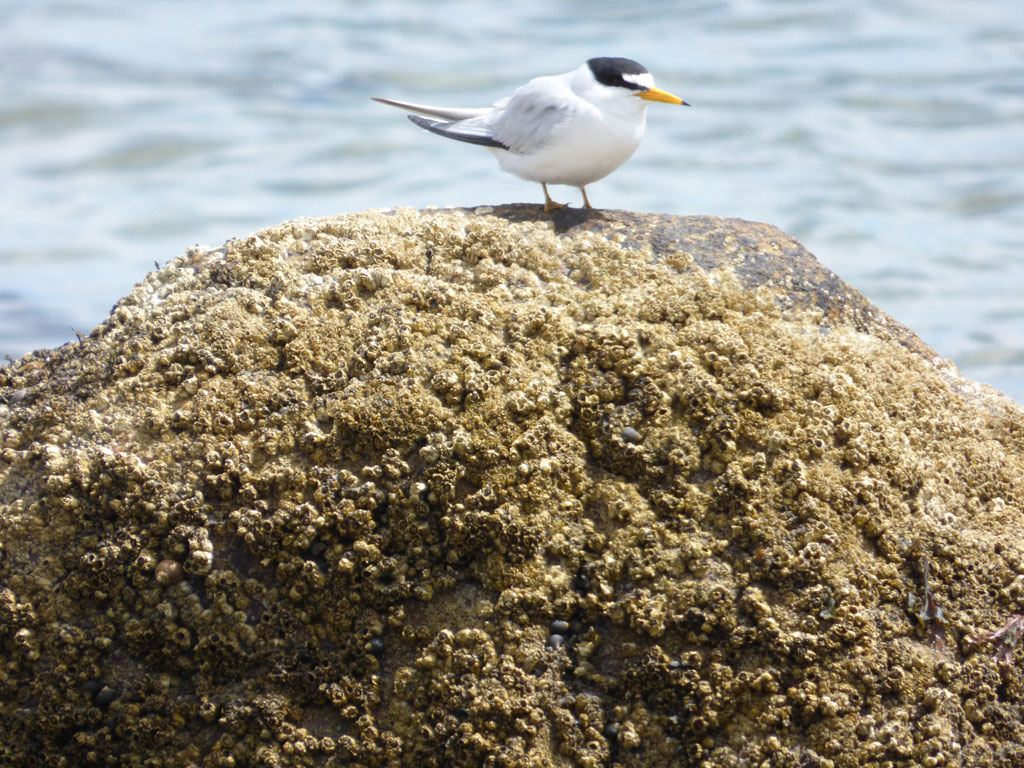
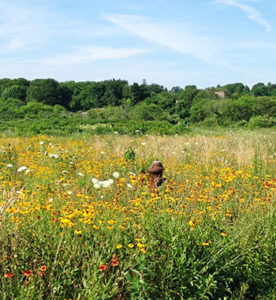
Sanctuary of Sands, Fishers Island.
Note the distinct yellow beak, white forehead and dark primaries (wing feathers) during this adult breeding time: March thru August.
PLEASE continue to kindly leash all “brigades” of dogs within Parade Grounds, welcoming the Least tern’s safe return to our Island.
From the Field, Field Note, Justine Kibbe, May 16, 2019
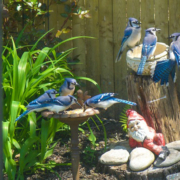
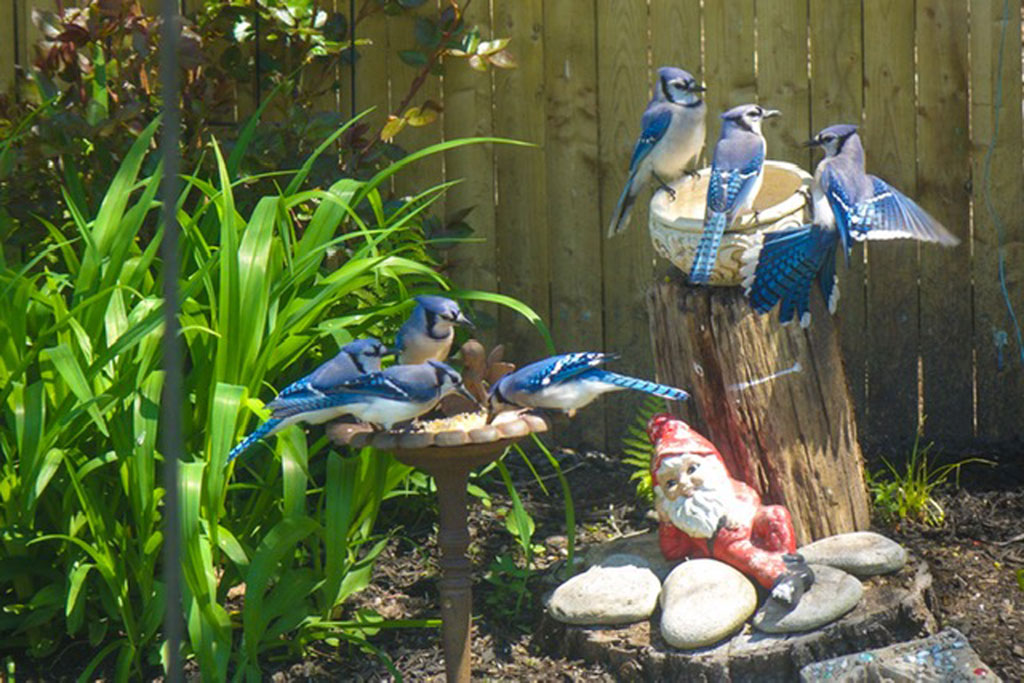
I’ve never seen anything like it! An actual blue jay migration!*
It all started Saturday May 11 at 10:45 a.m. Just a trickle at first, bright and bold Blue jays coursing over Silver Eel Cove. Then a steady stream of at least 40 noisy migrants flooded into the woods. Feathered crests bobbing on branches, their vocal cacophony swelled.
Community observations arrived shortly thereafter: Jackie Williamson up east had a dozen at her feeder by noon, and I saw another 2 dozen at 3 p.m., while bicycling to the Village Market.
Always grateful for remarks From the Field: Pierce Rafferty reported 16 Blue jays at his feeder May 14 at 6 a.m., and Marlin Bloethe captured and generously shared pictures of the initial landing.
* “A small proportion (Cornell estimates 20%) of the US blue jay population migrates south for the winter, whereas the majority of blue jays are year-round residents,” said entomologist Adam Mitchell, Ph.D.
“My guess is that storms moving northeast in early May, followed by a cold front, may have caused the jays migrating along the coastline to stopover on Fishers Island. This may be a boon for the Island in the future, as many species of bird will recall high-quality stopover sites when they migrate again. So we may want to be on the lookout for the jays next time for the fall migration.”
From the Field, Field Note, Justine Kibbe, May 15, 2019
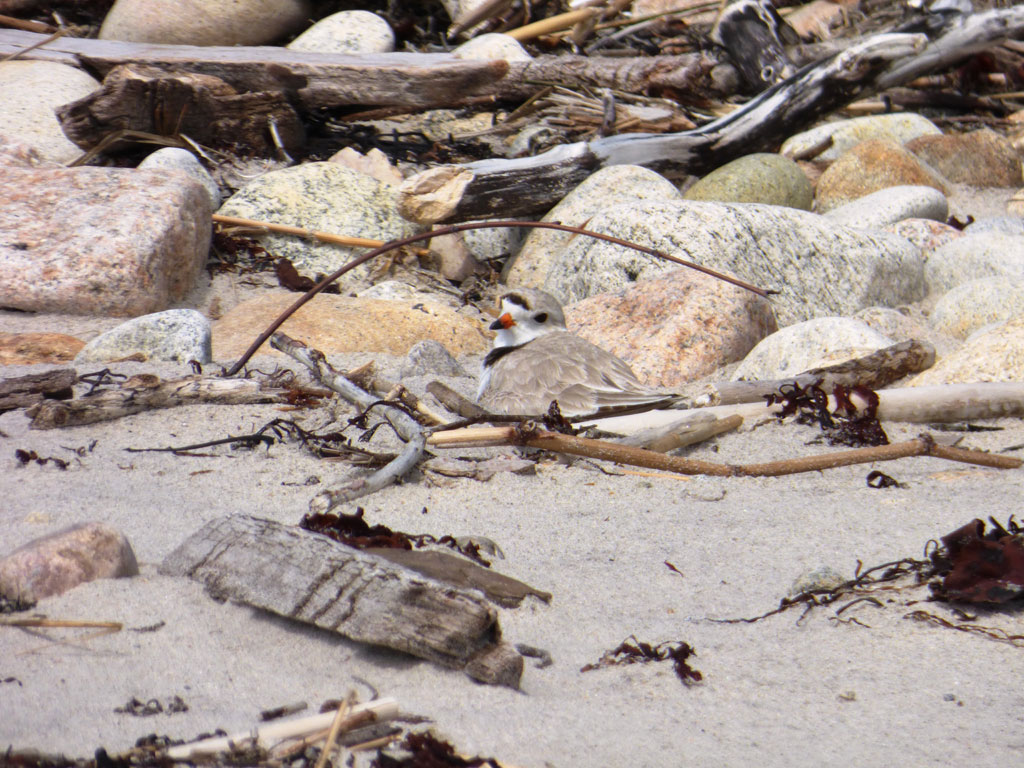
It took half an hour of scurrying around her South Beach “scrape” for this piping plover to finally settle down, because five killdeer were being pesty. There was a bit of territorial “drama”, before she returned to her—hopefully—clutch of eggs.
A piping plover pair returned to Fishers Island in early April. By early May the female was nesting on her “scrape” in the Sanctuary of Sands area of South Beach. Sandy-colored feathers help her to disappear into the background, particularly important since piping plovers are a “threatened” species.
There are fewer than 2000 pairs of piping plovers on the Atlantic Coast. Support our precious wildlife. Kindly continue to leash all dogs.
Sanctuary of Sands, West End, Fishers Island.
From the Field, Field Note, Justine Kibbe, May 7, 2019
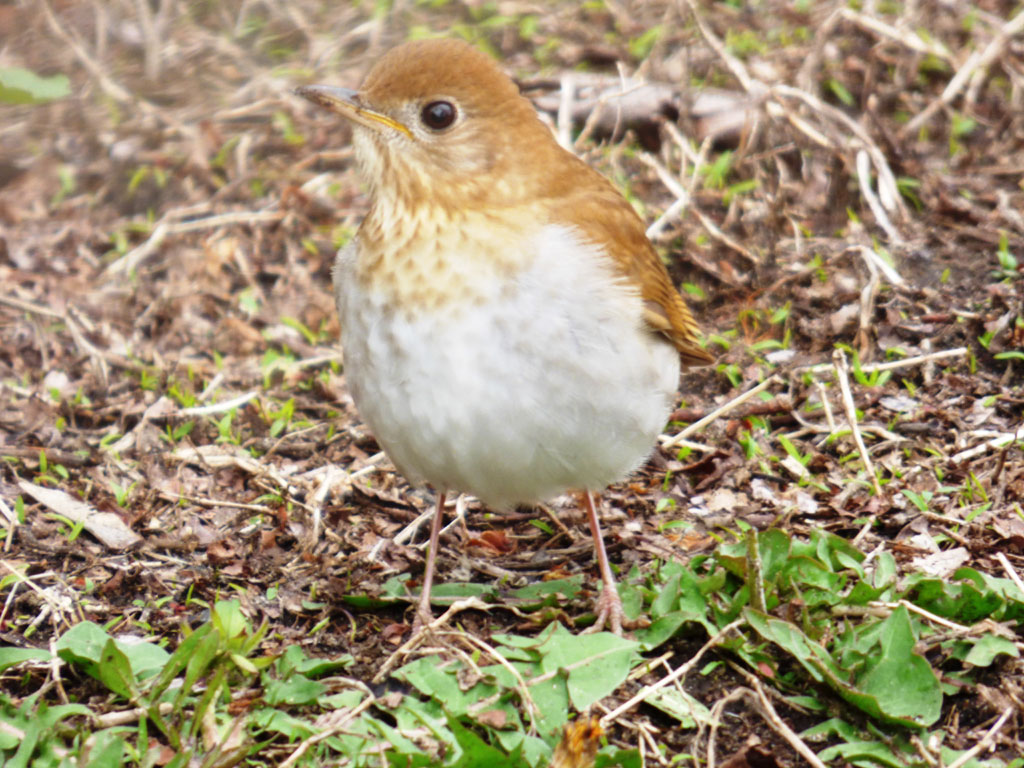
A rare sighting on Fishers Island: the veery, a small North American thrush. FIConservancy naturalist Justine Kibbe caught this image of the veery, May 3, when it hopped toward her near Silver Eel Pond.
FIConservancy President Tom Sargent said the veery has never been counted in FIConservancy’s annual Bird Migration Count (scheduled for Sun. May 19), but thinks he heard the bird’s melodic song a few years ago.
The veery prefers moist leafy woods and forages mostly by hopping about on the ground or in low vegetation to take insects from foliage. It hovers and takes short flights to catch insects in mid-air and also feeds on berries found in shrubs and trees.
According to Audubon’s, Guide to North American Birds, one place veeries like to breed is in damp areas near beaver wetlands. See pictures of beaver sighting on Fishers. The veery winters in central and southern Brazil.
Justine Kibbe Photo
This is the time of year when I always look forward to the Conservancy’s Spring Migration Bird Count (May 19). A point to point, west to east survey of all the unique bird species Fishers Island habitat attracts and welcomes “home” each season.
I’ve learned so much touring the Parade Grounds with Dr. Adam Mitchell (entomologist) and the birding team. I’ve asked tons of questions about insects, birds and habitat, all of which have helped me “discover” the Island as a Naturalist.
Yesterday, I was heading out the door with camera in hand, trying to catch up with Barred owl’s evening hoots, when I was met by this inquisitive, woodsy visitor all plump and puffed with cinnamon down. This lovely bird was unfamiliar to me; so I was equally curious…
The bird is a veery: a small forest thrush whose name denotes its ethereal and reedy song “vrdi vrreed vreed vreer vreer”.
From the Field, Field Note, Justine Kibbe, May 5, 2019
The 2019 Spring Migration Bird Count will be Sun. May 19 at 8 a.m. Meet at the Community Center. First, however, come to the Parade Grounds Sat. May 18 at 3 p.m. for a brief tour and a tutorial by the experts on the best way to count birds.
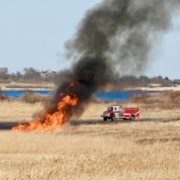
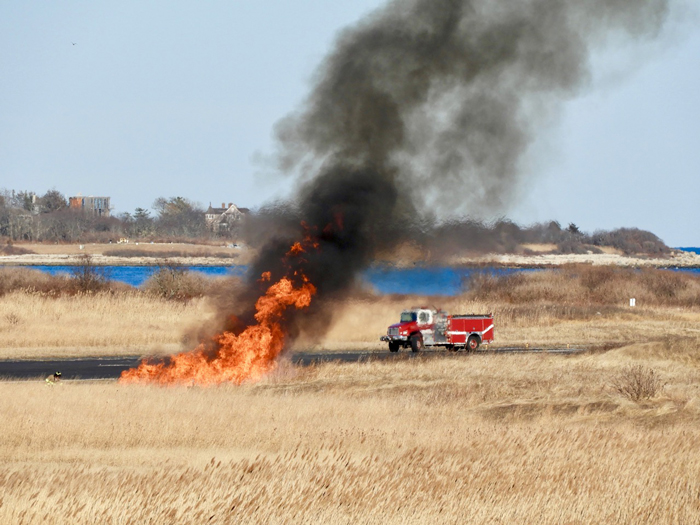
The Fishers Island Fire Department (FIFD) conducted a successful controlled burn on selected sections of the Parade Grounds and Elizabeth Airport March 26. FIConservancy relies on FIFD volunteers to coordinate their ongoing training with annual prescribed burns necessary to maintain a healthy natural habitat.
The drill began on a clear evening with moderate wind speed…
Jane T. Ahrens reporting and photo.