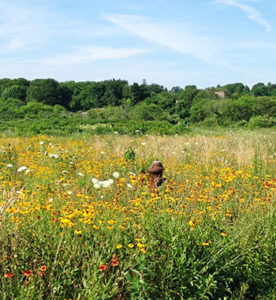
Scientists Say “Climate Chaos” is Main Reason for Decline in Bumblebee Population
A new study, published in the Feb. 7, 2020 journal, Science, makes a case for climate change as a principle driver of the potential extinction of bumblebees.


A new study, published in the Feb. 7, 2020 journal, Science, makes a case for climate change as a principle driver of the potential extinction of bumblebees.
The Gray Catbird is typical of migratory birds that prefer the fruits of native plants, despite invasive plants dominating fruit availability in late-autumn. The Gray Catbird was among 45 species sighted in the 2019 Migratory Bird Count on Fishers Island. Ann Stinely photo for the Manomet Team Newsletter.
Toxic spoils from the bottom of the Thames River will likely be dumped less than three miles off the northwest coast of Fishers Island to make way for a new class of ballistic missile submarines to be built at Electric Boat in Groton, Conn. FIConservancy has voiced strong objections to the location of the dumping.
Dianne Crary in October reported the presence of “a lot” of invasive Asian jumping worms on her property along Equestrian Road. These worms quickly devour fallen leaves and other organic material, destroying nutrients vital for the survival of trees.
For the past seven years, Justine Kibbe has lived on Fishers Island, most of that time as FIConservancy’s naturalist. We say a fond farewell to Justine this October as she […]
According to research published online in September by the journal Science, the breeding population of birds in the U.S. and Canada has dropped nearly 30% since 1970.
Although the 2019 Fall Migratory Bird Count began under an overcast sky, thick with clouds and fog, birders observed a total of 45 species for this year’s survey, which fell within the range of average for past counts in the fall. The number of individuals observed, however, was far below average: Most species (39 of 45) encountered were represented by only one or two birds.
Crickets here are still high-pitched and butterflies are still high flying. Swirling within clusters of busy dragonflies, and darting past reigning Monarchs, is the Orange Sulphur. While this insect varies in color, it appears nearly neon against tawny grasses or nearly invisible within honeysuckle and clover.
These quiet days of September are perfect for learning more about butterflies. Find a bench warmed by the sun within native meadows across from Silver Eel Cove, and you’re bound to see just how “social” these brilliantly colored insects are, flitting from one flower to the next. This painted lady butterfly is one of the most ubiquitous butterflies in the world.
The goldfinch can be identified by its vibrant yellow plumage accented by bold black streaks. These birds are common and can be seen in a variety of places on Fishers […]