Fishers Island Conservancy
  • Home
  • Who We Are
    • Our Mission
    • Our History
    • Our People
    • Contact Us
  • What We Do
    • Shorebird Monitoring
    • Annual Bird Counts
    • Marine Debris Clean Up
    • Island Sentinels
    • Research and Survey Team
    • Grassland Restoration
    • Mosquito Control
    • Invasive Plant Management
  • How To Help
    • Donate
    • Join Us
  • News
  • Events
    • Calendar
Wednesday, April 29, 2026
Fishers Island Conservancy
  • Home
  • Who We Are
    • Our Mission
    • Our History
    • Our People
    • Contact Us
  • What We Do
    • Shorebird Monitoring
    • Annual Bird Counts
    • Marine Debris Clean Up
    • Island Sentinels
    • Research and Survey Team
    • Grassland Restoration
    • Mosquito Control
    • Invasive Plant Management
  • How To Help
    • Donate
    • Join Us
  • News
  • Events
    • Calendar
Fishers Island Conservancy
  • Home
  • Who We Are
    • Our Mission
    • Our History
    • Our People
    • Contact Us
  • What We Do
    • Shorebird Monitoring
    • Annual Bird Counts
    • Marine Debris Clean Up
    • Island Sentinels
    • Research and Survey Team
    • Grassland Restoration
    • Mosquito Control
    • Invasive Plant Management
  • How To Help
    • Donate
    • Join Us
  • News
  • Events
    • Calendar
Copyright 2026 - All Right Reserved
Marine ReportsNews

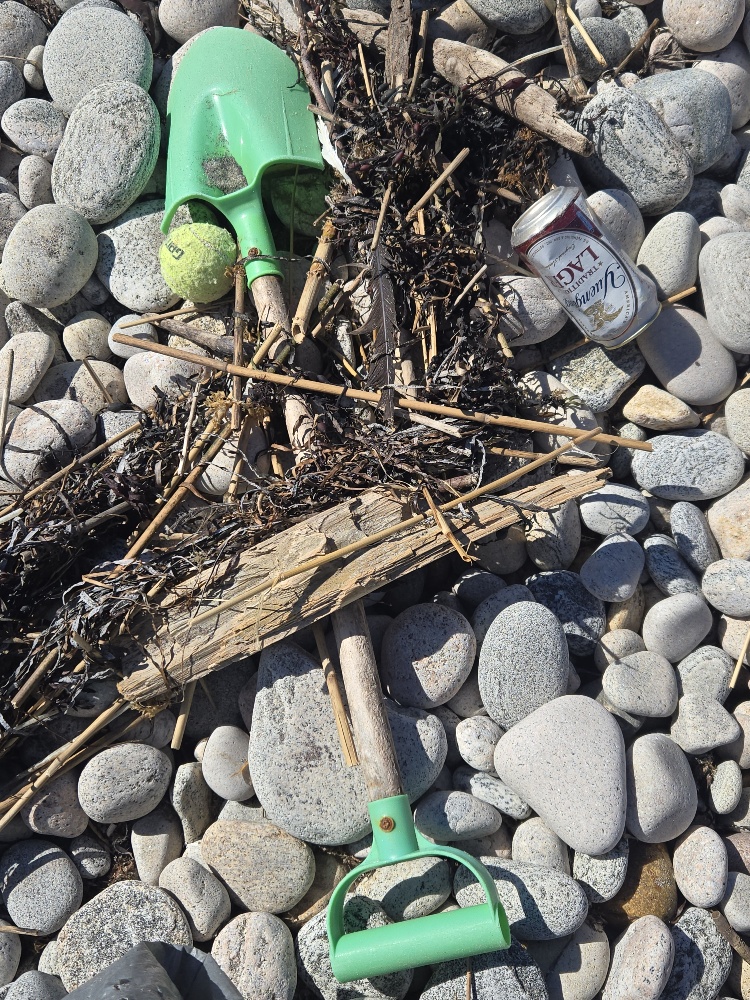
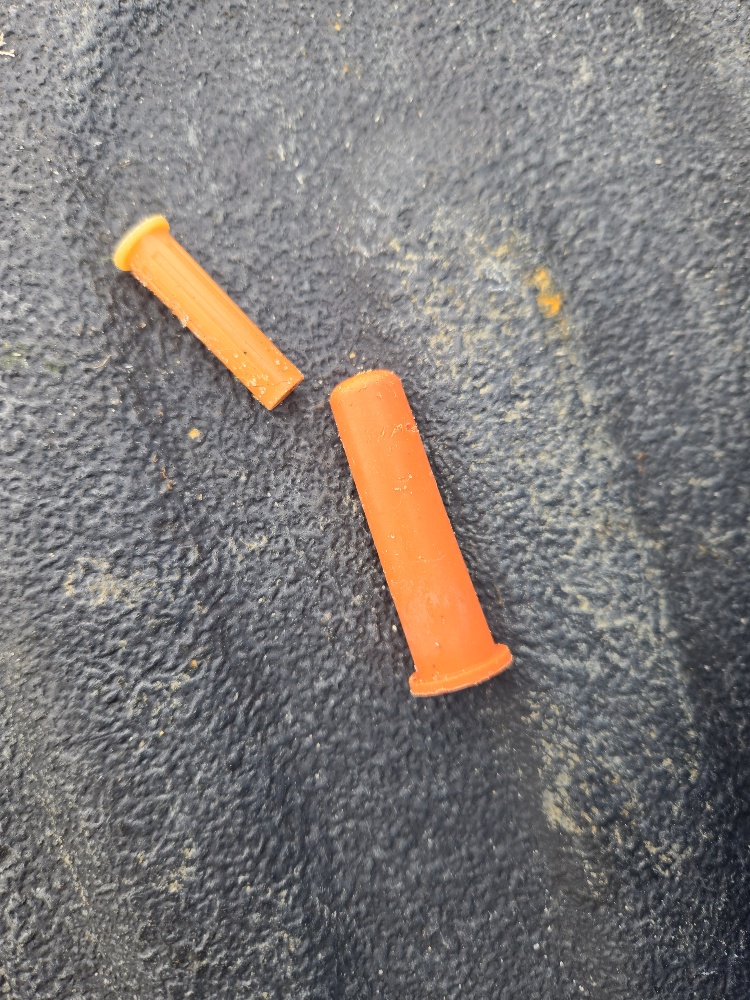
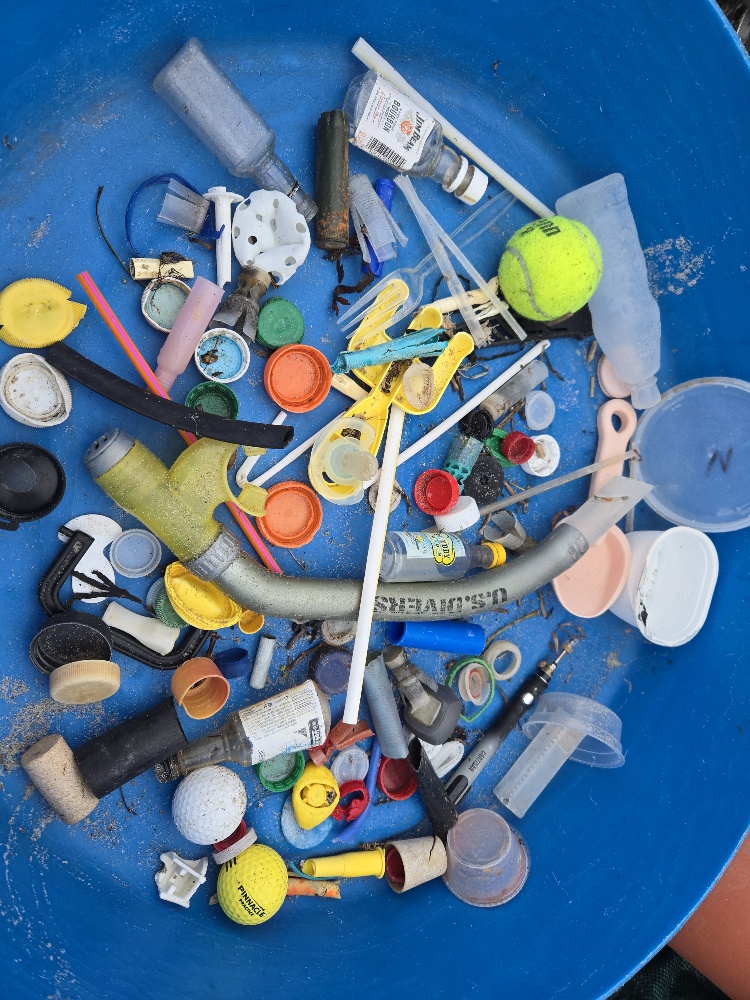
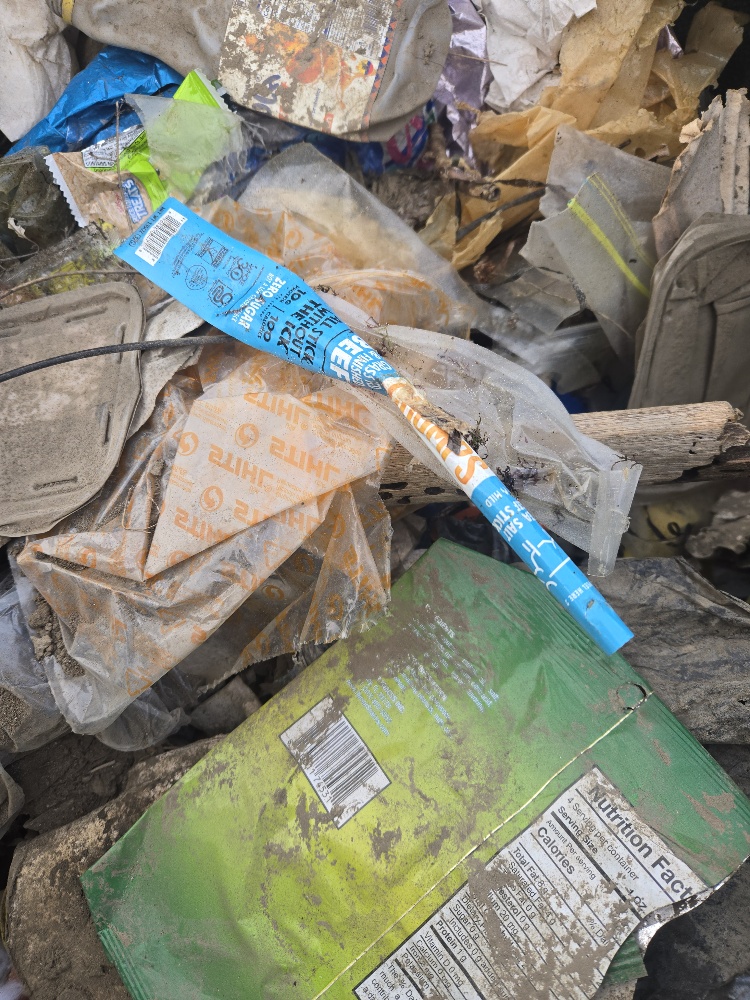
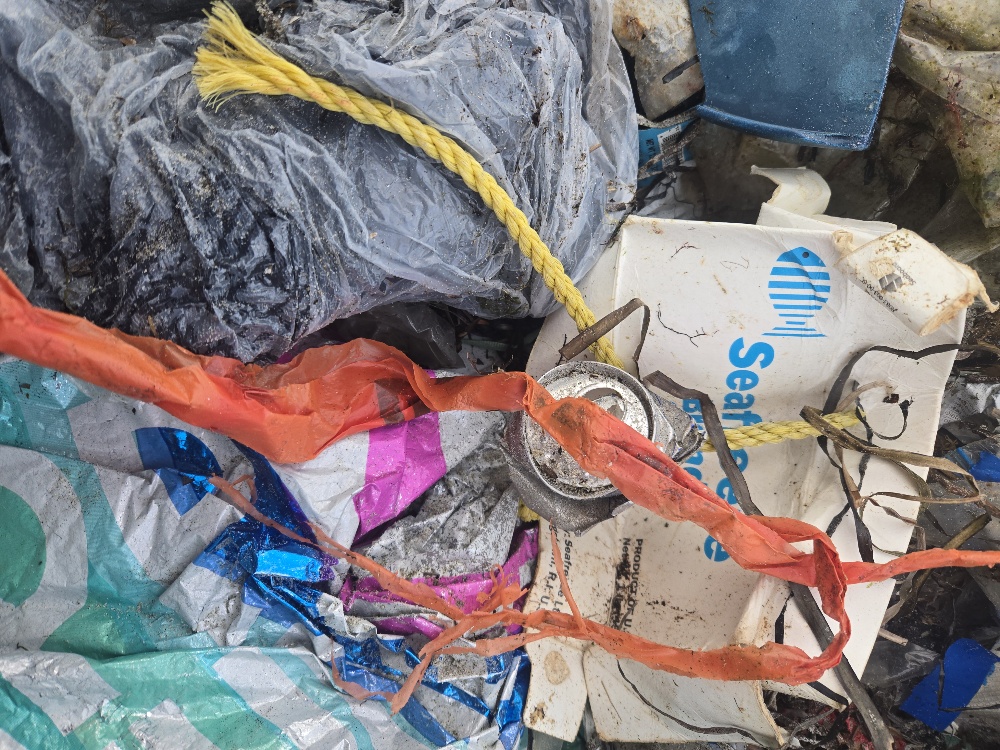
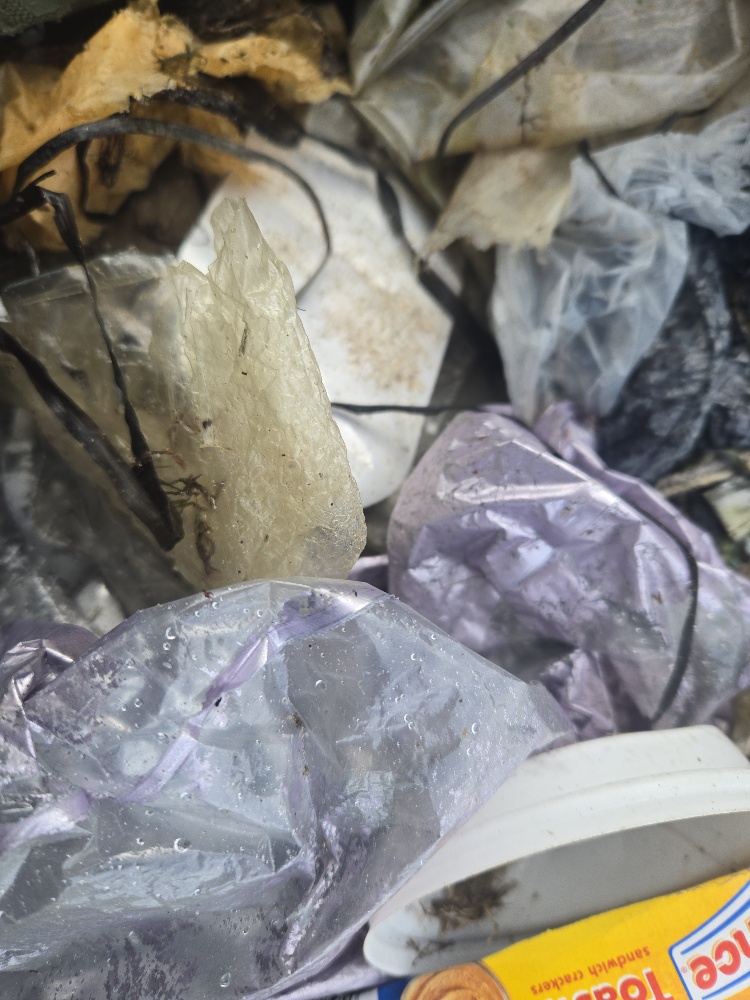
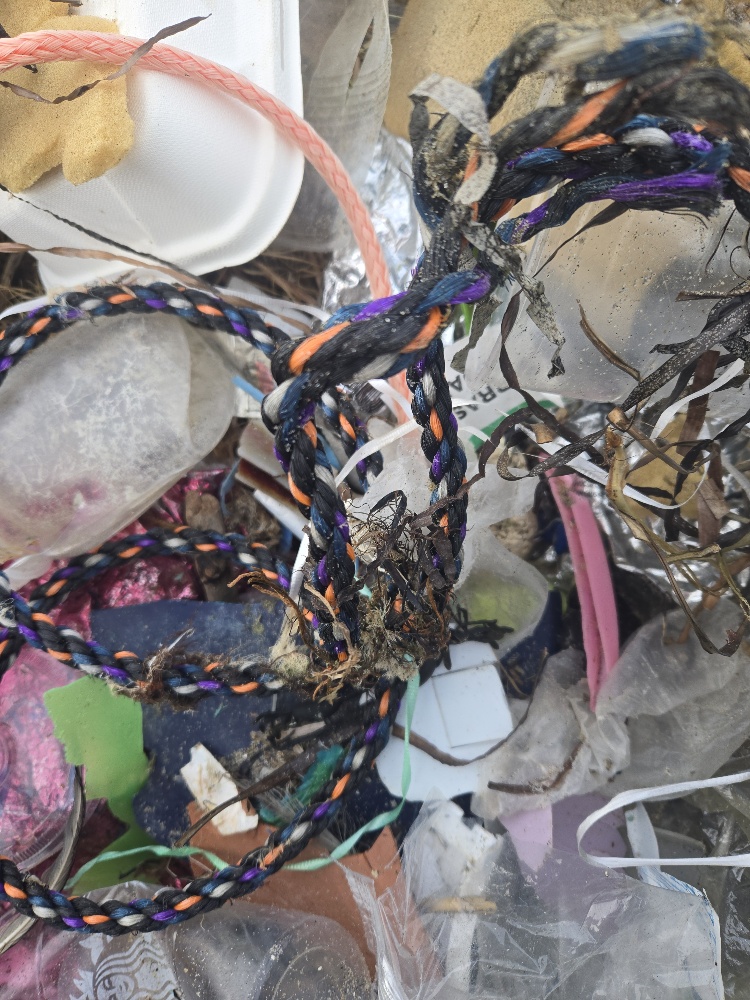
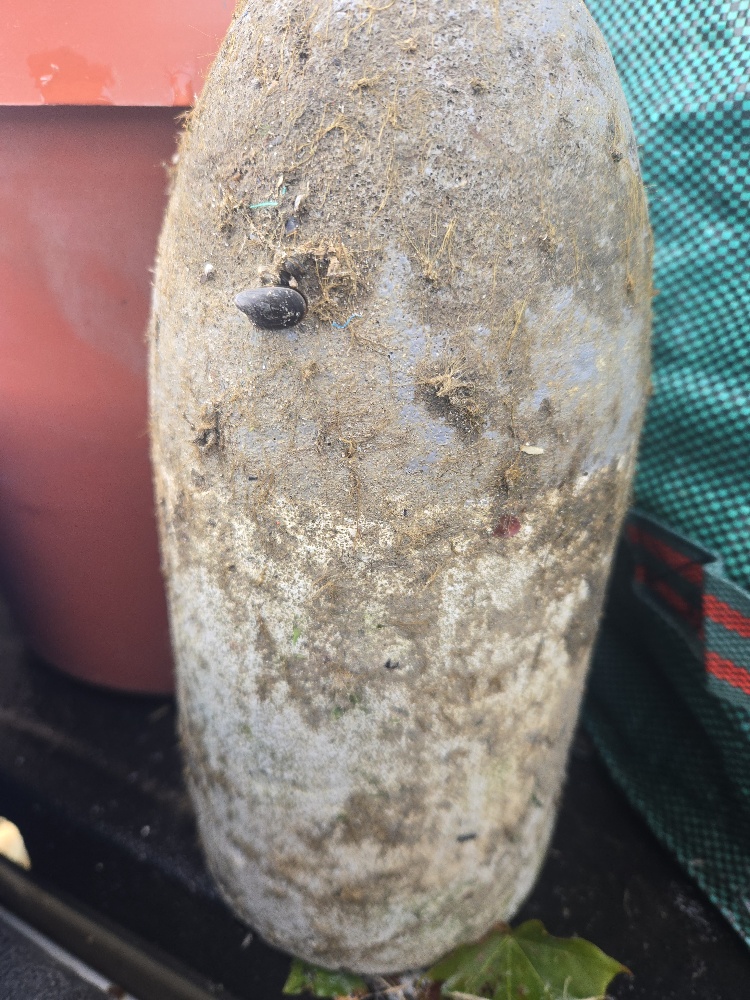
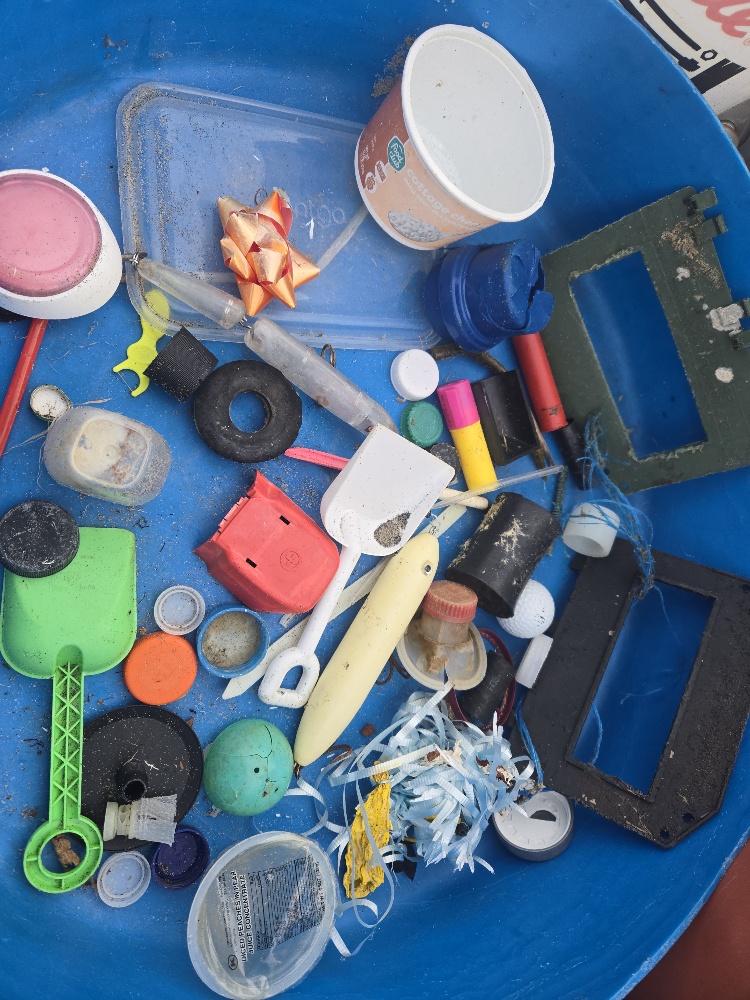
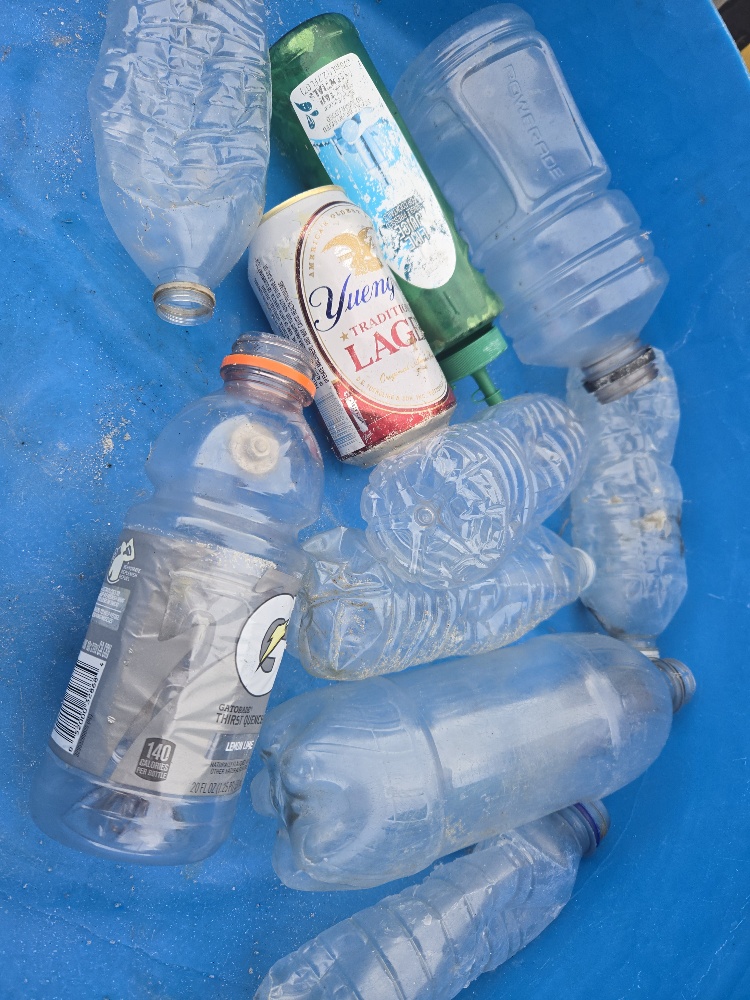
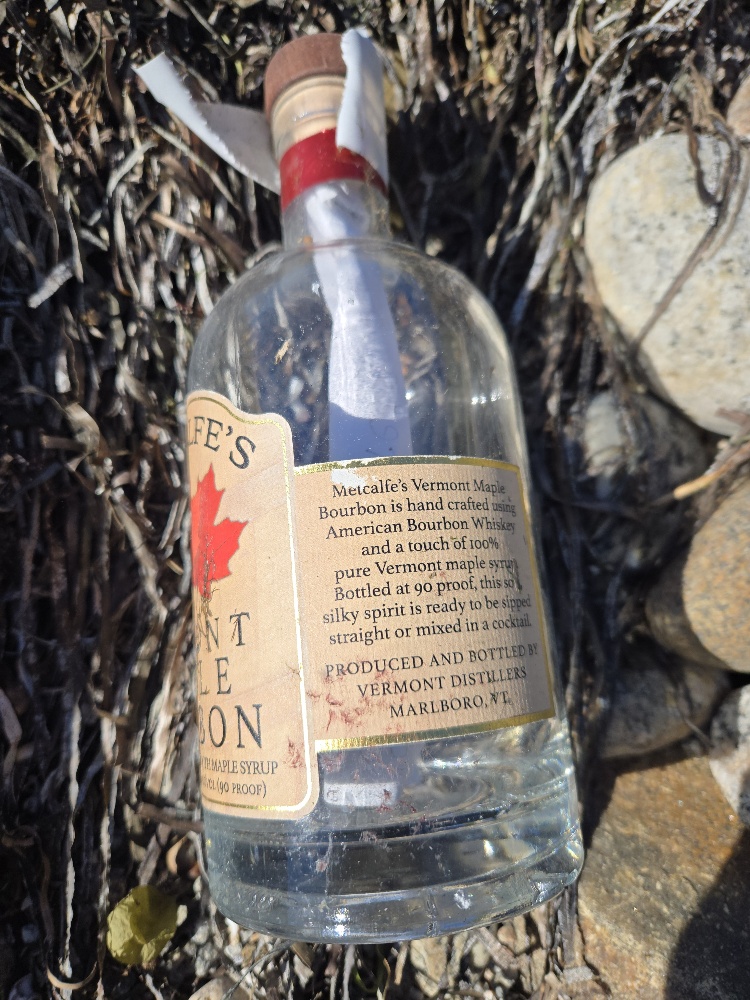
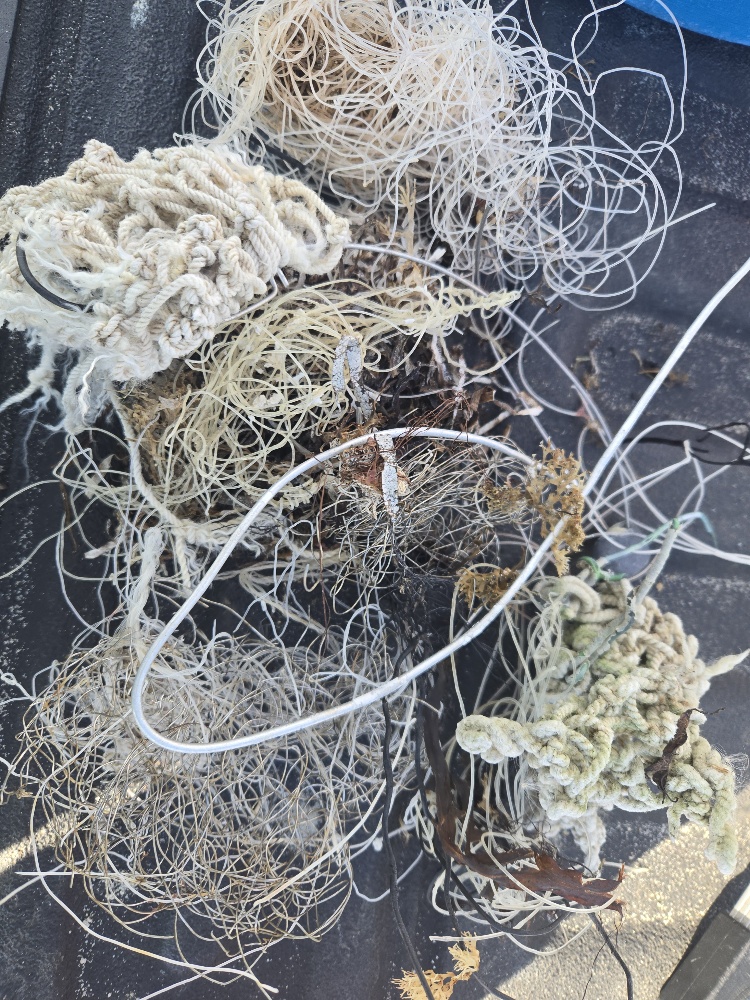
Marine Debris Winter Reports

by Anna White February 27, 2026

Marine Debris Winter Reports 2025/2026 Beaches

December 2025 – Total lbs = 72/ Total hours = 11

&

January 2026 – Total lbs = 240/ Total hours = 42.5

BIG STONY – Total lbs = 52/ Total hours = 7

February 2026 – Total lbs = 405/ Total hours = 64.5

~ Michele Klimczak

 
DATEZONELOCATIONWEIGHT (LBS)HOURS
12/3/2025S2Wilderness Point beaches284
12/4/2025S2Isabella beaches183
12/5/2025S2Isabella beaches264
Totals –  72 lbs11 hours
     
1/12/2026N1Airport beaches to Ordinance Ferry Park to Silver Eel Cover to Little Stony266
1/13/2026S2Race Rock beaches, Sanctuary of Sands through all of South beaches257
1/14/2026S2Wilderness Point beaches to Isabella beaches397.5
1/15/2026N6Clay Point Rd to Brick yard Rd beaches367
1/16/2026N1BIG STONY527
1/17/2026S3Chocomount beaches244
1/18/2026N6North Hill beaches284
1/17/2025N5Chocomount Cove beachess396.5
Totals –  240 lbs42.5 hours
     
BIG STONY Totals –  52 lbs7 hours
     
     
2/3/2026N1Airport beaches to Ordinance Ferry Park to Silver Eel Cover to Little Stony375
2/4/2026S2Race Rock, Sanctuary of Sands & S. beaches266.5
2/5/2026S2Wilderness Point beaches to Isabella & Vikings End385
2/9/2026S2Isabella beaches294.5
2/10/2026S3Chocomount Cove beaches through before Big Club365.5
2/11/2026N5Clay Point Rd & Brick yard Rd beaches335
2/12/2026N6Dock beaches, Three sisters to North Hill beaches345.5
2/13/2026N1Holiday House beaches to Hay Harbor to Little Stony, Ferry Park to Airport425.5
2/16/2026S2Race Rock, Sanctuary of Sands through South Beaches386
2/17/2026S2Wilderness Point beaches to Isabella’s, Vikings End366
2/19/2026S2One half of Isabella beaches224
2/21/2026 Organize/empty truck bed/trash in shed to sort & photograph last week due to winds.–2
Total –  405 lbs64.5 hours


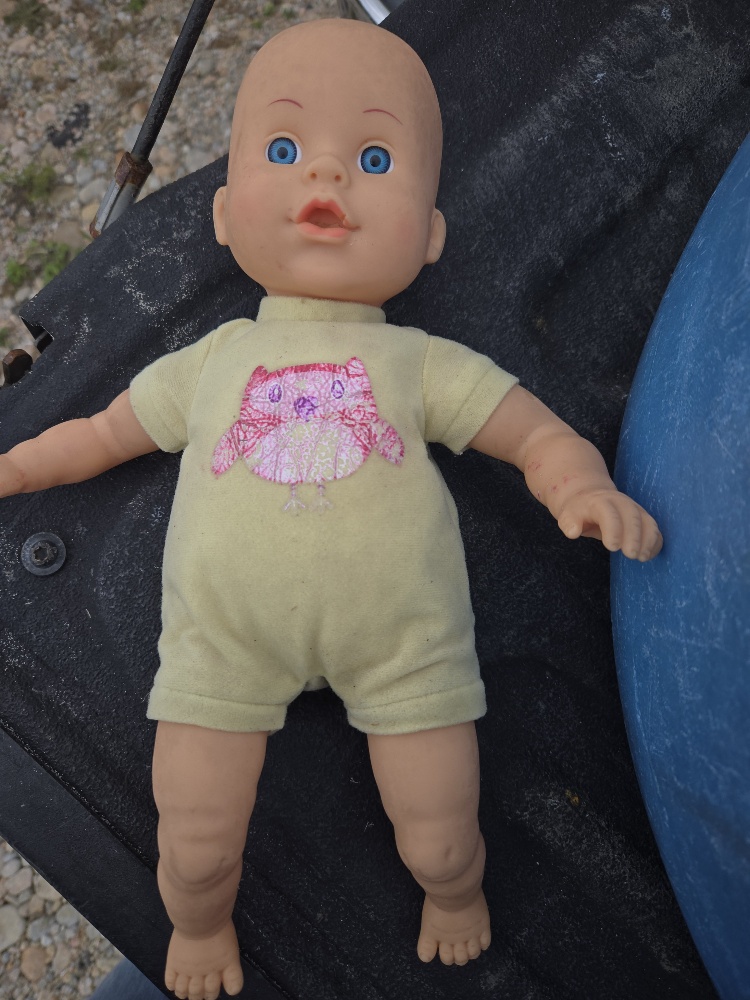
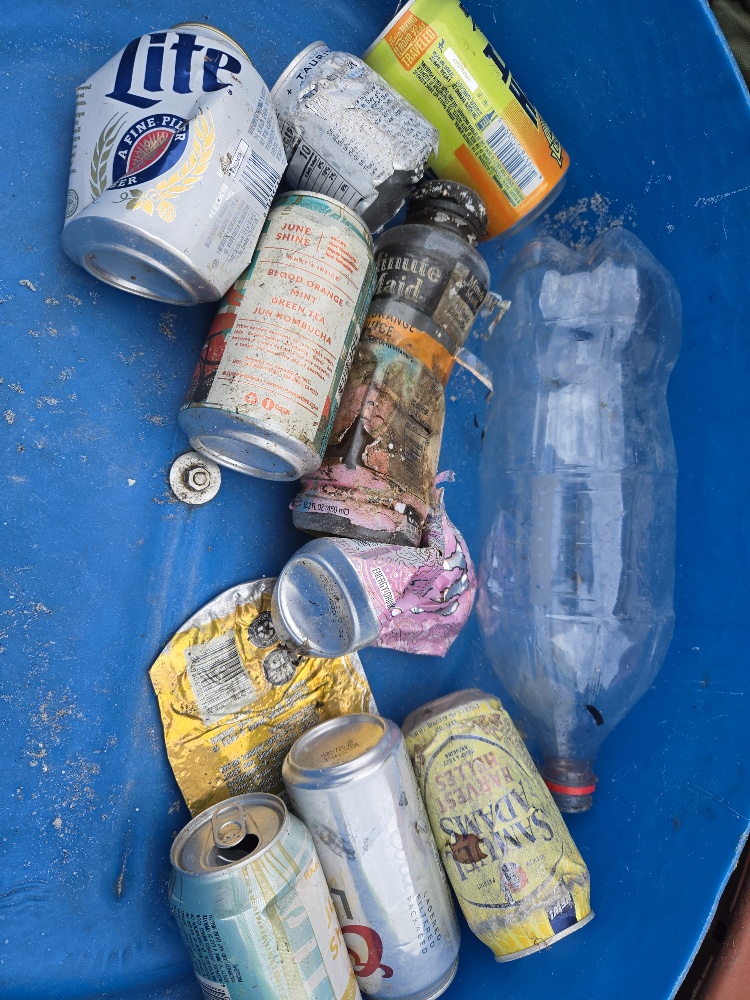
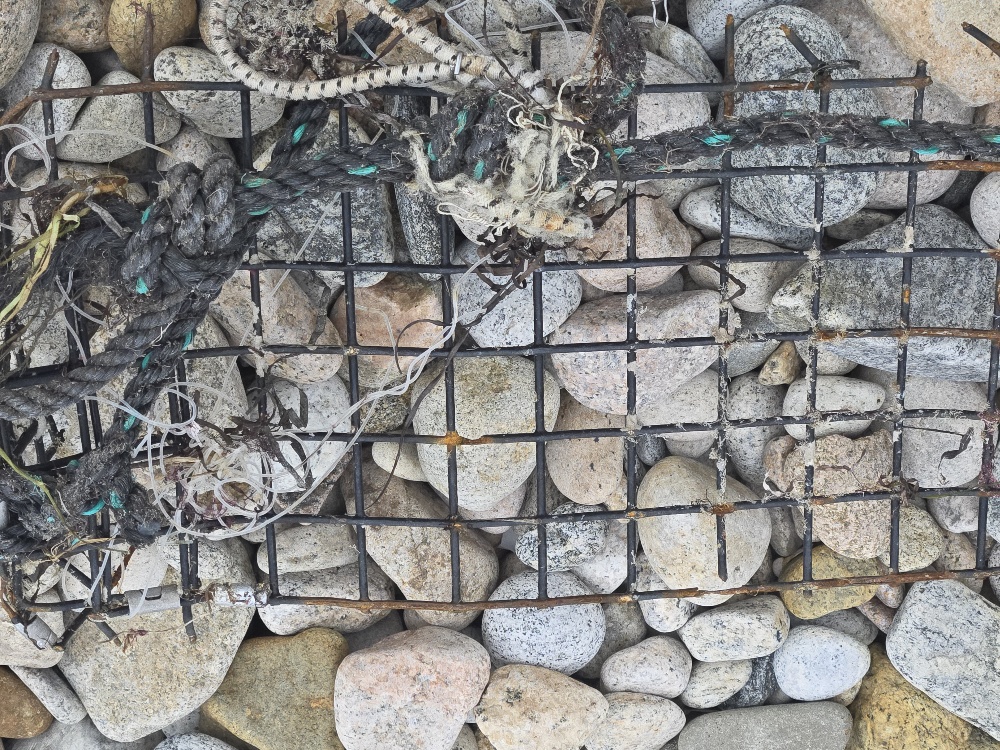
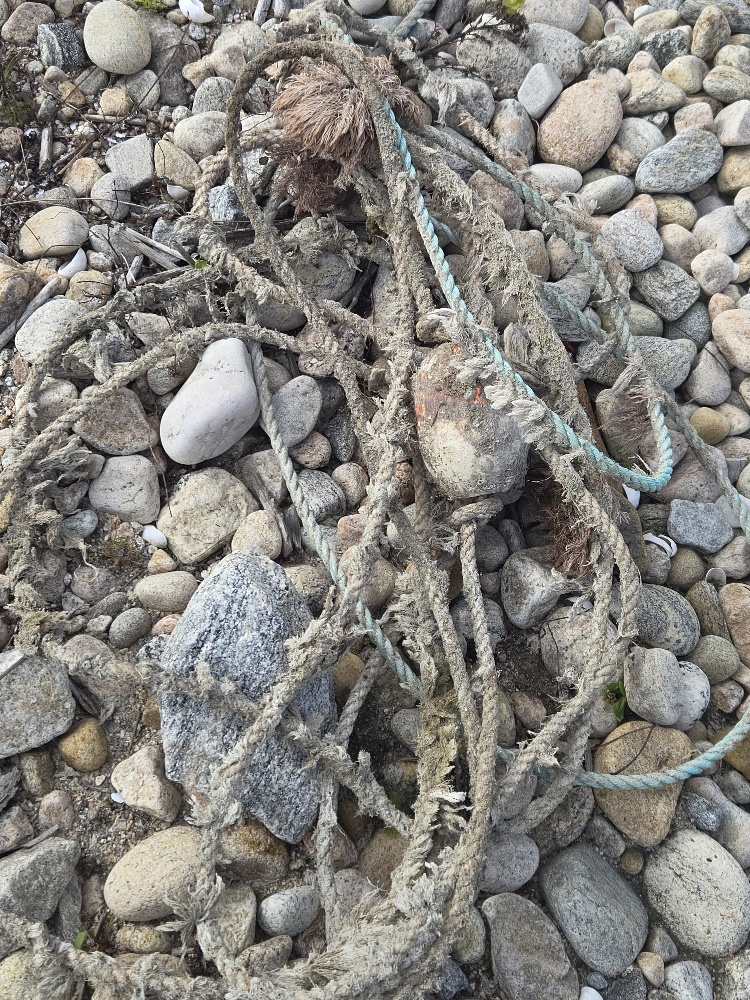
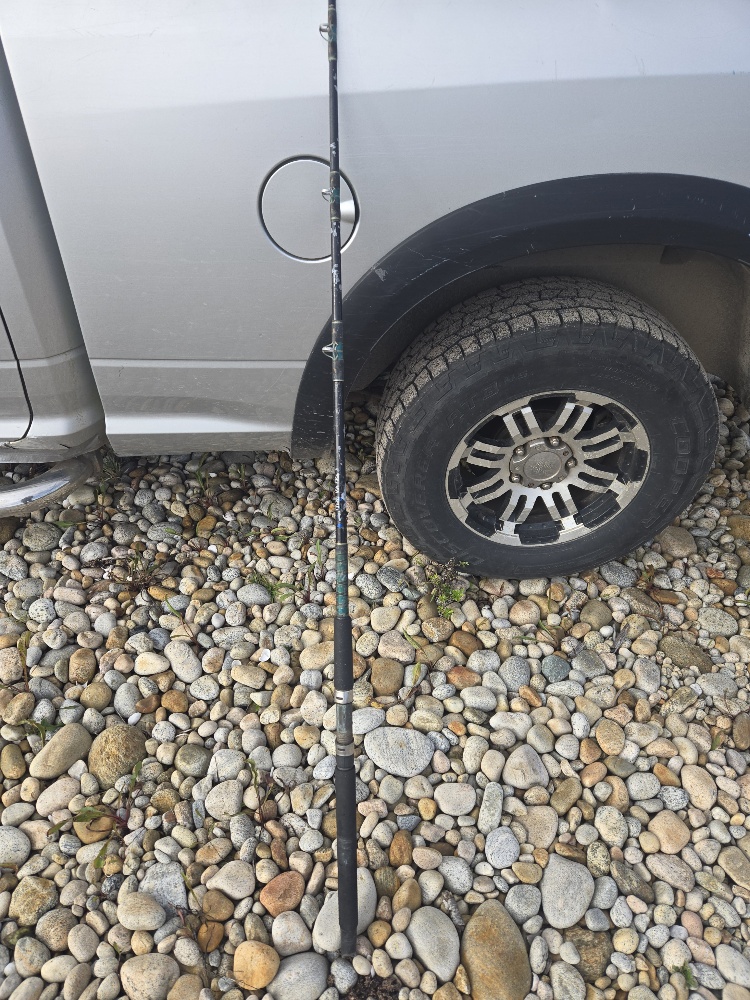
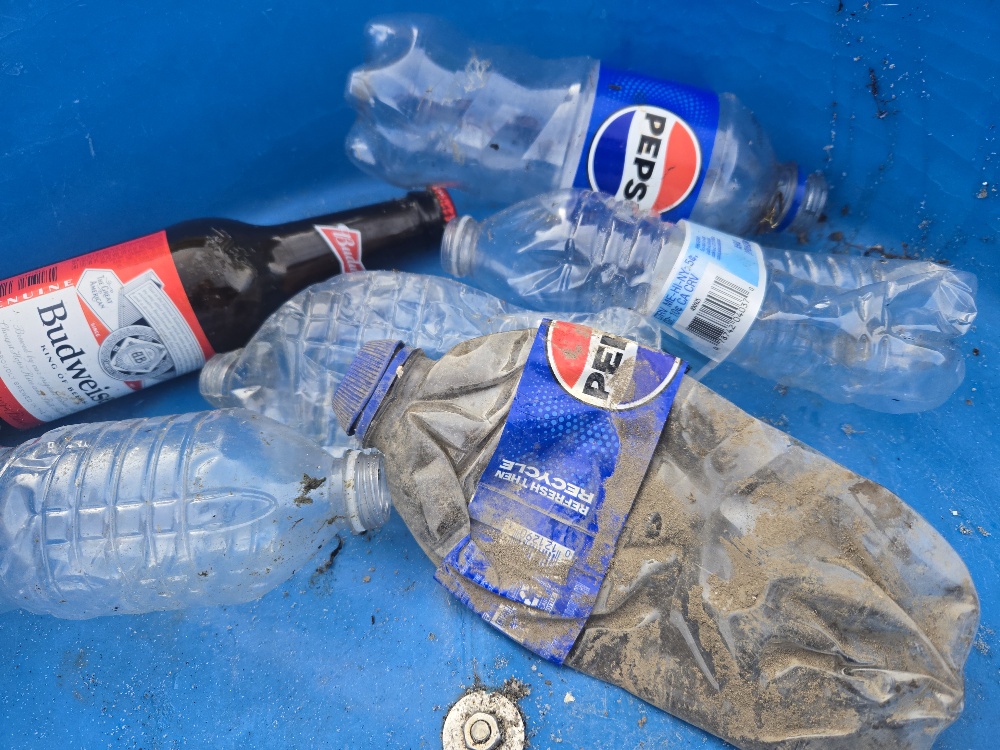
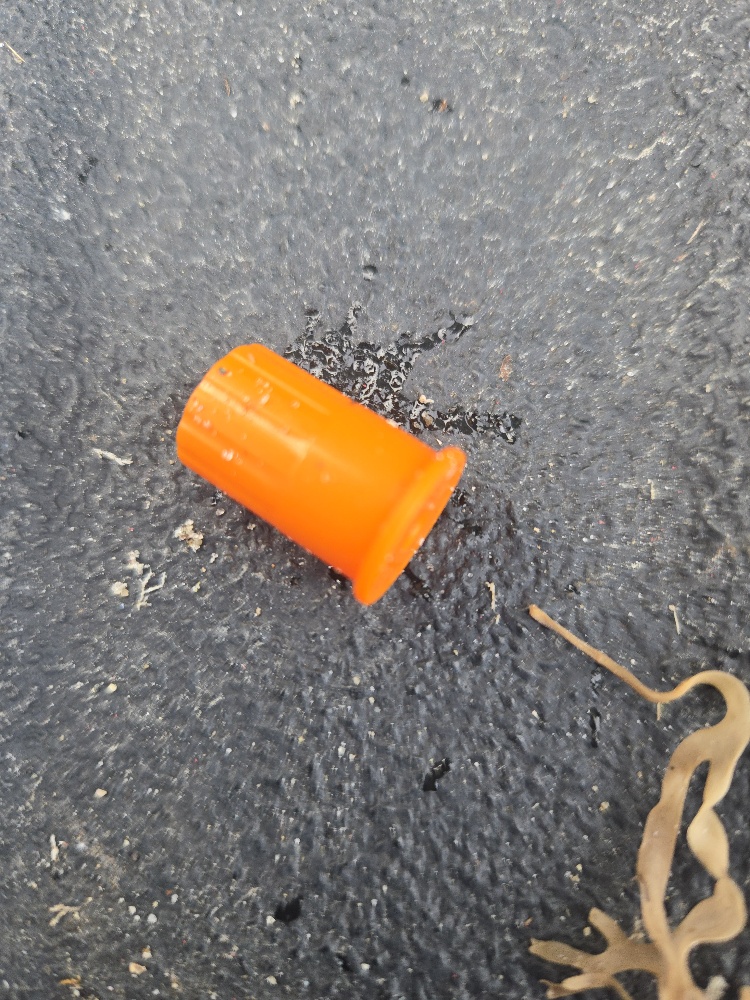
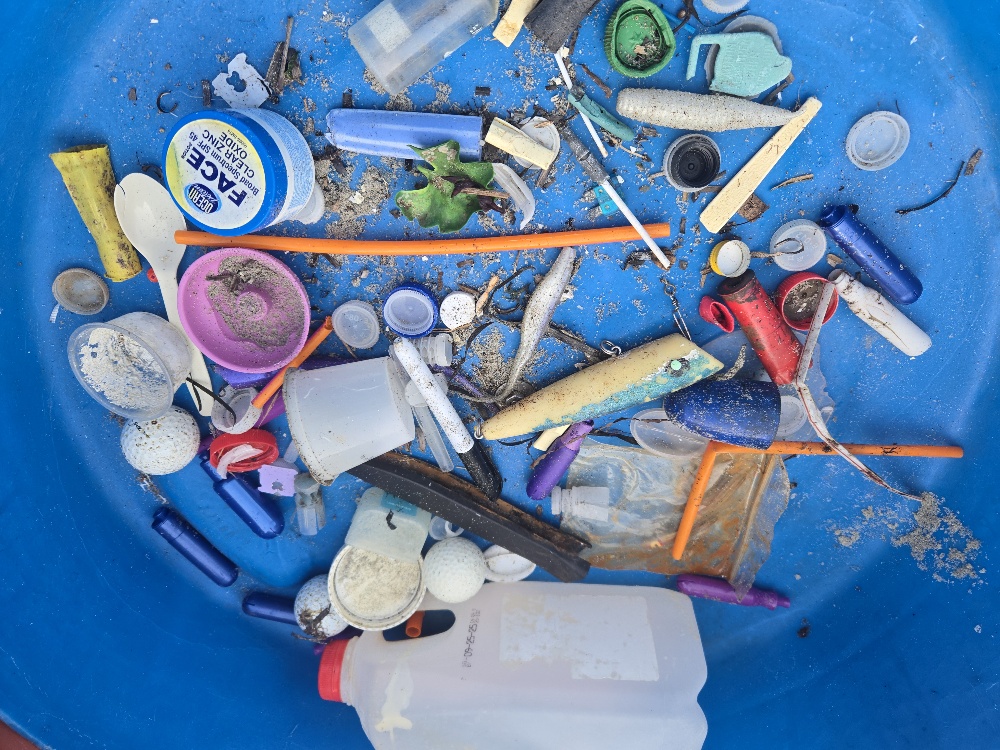
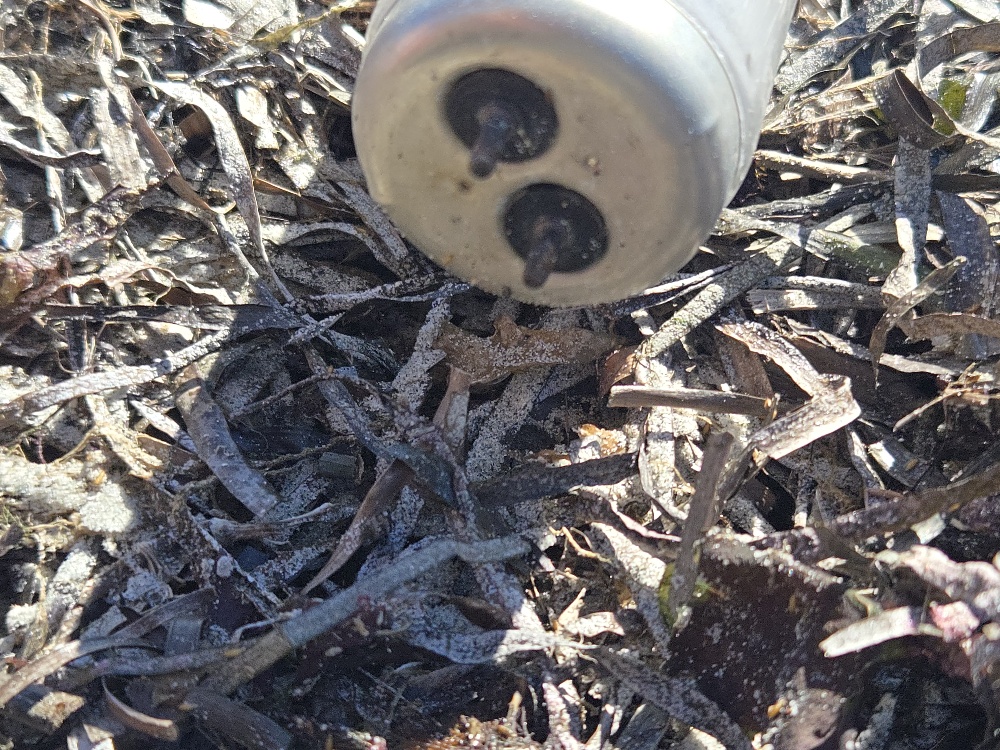
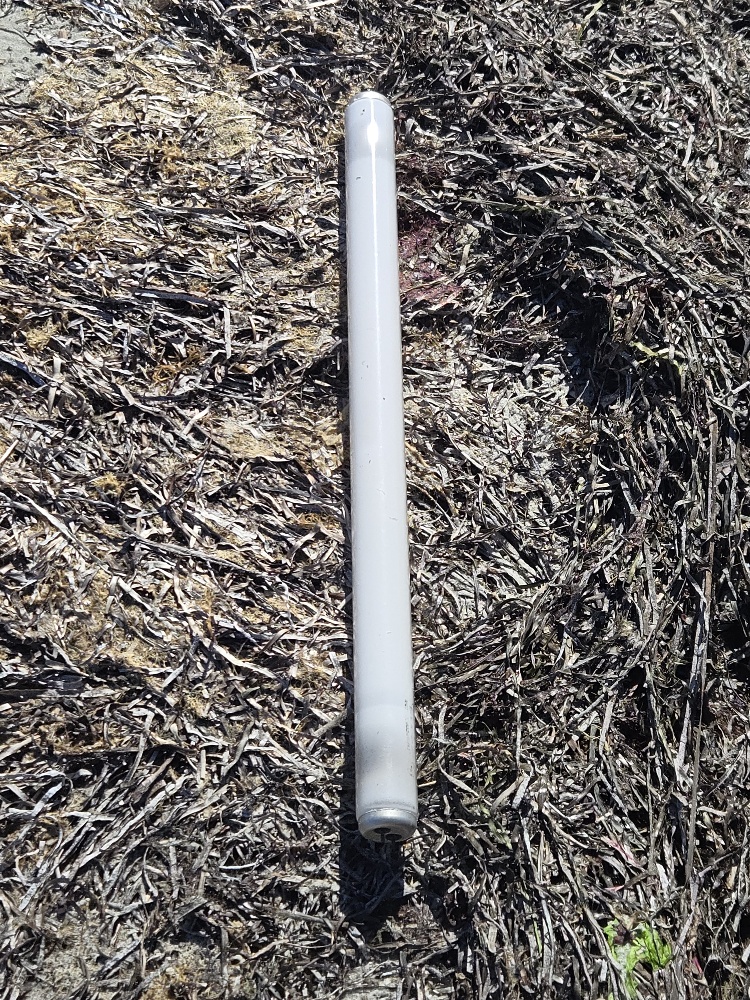
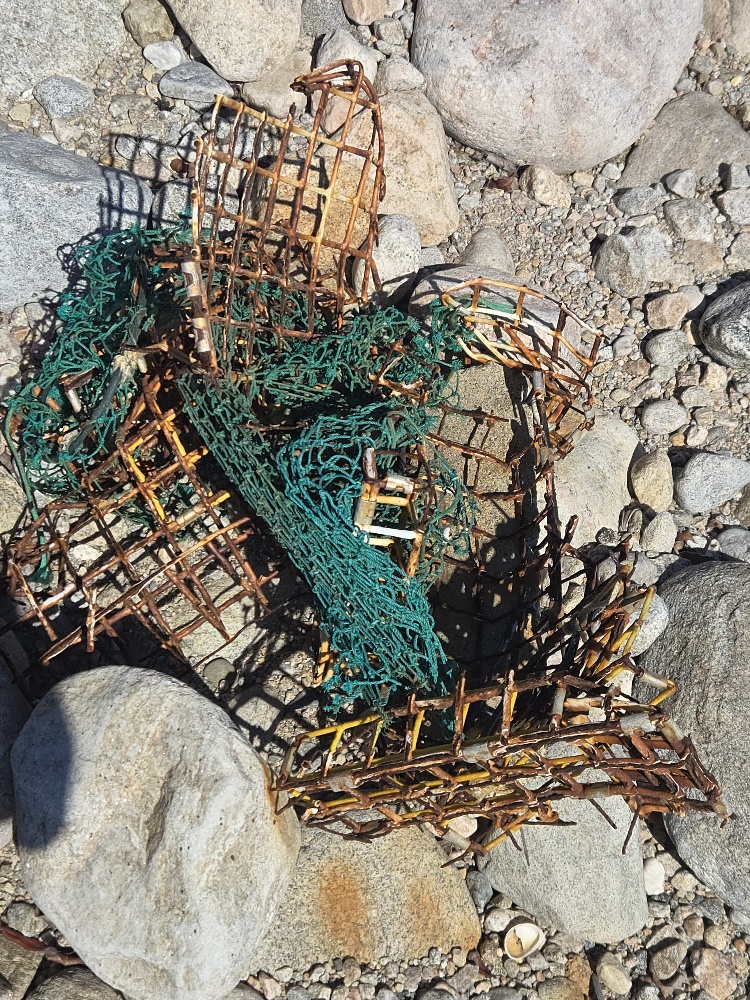
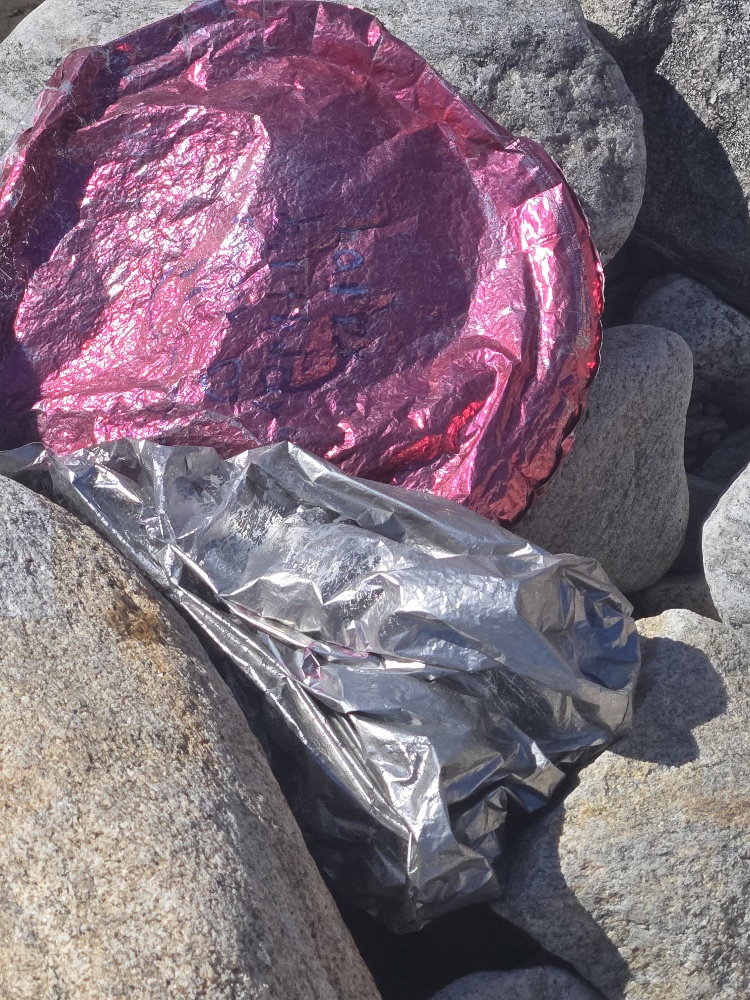
View Sample Photo Gallery Here!

February 27, 2026 83 views
Marine Reports

Marine Debris November 2025

by Anna White February 27, 2026

Marine Debris November 2025

beaches,

Total lbs = 886 / Total hours = 137
~ Michele Klimczak

 
DATE ZONE LOCATION WEIGHT (LBS) HOURS
11/1/2025 S3 Chocomount beaches 29 4
11/2/2025 S3 Behind Webbles beach & before Big Club 46 4
11/3/2025 E4 Latimer Light beaches & behind Money Pond 56 6.5
11/4/2025 N5 Chocomount Cove beaches to end of Hungry Point beaches 44 7.5
11/5/2025 N6 Clay point Rd, Brick yard Rd, Dock beaches through North Hill 38 6.5
11/6/2025 N1 Airport beaches to Ordinance Ferry Park to Silver Eel Cover to Little Stony 38 6.5
11/7/2025 S2 Race Rock beaches, Sanctuary of Sands through all of South beaches up to Wilderness Point 41 7.5
11/9/2025 S2 Isabella beaches and behind secret beach 27 4
11/11/2025 S3 Chocomount beaches to behind Webbles beach & before Big Club 37 7
11/12/2025 E4 Beach after Big Club to Behind Money Pond & Castle 48 7.5
11/14/2025 E4 Latimer Light beaches past 8th Hole up to Hungry Point 64 7.5
11/17/2025 N5 Chocomount Cove beachess 39 6.5
11/18/2025 N6 Clay Point Rd, Brick yard Rd beaches to Dock beaches, all North Hill beaches 44 7.5
11/19/2025 N1 Airport beaches to Ordinance Ferry Park to Silver Eel Cover to Little Stony to Holiday House Beaches 41 7
11/20/2025 S2 Isabella beaches to Secret Beach 39 5
11/21/2025 S2 Race Rock, Sanctuary of Sands to Wilderness Point beaches 31 7
11/23/2025 E4 Past Big Club to behind Money Pond 44 5
11/24/2025 E4 Latimer Light beaches past 8th Hole up to Hungry Point 54 7.5
11/25/2025 N5 Chocomount Cove beaches 28 4
11/26/2025 N6 Clay Point Rd, Brick yard Rd beaches to Dock beaches, all North Hill beaches 30 6.5
11/29/2025 N1 Airport beaches to Ordinance Ferry Park to Silver Eel Cover to Little Stony to Holiday House Beaches 37 6
11/30/2025 S2 Race Rock, Sanctuary of Sands through South Beaches 33 6
 

View Sample Photo Gallery Here!


February 27, 2026 43 views
FIRSTNews

Graduate Research Spotlight: Tyler McMahon

by Anna White February 26, 2026

Meet Tyler McMahon, FIRST PhD Researcher

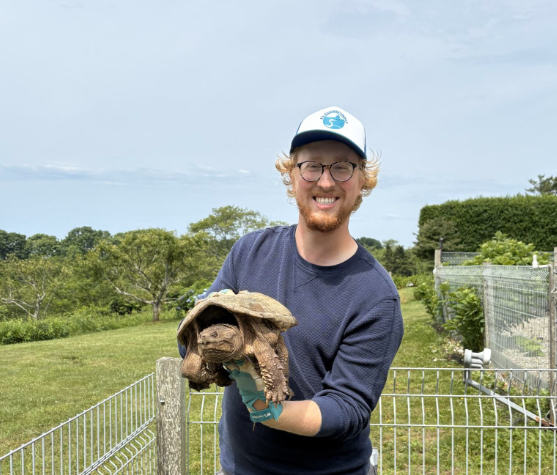
Tyler McMahon is a first year PhD student in Wildlife and Natural Resources working in partnership with the Fishers Island Conservancy through the FIRST program. His research focuses on long term grassland biodiversity and how management decisions shape insect communities over time.

Before coming to Fishers Island, Tyler studied the effects of bison reintroduction in Illinois tallgrass prairies, where he examined how large grazers influenced moth diversity. His background in insect ecology, especially his interest in moths and butterflies, brings a valuable perspective to the Conservancy’s growing monitoring efforts.

On Fishers Island, Tyler leads field surveys in the managed grasslands at the Parade Grounds and surrounding areas near Elizabeth Field Airport. His work builds on survey data originally collected between 2014 and 2016 and continues with renewed sampling from 2024 through 2026. By comparing these time periods, he is helping evaluate how invasive plant expansion, changing vegetation management, and broader landscape shifts affect arthropod diversity and community composition.

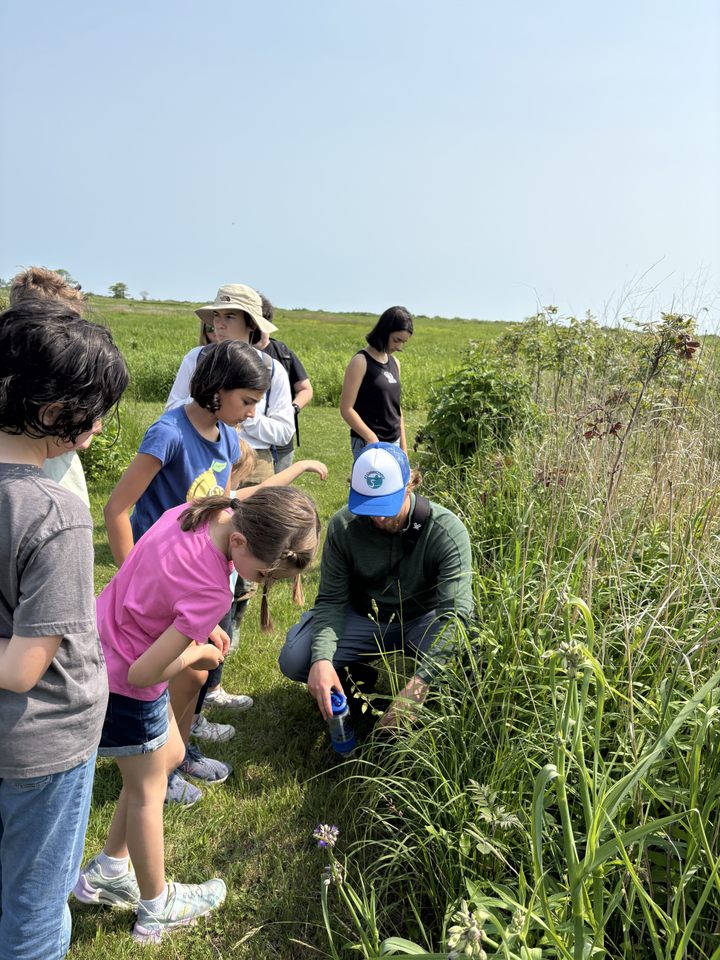
Tyler McMahon educating youth on plant identification

Tyler’s research combines insect sampling, vegetation assessments, and spatial analysis to better understand how native and invasive plant cover influence insect richness and abundance. Because insects form the foundation of grassland food webs, supporting birds, small mammals, and other wildlife, this work plays an important role in shaping long term conservation strategies for the island.

In addition to leading his own research, Tyler mentors undergraduate members of the FIRST Team. Each student develops an independent project connected to the larger monitoring effort, gaining hands on experience in field methods, data analysis, and scientific communication. This collaborative model strengthens both research capacity and long term stewardship on Fishers Island.

The managed grasslands on the island are especially significant, providing habitat near active shorebird nesting areas while balancing recreation and the historic character of the Parade Grounds. Tyler’s goal is to generate science based recommendations that support native biodiversity and guide thoughtful management decisions for years to come.

Tyler will continue working with the Conservancy throughout this multi year project, returning in upcoming field seasons to build on the data collected and deepen our understanding of grassland ecosystems on Fishers Island.

February 26, 2026 63 views
Sentinels

A Growing Record of Island Sentinel Observations

by Anna White February 18, 2026

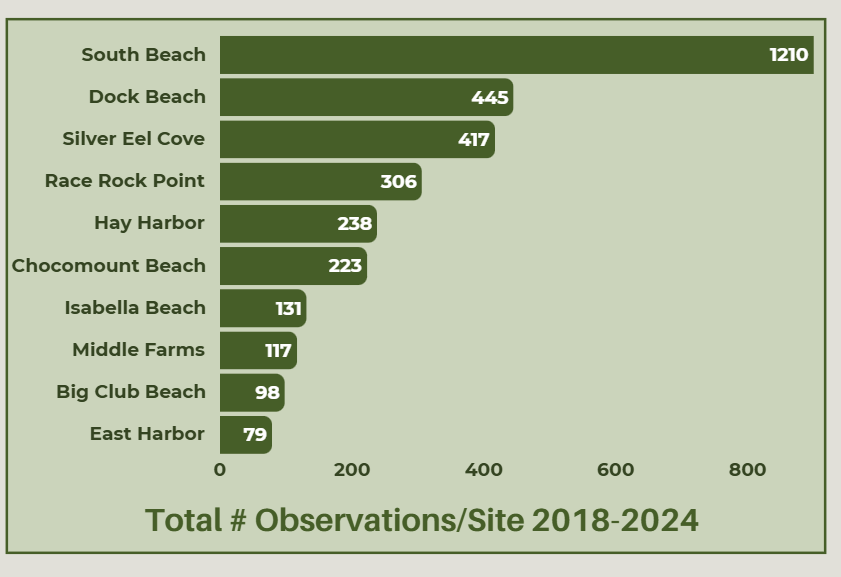
Sentinel Data 2018-2024

Since 2018, the Island Sentinel program has built a consistent record of observations across ten monitoring sites on Fishers Island. These observations reflect what Sentinels are seeing on the ground and along the shoreline, season after season.

Between 2018 and 2024, Sentinels recorded thousands of individual observations across a wide range of categories. Together, these entries help illustrate how different sites are used, which species are present, and how conditions vary across the island.

Most observations fall into the following categories:

  • Bird observations, which make up the largest portion of recorded data

  • Human activity, including recreation and site use

  • Insects and other wildlife

  • Boats and vessel activity

  • Seaweed, natural debris, and marine debris

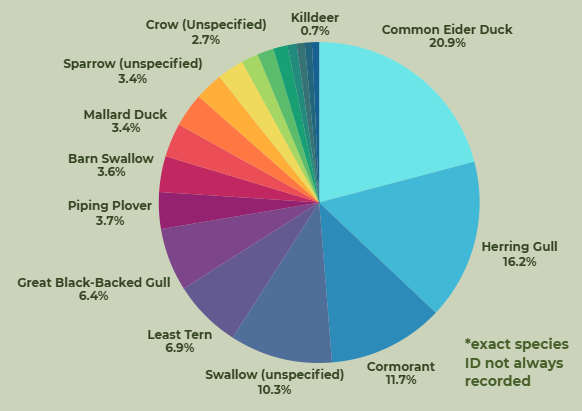
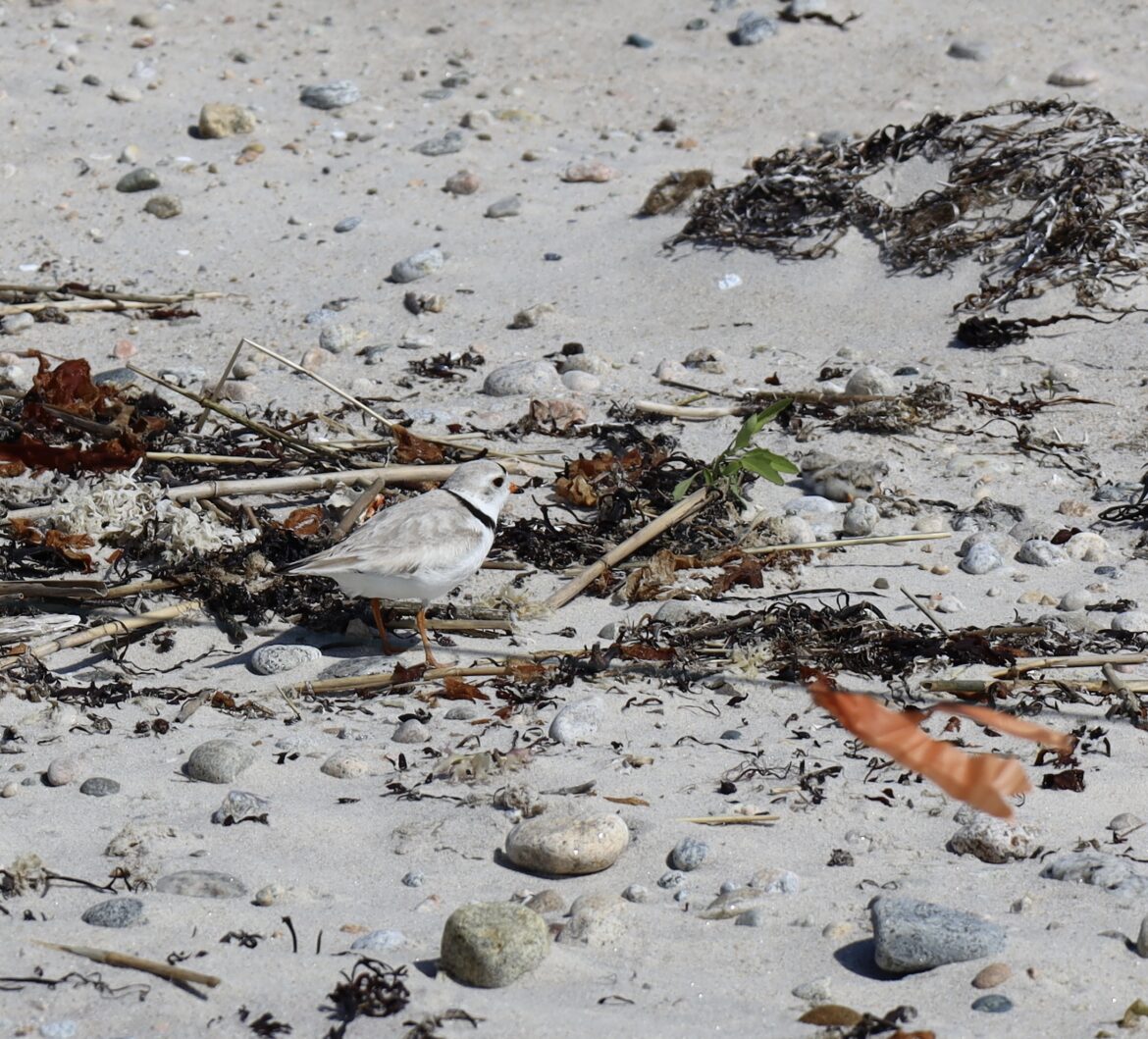
The most commonly observed birds are Eider Ducks, Herring Gulls, and Cormorants. However, NYSDEC endangered species such as Piping Plovers are also observed at many sites.

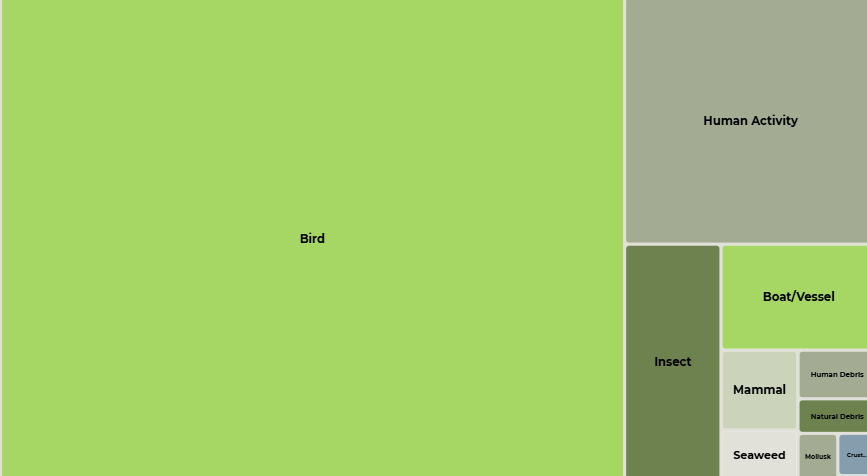
Observations taken by Sentinels are categorized by data
type. These include:

  • Bird – 71.3%

  • Mammal – 1.5%

  • Vessel/Boat – 3.9%

  • Human Activity – 14.7%

  • Seaweed – 0.9%

  • Natural Debris – 0.6%

  • Mollusk – 0.4%

  • Bivalve – 0%

  • Crustacean – 0.4%

  • Human Debris – 0.9%

  • Insect – 5.4%

  • Reptile – 0%

It can be seen here that bird observations are by far the most
common with 2476 (71.3%) recorded observations over seven
years. Human activity is the second most observed with 509
(14.7%). Next are boat/vessel and insect observations 135
(3.9%) & 187 (5.4%), respectively.

Bird observations account for the majority of entries, reflecting both the visibility of birds across the island and the importance of Fishers Island as habitat for coastal and migratory species. 

As the program continues, this growing body of observations adds to our understanding of Fishers Island as a living system shaped by both natural processes and human presence. Each season builds on the last, strengthening the record and providing perspective on how conditions shift across the island over time.

February 18, 2026 42 views
News

2026 Shorebird Season- Coming Soon

by Anna White January 28, 2026

Shorebird Season 2026 Is Almost Here!

Shorebird season is just around the corner, and with it comes our annual reminder that it’s almost time to share the shore. In the coming weeks, piping plovers and least terns will begin returning to Fishers Island to nest and raise their young. Their arrival is one of the sure signs that spring is settling in.

When the Birds Arrive

Piping Plovers

  • Typically begin arriving in late March through April

  • Establish territories and begin nesting by late April into May

  • Chicks hatch in June

  • Most chicks fledge by early July, often around July 4, unless there is nest failure or renesting

Least Terns

  • Usually arrive a bit later, in mid to late May

  • Nest in small colonies on open sandy areas

  • Eggs are typically laid in June

  • Chicks hatch from late June into July

Both species nest directly on the sand, which makes them especially vulnerable to disturbance, predators, and weather.

What We’ll Be Doing

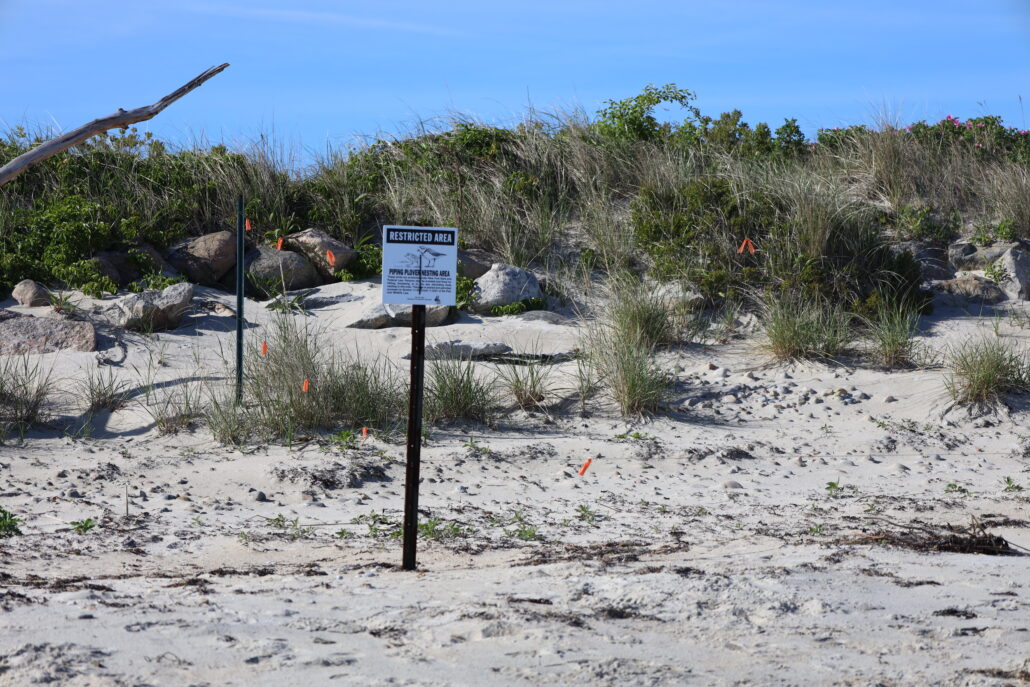
Like last year, we will be installing symbolic fencing around active nesting areas once birds establish territories.

  • Fencing helps reduce disturbance during nesting and chick rearing.

  • It is temporary and will remain in place only until chicks have successfully fledged.

  • If nests fail and birds renest, fencing timelines may shift accordingly.

Throughout the season, we will conduct regular monitoring visits to document nest activity, track chick development, record productivity and assess disturbances and habitat conditions.

We follow established state and regional monitoring protocols so the data collected here contributes to broader Long Island and Atlantic Coast recovery efforts. This ensures our work is both locally grounded and scientifically meaningful.

Want to Learn More?

If you’d like a deeper look at our priorities, monitoring structure, and management approach for this year, please read our full Shorebird Program Plan for 2026.

2026 Shorebird Plan

Upcoming Fencing Installation

As part of our early season preparations, New York DEC biologist Sean Wiedemann will be coming to Fishers Island on April 9th  to assist with installing symbolic fencing around anticipated nesting areas.

If you would like to volunteer to help with fencing installation that day, please reach out to Anna directly to let her know. It’s a great way to be involved at the very beginning of shorebird season and to support hands-on conservation work on the beach.

We’re looking forward to another season of careful stewardship, science-based monitoring, and community support!

FI Conservancy

January 28, 2026 65 views
NewsPresident's Message

President’s Message 2025

by Anna White January 19, 2026

Thank you for your ongoing support of Fishers Island Conservancy!

Dear Friends of Fishers Island,

FI Conservancy President Tom Sargent

It’s hard to believe that Halloween has come and gone and we are at the edge of the holiday season. 2025 has been a very busy year for the Fishers Island Conservancy, in fact, our busiest year ever. We expanded every program and have added several new initiatives and collaborations.

This year the Conservancy continued its participation in the Long Island Colonial Waterbird Surveys, working alongside the NYSDEC and the NY Audubon Society. Through this collaboration we have helped install protective fencing each spring from April until the young birds fledge around July 1st. This effort gives these vulnerable Piping Plovers a better chance to nest and raise their chicks safely. The results this year were very encouraging. In 2025 we recorded five nesting pairs with at least 12 eggs laid, 10 hatched and 7 fledglings. That’s a productivity rate of 1.4 fledging’s per pair, right on track with the NY region’s average. As we move into next year, we’ll continue our partnership and work towards maintaining that 1.5 fledging benchmark. We held spring and fall island Audubon migratory line counts giving us a full decade of observation and scientific data.

We held spring and fall island Audubon migratory line counts giving us a full decade of observation and scientific data.

We collaborated with the island community on the promotion and importance of native plants and plantings to enhance the strength of local ecosystems and food webs.

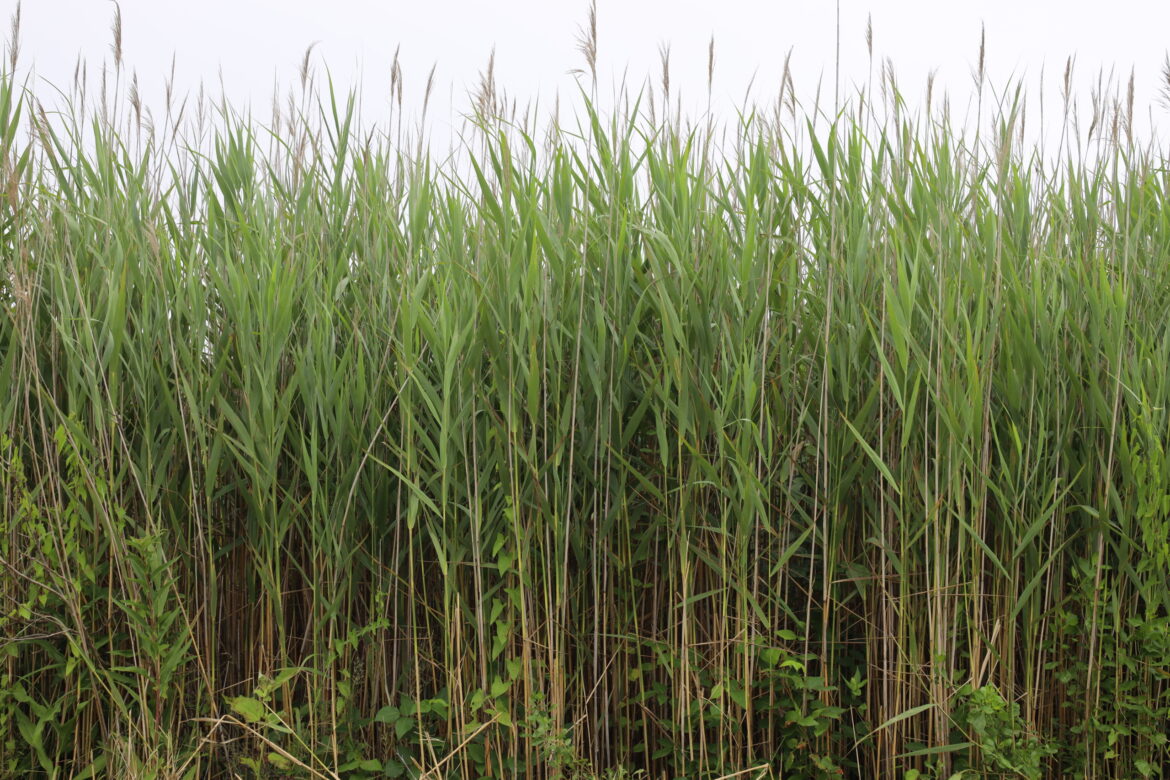
The Conservancy accessed licensed environmental contractors to help coordinate the removal and management of invasive phragmites from some of our most sensitive wetland habitats on private properties. 2026 will be a threshold year as this program gains big momentum.

We continued our partnership with the Fishers Island Ferry District on the management of the Ft. Wright and Elizabeth Field parade grounds. At 175 acres, this coastal meadow restoration is one of the largest projects of its kind on the east coast and is now in its 13th year.

Our relationship with Dr. Adam Mitchell and Tarleton St. University of Texas grew this year. We welcomed six graduate students who gathered scientific data on the health of the parade grounds habitat and worked on the removal of invasive plant species. Led by PhD candidate Tyler McMahon, these young men and women worked tirelessly not only in the parade grounds, but could also be seen helping out in various spots on the island for other island conservation efforts. Stay tuned for their published findings.

This August, the Conservancy joined with the Ferguson Museum, Brad and Mary Burnham, Waste Management and others to create the Silver Eel Coastal Path connecting Ferry Park to the Race. This connector highlights a somewhat forgotten but beautiful stretch of our
wonderful coastline.

Nature Day, held on the first weekend in August, attracted our biggest crowd in years. This event caters to our youngest constituency, but there were plenty of adults equally fascinated with the insects, amphibians and raptors on display from the Denison Pequotsepos Nature Center, and they welcomed the chance to learn about our local flora and fauna.

Lastly, we are very lucky to have Dr. Douglas Tallamy, PhD emeritus chair of the Entomology Department at the University of Delaware, as our advisor. Dr. Tallamy is a New York Times bestselling author and is one of the foremost authorities on habitat restoration and native plants’ role in healthy ecosystems in the U.S. Dr. Tallamy has been working with the Conservancy for over a decade, and so it was with great enthusiasm that we awarded our first ever Conservancy Medal of Honor to him. This is our highest commendation, and it is awarded in recognition of eminent service to the understanding, education, environmental stewardship, and protection of our environment. In fact, our medal carries his name: the Douglas W. Tallamy Medal of Honor. Doug is a true friend of the Conservancy and well deserving of this inaugural award.

There is so much more to talk about in 2025 but space prevents it. Please check out our website fishersislandconservancy.org for much more information on the ways we support our fragile island ecosystems. We are a busy and robust organization but without the broad support from the island community, we couldn’t do our important work. Your generosity has been outstanding, and we are deeply grateful. So this is where I ask for your help once again.

Please remember, a gift to the Fishers Island Conservancy is a gift to Fishers Island.

Thank you,

Cheers Tom

January 19, 2026 86 views
Current EventsEventsNews

What to Do if You Find a Stranded Animal

by Anna White October 31, 2025
 

What to Do if You Encounter a Stranded Marine Animal

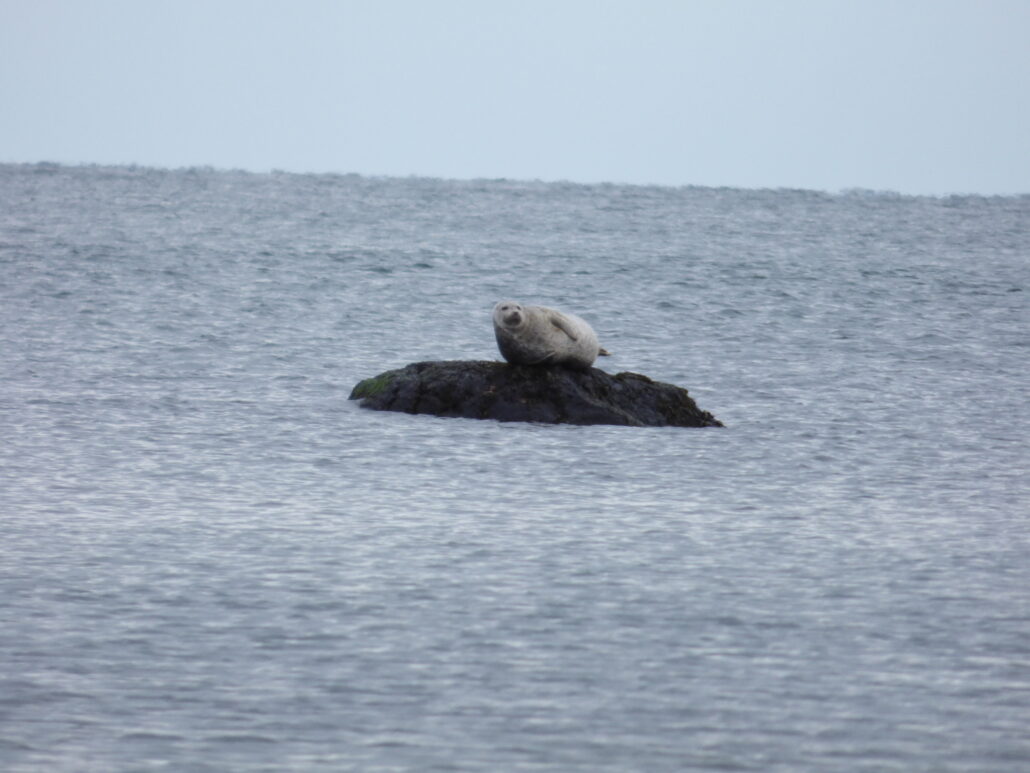
While it’s not uncommon to see seals resting on Fishers Island’s beaches, there are times when a marine mammal may need help. Seals often haul out on land to rest, warm up, or digest food – this is a normal and healthy behavior. However, if you’re unsure whether an animal is just resting or in distress, it’s always best to notify professionals.

What to Do First

The first step is to call the Mystic Aquarium Marine Mammal Stranding Hotline at (860) 572-5955 x107.
This ensures there’s an official record of your report and allows their trained team to coordinate a proper response.

  • The animal’s exact location (GPS coordinates)
  • A photo taken from a safe distance
  • Notes about the animal’s behavior, such as alertness, responsiveness, or visible injuries

Understanding Normal Seal Behavior

Seals on beaches do not always need help. They haul out naturally and do not need to be wet at all times. Resting on shore is part of their normal routine and allows them to conserve energy and regulate body temperature.

A healthy seal will often appear alert and responsive and may rest in a “banana pose” – with its head and tail lifted off the ground. This posture indicates that the animal is relaxed and comfortable.

Keep Your Distance

Please keep at least 150 feet away from all marine mammals. This is required by federal law under the Marine Mammal Protection Act. A simple way to check your distance is to hold your thumb out at arm’s length: if you can completely cover the seal with your thumb, you’re far enough away.

  • Never touch, feed, or approach a seal
  • Do not stand over or near the animal’s head or flippers
  • Keep dogs leashed and well away
  • Remember that seals can carry zoonotic diseases, which can spread to humans and pets. Always observe from a distance
Photo by fishersnaturalist (iNaturalist 2017)

Local Certified Responders

Fishers Island is fortunate to have several certified responders through Mystic Aquarium’s Marine Mammal Rescue Program. These volunteers are trained annually to help assess, monitor, and assist with marine mammal strandings and sightings on the island.

As of October 2025, the following individuals are certified and available to assist when needed:

  • Kristen Peterson – kmpfic@gmail.com
  • Michele Klimczak – klimette62@sbcglobal.net
  • Anna White – annarwfic@gmail.com
  • Stephanie Hall – glynn7447@gmail.com
  • Nick Hall
  • Annabel Vartanian Jeffries
  • Gordon Murphy – gsmurphy@mac.com

Note: Only volunteers who are certified and current on their annual recertification are eligible to assist with a stranding response.

Fishers Island Conservancy’s Role

The Fishers Island Conservancy works closely with Mystic Aquarium and maintains on-island response gear, including a transport crate and other necessary equipment. If you reach out to the Conservancy, they can help connect you with certified volunteers, but please call the Mystic Aquarium hotline first to file an official report.

Interested in Becoming a Volunteer?

The Conservancy and Mystic Aquarium partner each year to provide marine mammal response training on Fishers Island.
If you are interested in becoming a certified volunteer in the future, please contact:
Karissa McNair, Mystic Aquarium Volunteer Coordinator – volunteer@mysticaquarium.org


October 31, 2025 101 views
Current EventsEducationEventsFeatureNews

Update on Phragmites Work and New Wetlands Regulations

by Anna White October 10, 2025

We wanted to share an update about this season’s phragmites management work. Recently, the New York State Department of Environmental Conservation (NYSDEC) updated its freshwater wetlands regulations. These new rules expand which areas are considered regulated wetlands and change the process for getting permits to do any work in or near them.

Because of this, most of our current and planned phragmites treatment sites are now on pause while new permits and preliminary determinations are completed. The only location that can move forward right now is the Parade Grounds, which already had its permit approved under the previous regulations.

While delays are never easy, this is an important step to make sure we’re doing everything responsibly and in full compliance with state policy. Wetland regulations exist to protect sensitive habitats, water quality, and the overall health of our island’s ecosystem. When the state updates these policies, it’s our job to make sure all of our work stays consistent with those changes.

We’re continuing to work closely with our partners at The Pond and Lake Connection and NYSDEC to complete the required paperwork and move forward as soon as possible. We’ll share updates once we have a clearer timeline.

In the meantime, if you’d like to learn more about the new wetlands regulations, you can visit the NYSDEC Freshwater Wetlands Program for more information.

Pease feel free to email annarwfic@gmail.com if you have any questions.

October 10, 2025 44 views
Current EventsEducationEventsFeatureNews

SPOTTED in New London!

by Anna White October 2, 2025

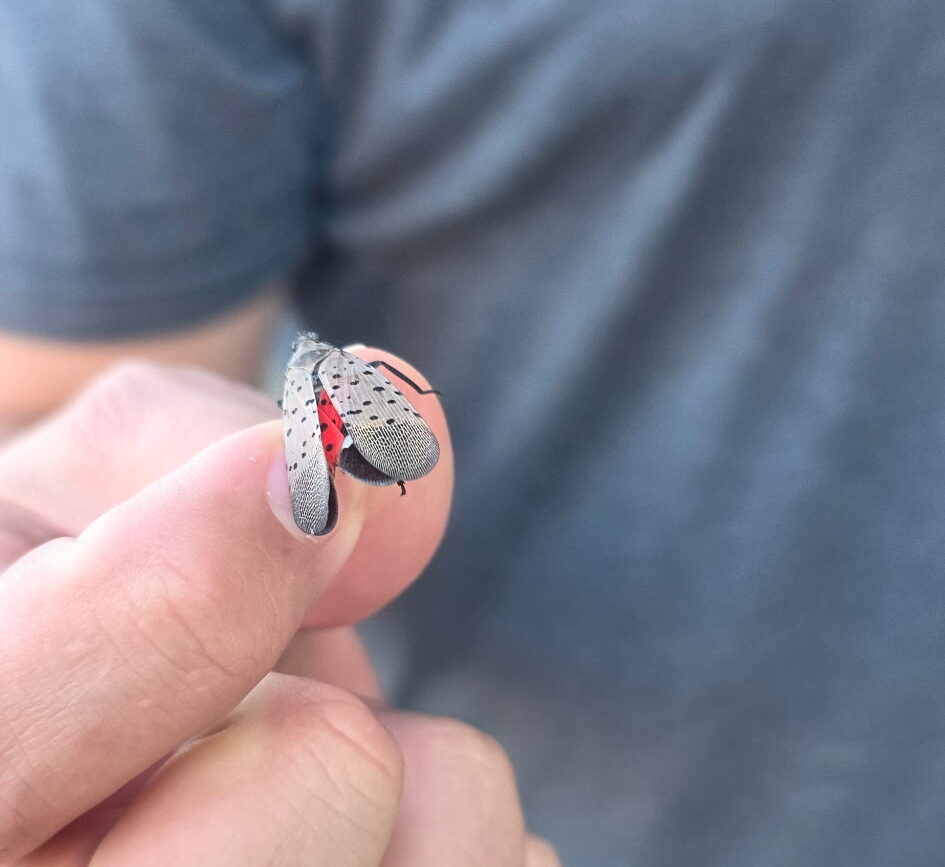
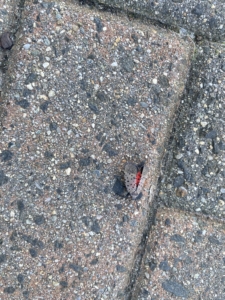
During preparations for this year’s fall bird migration count, Dr. Adam Mitchell of Tarleton State University and Catalina Berry, a Ph.D. student and former lead of the 2024 migration team, observed an adult spotted lanternfly on the ground in New London, just a block from the ferry. This marks a concerning sign that the invasive species is present close to the island and could spread here.
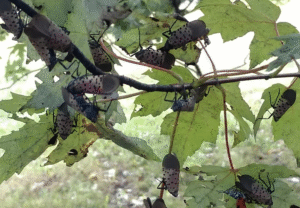
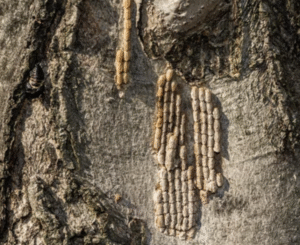
 

The spotted lanternfly (Lycorma delicatula) is a destructive invasive insect tha tposes a significant threat to both agriculture and native ecosystems. Although it is native to Asia, it has spread rapidly through the northeastern United States in recent years. The insect feeds on the sap of plants, with a strong preference for the invasive tree-of-heaven, but it is known to consume more than

100 plant species. These include grapevines, fruit trees, hardwoods such as maples and oaks, and a wide range of ornamental plants and vines. Infestations can cause serious damage to crops, reduce the health of trees, and disrupt ecological balance.

While the insect is not dangerous to humans or pets, it spreads quickly and often hitchhikes on vehicles, firewood, outdoor furniture, and other materials. For this reason, the community’s vigilance is super important in preventing its spread to our island.

What You Can Do to Help Prevent the Spread

1. Check your belongings and vehicles
Before traveling to or from the island, inspect your car, boat, luggage, and any outdoor equipment for spotted lanternflies, egg masses, or nymphs.

2. Look for egg masses
From fall through early spring, females lay egg masses on flat surfaces such as trees, rocks, vehicles, patio furniture, and even outdoor gear. Scrape and destroy any you find.

3. Avoid moving firewood
Do not bring firewood or other untreated outdoor materials onto the island, as these can easily carry egg masses or hidden insects.

4. Be vigilant in your yard
Check trees and plants regularly, especially grapes, fruit trees, maples, and tree-of-heaven, which are common hosts.

5. Report sightings immediately
If you see a spotted lanternfly, take a clear photo and report it to both the Fishers Island Conservancy and the New York State Department of Environmental Conservation (NYSDEC). Reports can be submitted through NYSDEC’s invasive species survey

6. Kill the insect if possible
Spotted lanternflies are not harmful to people or pets. Stomping or capturing them on sight is one of the most direct ways to slow their spread!


October 2, 2025 39 views
Marine Reports

Marine Debris October 2025

by Anna White October 1, 2025

Marine Debris Report
October 2025

Collected across island beaches
Total weight: 1,168  lbs | Total hours: 107.5
~ Michele Klimczak

DATE ZONE LOCATION WEIGHT (LBS) HOURS
10/1/2025 S3 Chocomount Cove beaches through behind Webbles, beach before Big Club 42 7
10/2/2025 E4 Latimer Light beaches past Eighth Hole 46 8
10/5/2025 E4 Castle Rd beaches to behind Money Pond beach 32 5
10/14/2025 N5 Chocomount Cove beaches to end of Hungry Point beaches 29 6
10/15/2025 N6 Clay point Rd, Brick yard Rd, Dock beaches through North Hill 36 8
10/16/2025 N1 Airport beaches to Ordinance Ferry Park to Silver Eel Cover to Little Stony 33 6
10/19/2025 S2 Race Rock beaches, Sanctuary of Sands through all of South beaches up to Wilderness Point 46 8
10/20/2025 S2 Isabella beaches and behind secret beach 49 6
10/22/2025 S3 Chocomount beaches to behind Webbles beach, Barley Field Cove beaches 57 7
10/23/2025 E4 Latimer Light beaches through to Coast Guard House over golf course 48 7.5
10/24/2025 E4 Behind Money Pond and Castle Rd beaches 39 5
10/27/2025 N5 Chocomount Cove beaches through Hungry Point beaches 44 8
10/28/2025 N6 Clay Point Rd, Brick yard Rd beaches to Dock beaches, all North Hill beaches 38 8
10/29/2025 N1 Airport beaches to Ordinance Ferry Park to Silver Eel Cover to Little Stony to Holiday House Beaches 42 8
10/30/2025 S2 Race Rock, Sanctuary of Sands, South beach, Wilderness Point 52 8

View the Marine Debris Gallery Below

October 1, 2025 56 views
Newer Posts
Older Posts

Upcoming Events

Aug 8
All day

August Craft Fair

View Calendar

Keep in touch

Facebook Instagram Youtube

Recent Posts

  • What to Do if You Find a Stranded Animal

  • Update on Phragmites Work and New Wetlands Regulations

  • SPOTTED in New London!

  • 2025 Fall Migratory Bird Count Results

  • Fall 2025 Migratory Bird Count

  • FIRST Summer Highlights 2025

  • Shorebirds Take Flight- The 2025 Season Wrap-Up

  • Buzz Be Gone- Final Spray of the Season

  • Silver Eel–Race Point Coastal Trail Opens with Dedication to Janet Harvey

  • August Shorebird Update

Explore

    • Home
    • Who We Are
    • What We Do
    • How To Help
    • News
    • Events

Connect

    • Join Us
    • Donate
    • Contact Us
Facebook Instagram Youtube
© 2026 All Right Reserved. Fishers Island Conservancy
Fishers Island Conservancy
  • Home
  • Who We Are
    • Our Mission
    • Our History
    • Our People
    • Contact Us
  • What We Do
    • Shorebird Monitoring
    • Annual Bird Counts
    • Marine Debris Clean Up
    • Island Sentinels
    • Research and Survey Team
    • Grassland Restoration
    • Mosquito Control
    • Invasive Plant Management
  • How To Help
    • Donate
    • Join Us
  • News
  • Events
    • Calendar