Fishers Island Research and Survey Team
The Fishers Island Research and Survey Team, known as FIRST, is a collaborative conservation and research program created by the Fishers Island Conservancy to support long term habitat restoration, ecological monitoring, and science based stewardship on the island.
Launched in 2024, FIRST represents an evolution of the Conservancy’s invasive plant management work by pairing hands on field efforts with structured ecological research. The program is designed to better understand how restored habitats are functioning over time while training students through real world conservation experience.
FIRST grew directly out of the Conservancy’s earlier Weed Team program, which focused on careful, species specific removal of invasive plants from priority grassland and coastal habitats. That work laid the foundation for restoring native plant communities and improving habitat quality across the island.
FIRST builds on this legacy by expanding beyond removal alone. The program integrates vegetation surveys, insect and bird monitoring, and data analysis to evaluate restoration success and guide future management. The Weed Team remains an important part of the Conservancy’s history and serves as the groundwork for FIRST’s approach to stewardship.
Working With Tarleton State University
The FIRST program is a major collaboration between the Fishers Island Conservancy and Dr. Adam Mitchell, Associate Professor of Entomology at Tarleton State University and a longtime Fishers Island researcher. Dr. Mitchell played a central role in designing and organizing the FIRST pilot program, helping connect academic research with on the ground conservation work.
Through this partnership, students from Tarleton State University work directly with the Conservancy to conduct field research, collect ecological data, and contribute to long term conservation goals on Fishers Island.
The 2024 FIRST Pilot Program
The FIRST program is a significant collaboration between the Fishers Island Conservancy and Dr. Adam Mitchell, Assistant Professor at Tarleton State University and a longtime Fishers Island researcher. Dr. Mitchell played a central role in designing and organizing the FIRST pilot program, helping connect academic research with on the ground conservation work.
Through this partnership, students from Tarleton State University work directly with the Conservancy to conduct field research, collect ecological data, and contribute to long term conservation goals on Fishers Island.
Invasive Plant Management
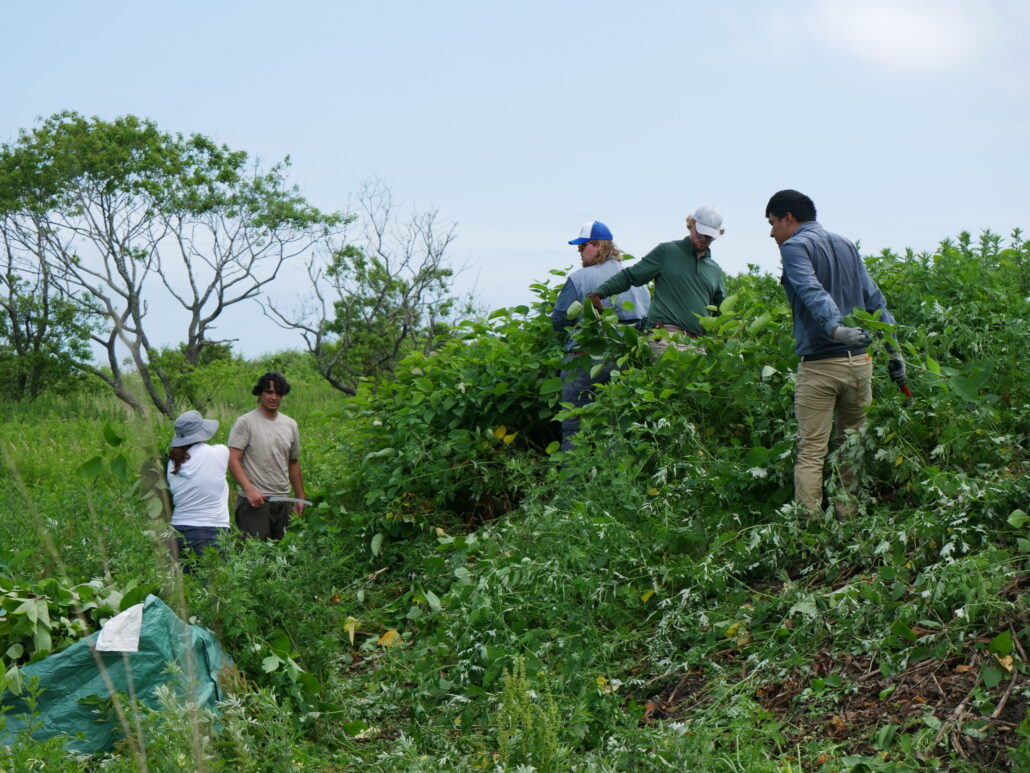
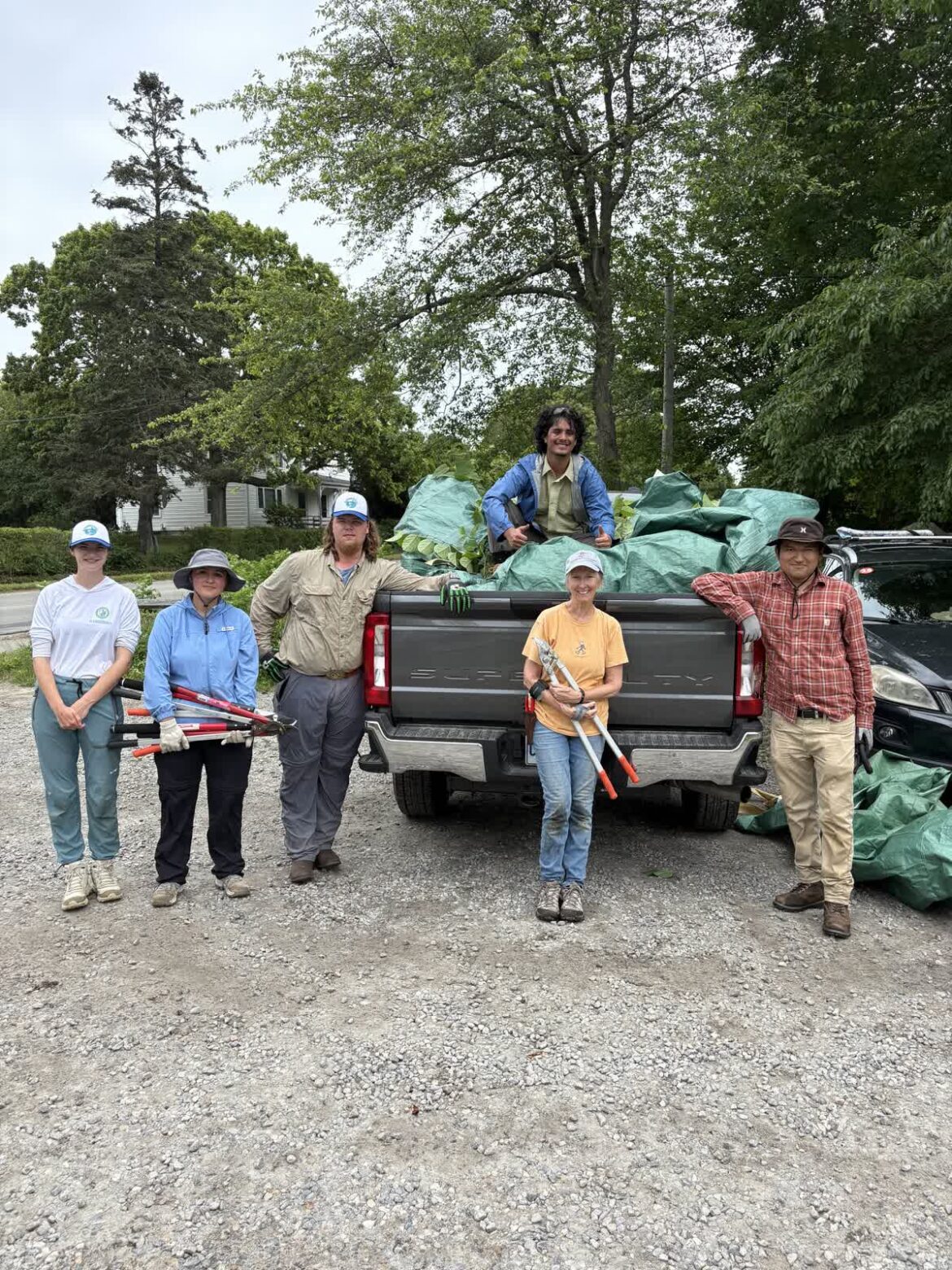
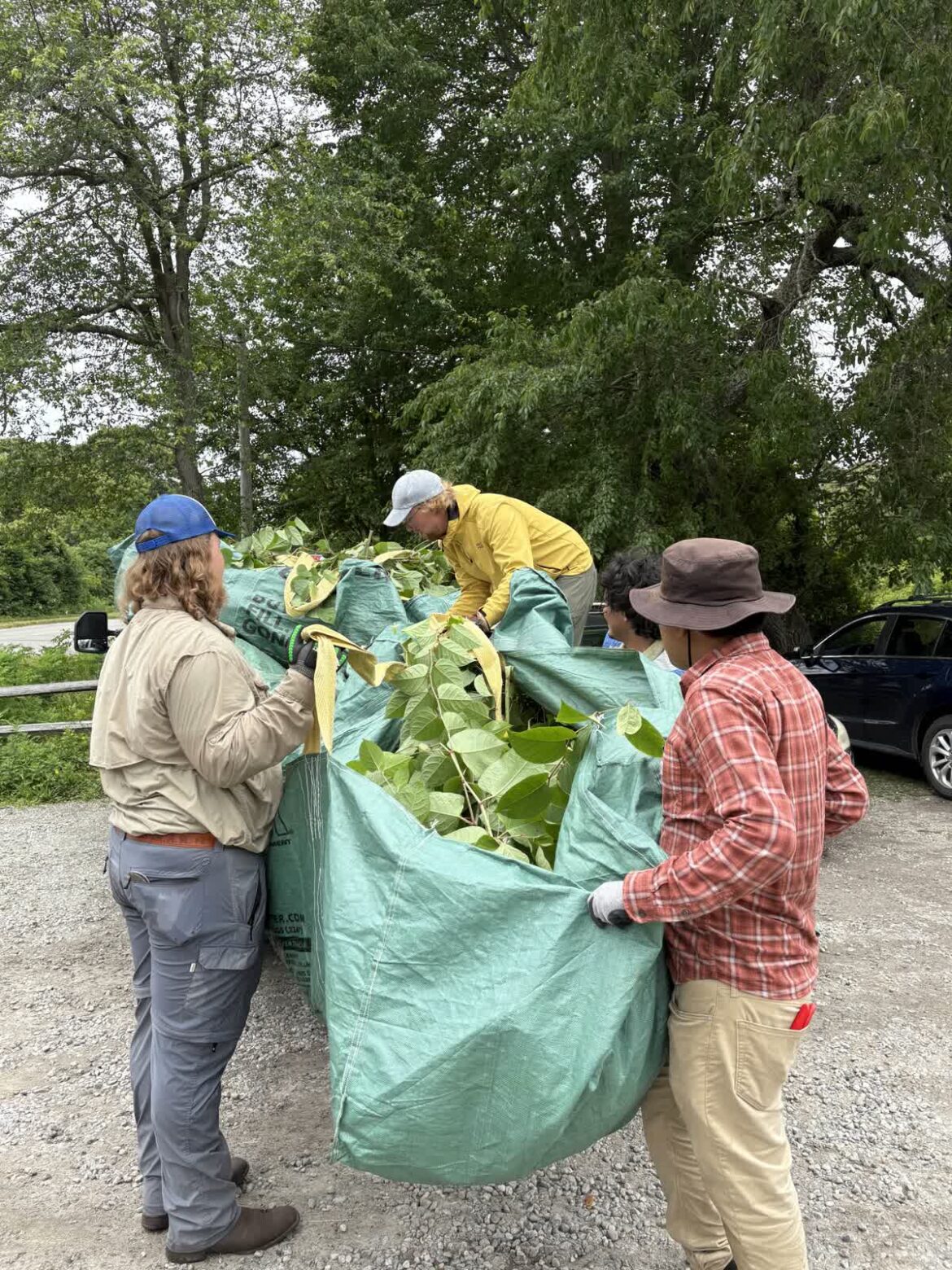
Between research tasks, the FIRST team removed invasive species across multiple designated sites in the Parade Grounds. Over the course of the season, the team cleared more than 2,150 square feet of Japanese knotweed and common mugwort, along with multiple stands of porcelain berry. This work resulted in eight dumpster bags of knotweed and a six foot high pile of invasive plant debris.
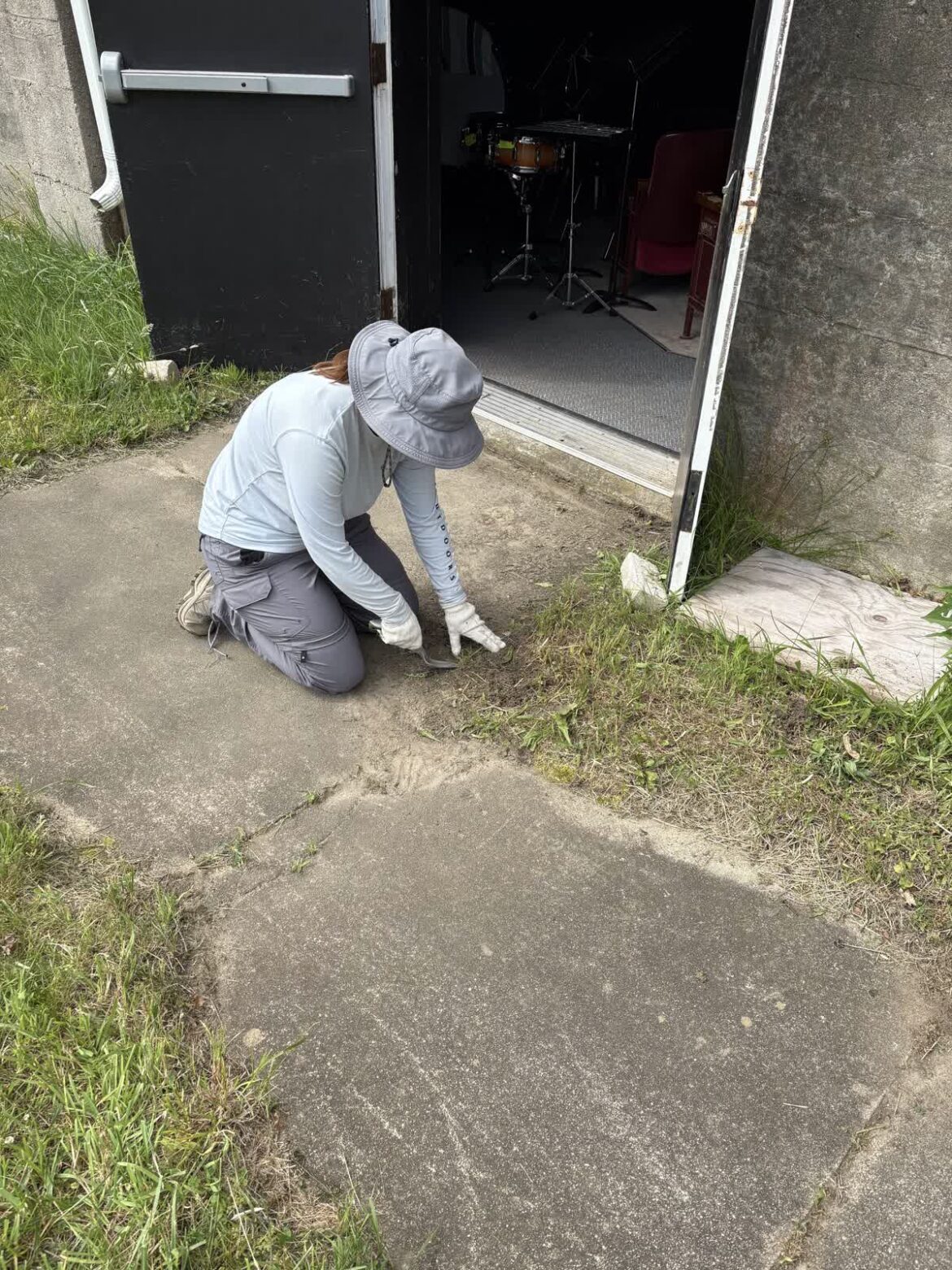
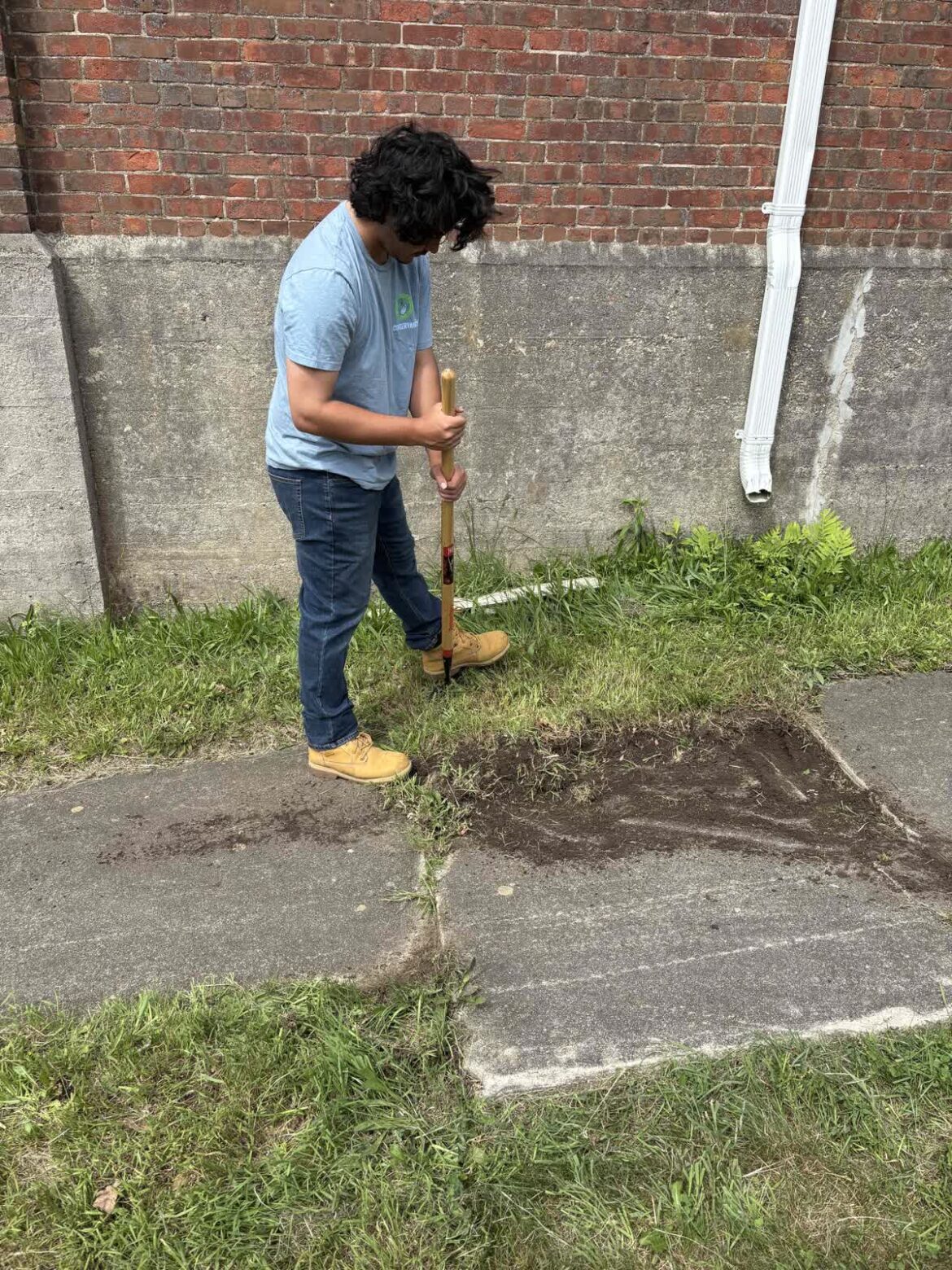
Removal methods included hand pulling, loppers, garden shears, and species appropriate treatment techniques. While a small team can make meaningful progress, the work also reinforced an important reality of invasive management: continued effort over many years is essential to give native species the opportunity to thrive.
Research and Field Methods
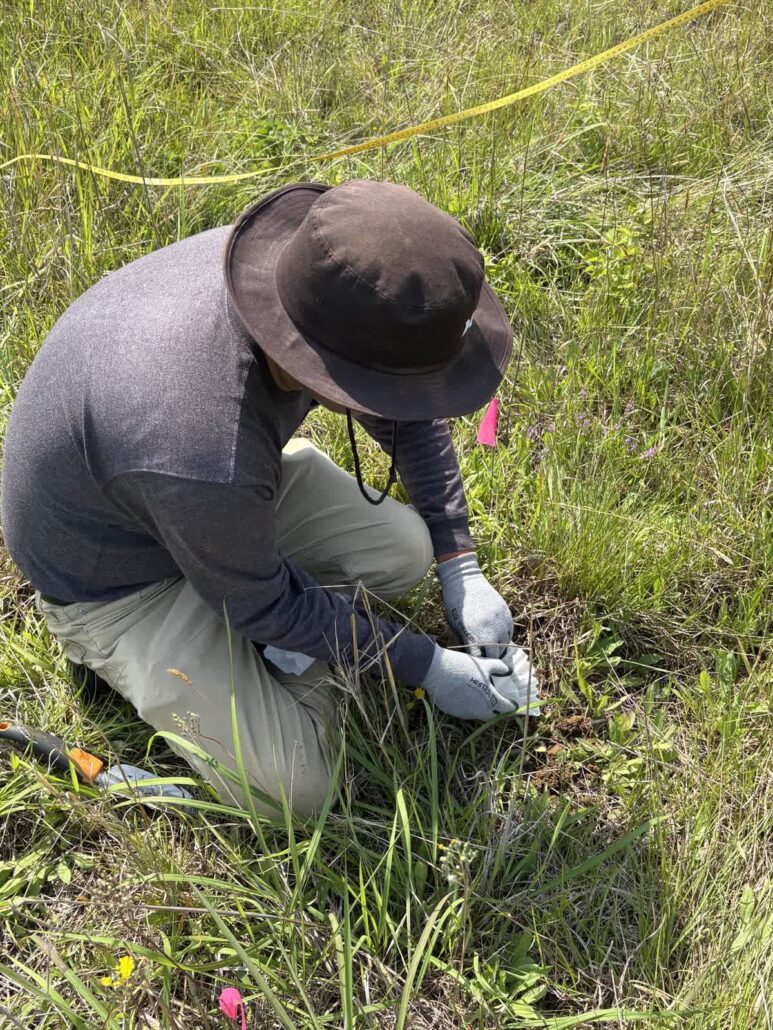
To assess restored grasslands, the team surveyed 15 randomly placed vegetation transects. These surveys allow comparison with previous datasets and help quantify plant diversity, percent cover, and the proportion of native versus invasive species. Early results showed high proportions of native plants in some plots, a positive indicator of long term restoration success. Data analysis is ongoing and will be shared with the Conservancy.
In addition to vegetation surveys, the team collected 150 pitfall traps and 75 vacuum samples to monitor arthropod communities. These samples included bees, caterpillars, spiders, beetles, grasshoppers, ants, isopods, and flies. Specimens were transported back to Tarleton State University for preservation and identification during the academic year.
FIRST also conducted bird surveys every two weeks across Fishers Island to continue adding to our bird count data, with survey points spanning coastal, grassland, garden, pond, and forest environments. A total of 83 bird species were recorded, an impressive number for an island ecosystem. Nesting American black ducks and red winged blackbirds were documented in Elizabeth Field, further suggesting healthy grassland habitat.
Education and Community Engagement
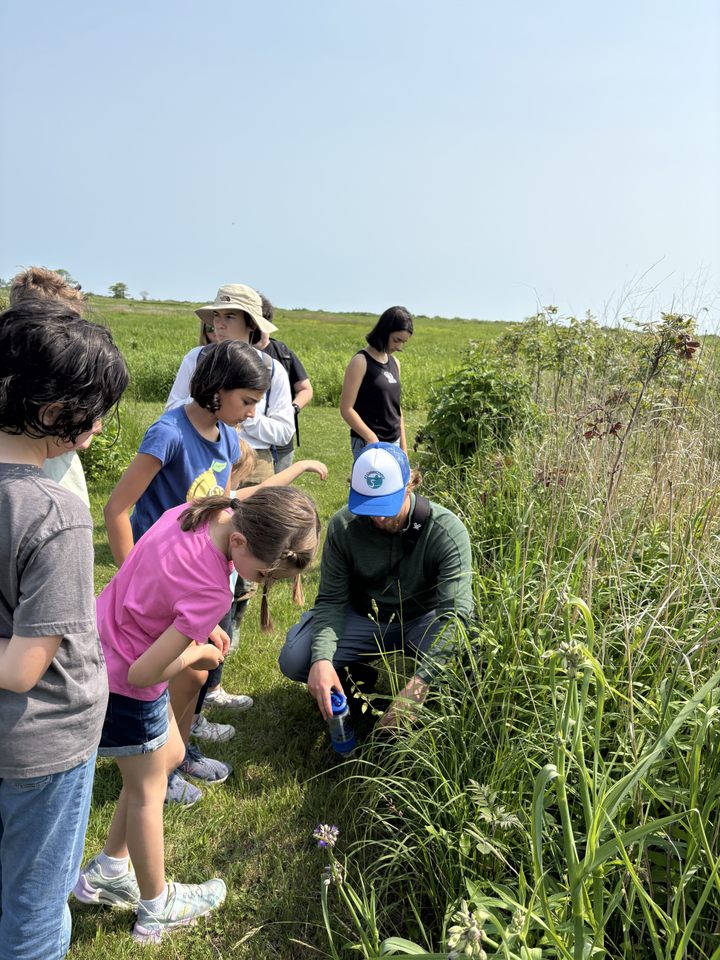
Community education is a key part of FIRST. During the 2024 season, the team led the annual Bug Night on July 20, engaging residents in nocturnal insect monitoring and highlighting the importance of invertebrates in healthy ecosystems.
By sharing their work directly with the community, FIRST helps connect research findings to everyday experiences on the island.
FIRST also contributed time and effort to broader community projects across the island. These collaborations reflect the Conservancy’s belief that conservation work is strongest when it is connected to the community it serves.
During the 2025 season, FIRST members worked alongside local organizations and volunteers, including Pollinator Pathways with Diana Fiske, Trail Dogs from HLF Museum and FIDCO. Their work supported community initiatives, and on the ground conservation efforts beyond the Parade Grounds.
Altogether, the FIRST team contributed 186 hours of community service to projects across Fishers Island!
Funding and Support
The FIRST pilot program is jointly funded by the Tarleton State University President’s Excellence in Research Scholars initiative and the Fishers Island Conservancy. Research supported through the PERS initiative will be presented at Tarleton State University’s Research, Innovation, and Economic Development Symposium.
This shared funding model supports both academic research and on island conservation work, strengthening the impact of the program for students and the Fishers Island community.
FIRST Through the Years
The program began as a pilot in 2024 and continues to grow each season. Every year builds on the last, expanding datasets, refining methods, and deepening understanding of the island’s ecosystems.
Learn more about each season’s team and accomplishments
While summer fieldwork is at the heart of FIRST, much of the work continues year round through data analysis, specimen identification, and reporting. As the program grows, FIRST will remain a key link between restoration, research, and education, helping ensure that Fishers Island’s natural landscapes are cared for with both intention and knowledge.
Following a successful pilot season, FIRST was renewed for summer 2025. The second field season continues the collaboration with Tarleton State University under the guidance of Dr. Adam Mitchell, with both returning and new students supporting vegetation surveys, bird and insect monitoring, invasive species management, and data analysis.
As the program grows, seasonal updates, research highlights, and team profiles will be shared here. FIRST represents a long term investment in science based conservation on Fishers Island, building on the Weed Team’s legacy while expanding the tools available to protect and restore the island’s ecosystems.