Fishers Island Conservancy
  • Home
  • Who We Are
    • Our Mission
    • Our History
    • Our People
    • Contact Us
  • What We Do
    • Shorebird Monitoring
    • Annual Bird Counts
    • Marine Debris Clean Up
    • Island Sentinels
    • Research and Survey Team
    • Grassland Restoration
    • Mosquito Control
    • Invasive Plant Management
  • How To Help
    • Donate
    • Join Us
  • News
  • Events
    • Calendar
Thursday, April 30, 2026
Fishers Island Conservancy
  • Home
  • Who We Are
    • Our Mission
    • Our History
    • Our People
    • Contact Us
  • What We Do
    • Shorebird Monitoring
    • Annual Bird Counts
    • Marine Debris Clean Up
    • Island Sentinels
    • Research and Survey Team
    • Grassland Restoration
    • Mosquito Control
    • Invasive Plant Management
  • How To Help
    • Donate
    • Join Us
  • News
  • Events
    • Calendar
Fishers Island Conservancy
  • Home
  • Who We Are
    • Our Mission
    • Our History
    • Our People
    • Contact Us
  • What We Do
    • Shorebird Monitoring
    • Annual Bird Counts
    • Marine Debris Clean Up
    • Island Sentinels
    • Research and Survey Team
    • Grassland Restoration
    • Mosquito Control
    • Invasive Plant Management
  • How To Help
    • Donate
    • Join Us
  • News
  • Events
    • Calendar
Copyright 2026 - All Right Reserved
insect
FI Moths

Blue Dasher

by Betty Ann Rubinow July 25, 2016

insect

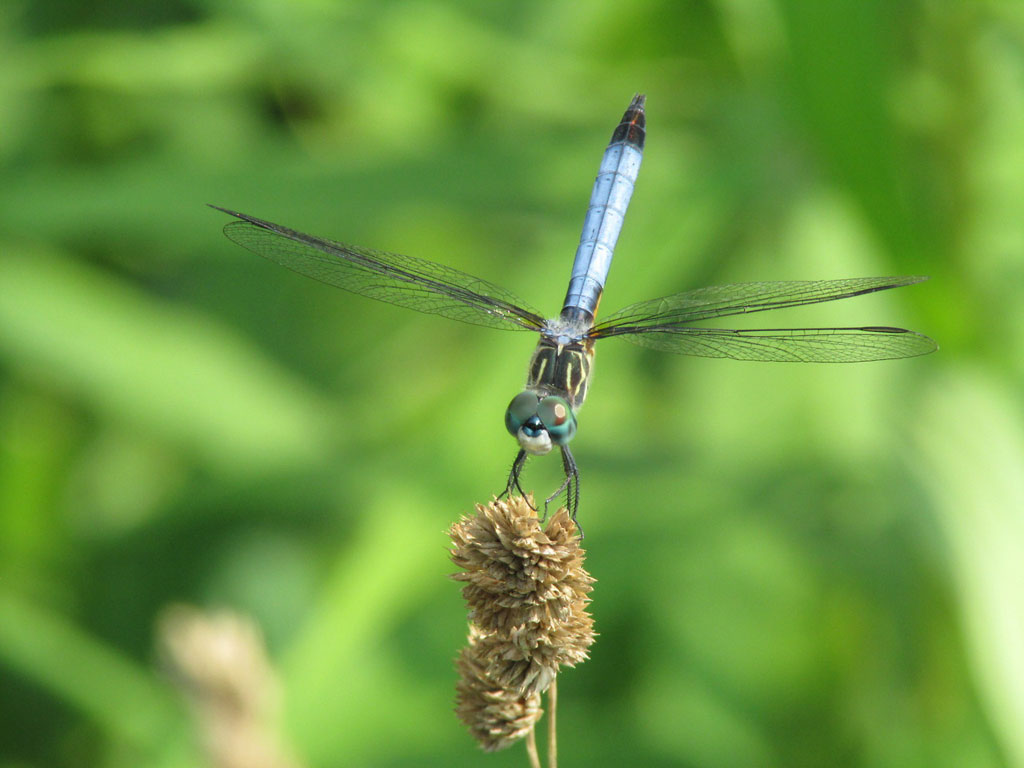
Common name: Blue Dasher, Fishers Island, NY, July 2017

Scientific name: Pachydiplax longipennis 

Not a moth, but too beautiful to omit. The blue dasher is one of the more common dragonflies in the eastern U.S. and one of the most striking. Like many dragonflies, this species is sexually dimorphic, meaning that the appearance of the individual depends on its gender. Only males develop bright blue abdomens, whereas females have an orange-and-black pattern instead. This is a fully mature male.

When adults perch, they tend to raise their abdomens in the air in what is known as the “obelisk” position. This is believed to be an effective way to minimize heat by allowing more wind to pass over the abdomen.
July 25, 2016 36 views
moth
FI Moths

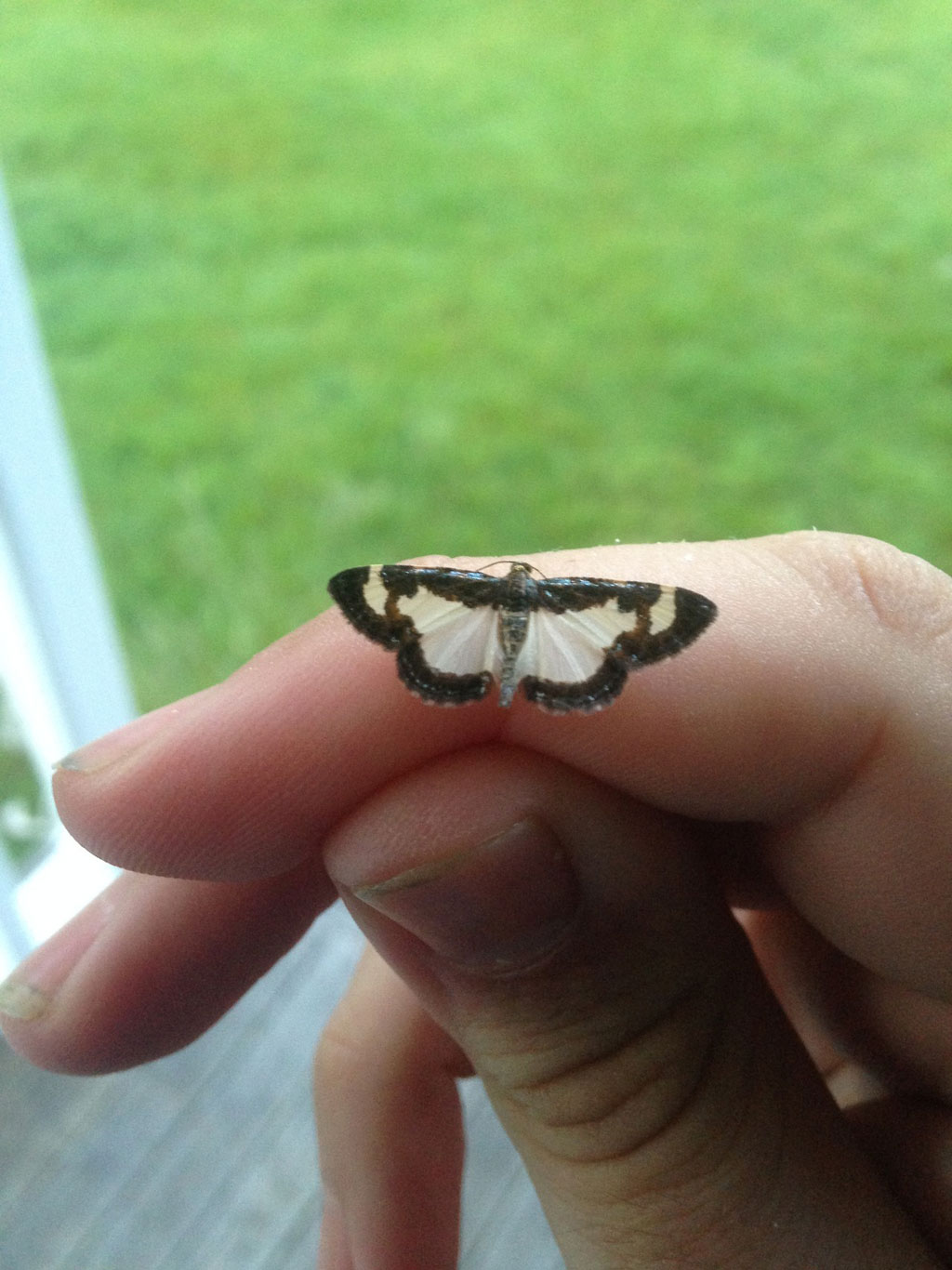
Common Spring Moth

by Betty Ann Rubinow July 20, 2016

mothCommon name: Common spring moth, Fishers Island NY, June 2017

Scientific name: Heliomata cycladata

Season: March-July

Food:  Black locust and honey locust.

Ecology: As the name implies, these moths are common to see during the spring and into July through the Mid-Atlantic. Although small, they are quite beautiful.

July 20, 2016 34 views
moth
FI Moths

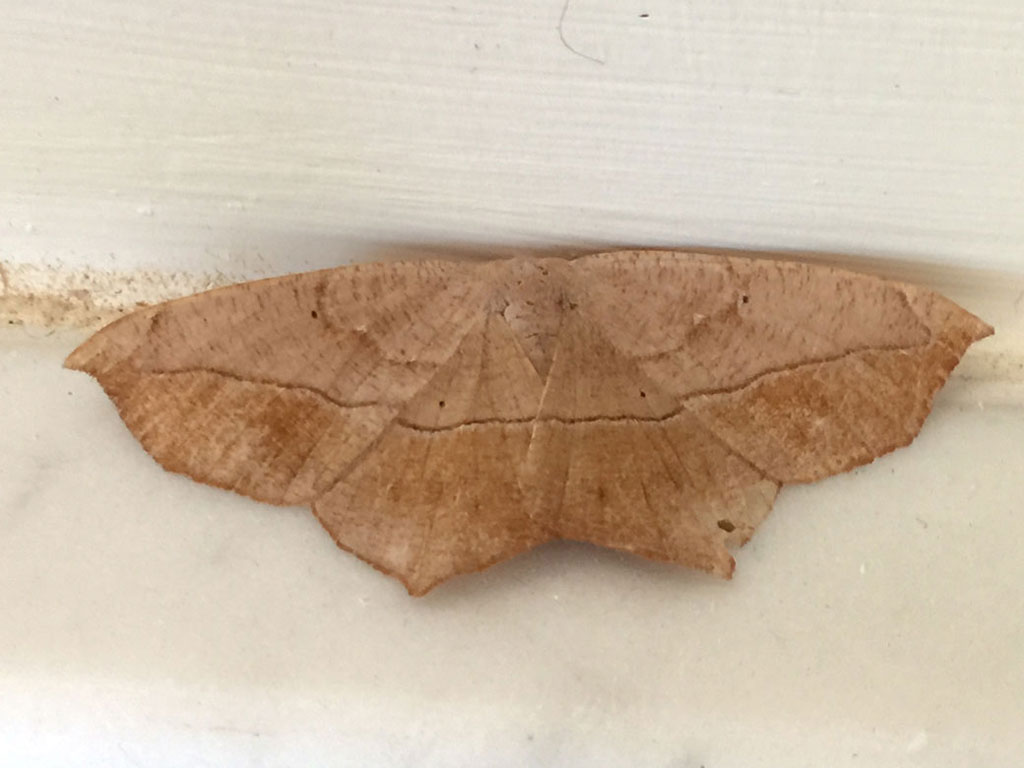
Curve-toothed Geometer

by Betty Ann Rubinow July 15, 2016

moth

Common name: Curved-toothed geometer

Scientific name: Eutrapela clemataria

Food: Larvae feed on leaves of ash, basswood, birch, elm, fir, maple, poplar, willow and other trees.

Ecology: These geometers live in deciduous and mixed woodlands. Their scientific name derives from the Ancient Greek “measure” “the earth” in reference to the way their larvae, or inchworms, appear to “measure the earth” as they move along in a looping fashion. The geometer has two generations a year and is part of a very large family of around 23,000 species of moths.

Lucinda Herrick Photo, July 2018

July 15, 2016 47 views
monarch butterfly caterpillar
FI Moths

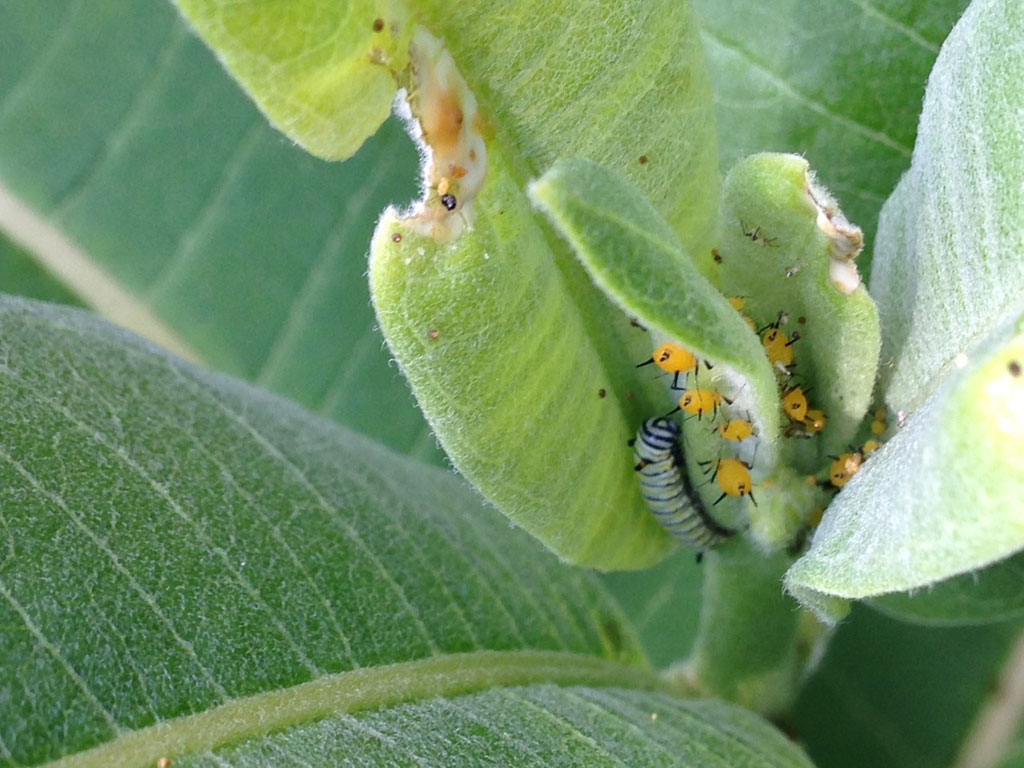
Monarch Butterfly Caterpillar and Aphids

by Betty Ann Rubinow July 10, 2016

monarch butterfly caterpillar Monarch butterfly caterpillar and aphids, Fishers Island NY, August 2015

Scientific names: Danaus plexippus and Aphis nerri

Here’s a bit of hidden moth science, provided by entomologist Adam Mitchell, PhD:

Like animals, plants have an “immune system” and have a series of finely-tuned responses to specific stressors in their environment. When a leaf is chewed, signals are sent to the plant to create defenses that prevent further feeding. When, for example, a caterpillar chews on a leaf, the production of a hormone called jasmonic acid (JA) signals that kind of response. In contrast, when an insect feeds on the vascular (xylem-phloem) tissue of a plant, such as an aphid, a different signal is sent, and a different hormone is produced. This one is called salicylic acid (SA).

Generally, these different signals allow plants to focus specific defenses against specific threats. However, the production of one signal can sometimes prevent another. If a plant is already producing salicylic acid, it struggles to produce jasmonic acid. That is, if aphids are already feeding on a plant when a caterpillar begins to chew on the leaves, the plant cannot raise its defenses as effectively against the caterpillar as it usually would, because it’s already producing defenses to defend against the aphid.

July 10, 2016 31 views
moth
FI Moths

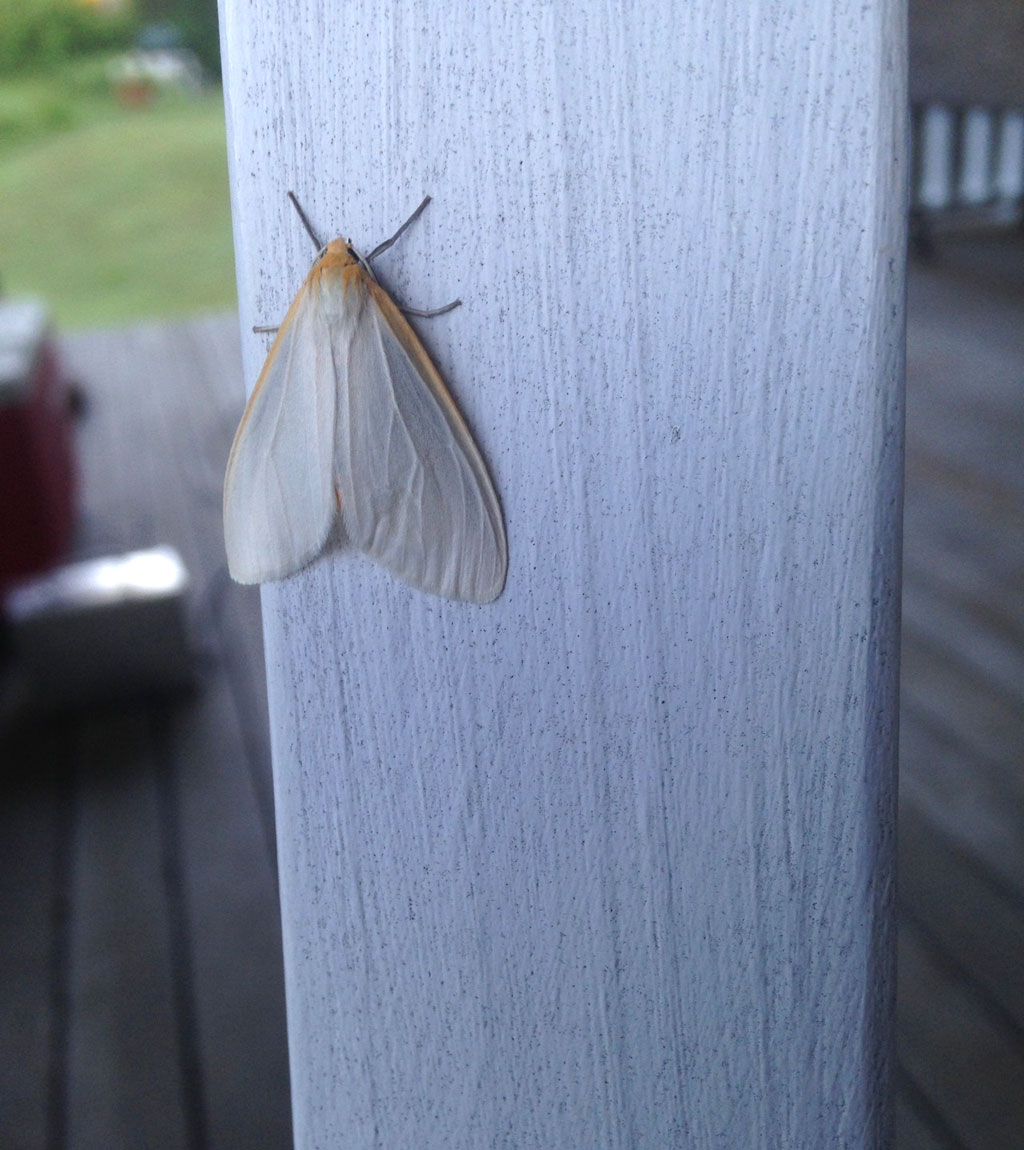
Delicate Cycnia

by Betty Ann Rubinow July 5, 2016

moth

Common name: Delicate cycnia or dogbane tiger moth, Fishers Island NY, June 2017

Scientific name: Cycnia tenera

Season: Two generations in the Northeast, with adults in late spring into June and again in the fall.

Food: Caterpillars feed on milkweeds and dogbanes, but they feed on older, mature leaves, as opposed to monarch caterpillars, which feed on younger, tender leaves.

Ecology: Although lacking stripes or spots, this moth belongs to same family as tiger moths. Males emit a “clicking” sound from their thorax for mating and also in flight. These clicks actually “jam” the echolocation of bats, preventing predators from being able to effectively find the moths.

July 5, 2016 43 views
moths
FI Moths

Eastern Tent Caterpillar

by Betty Ann Rubinow July 1, 2016

moths

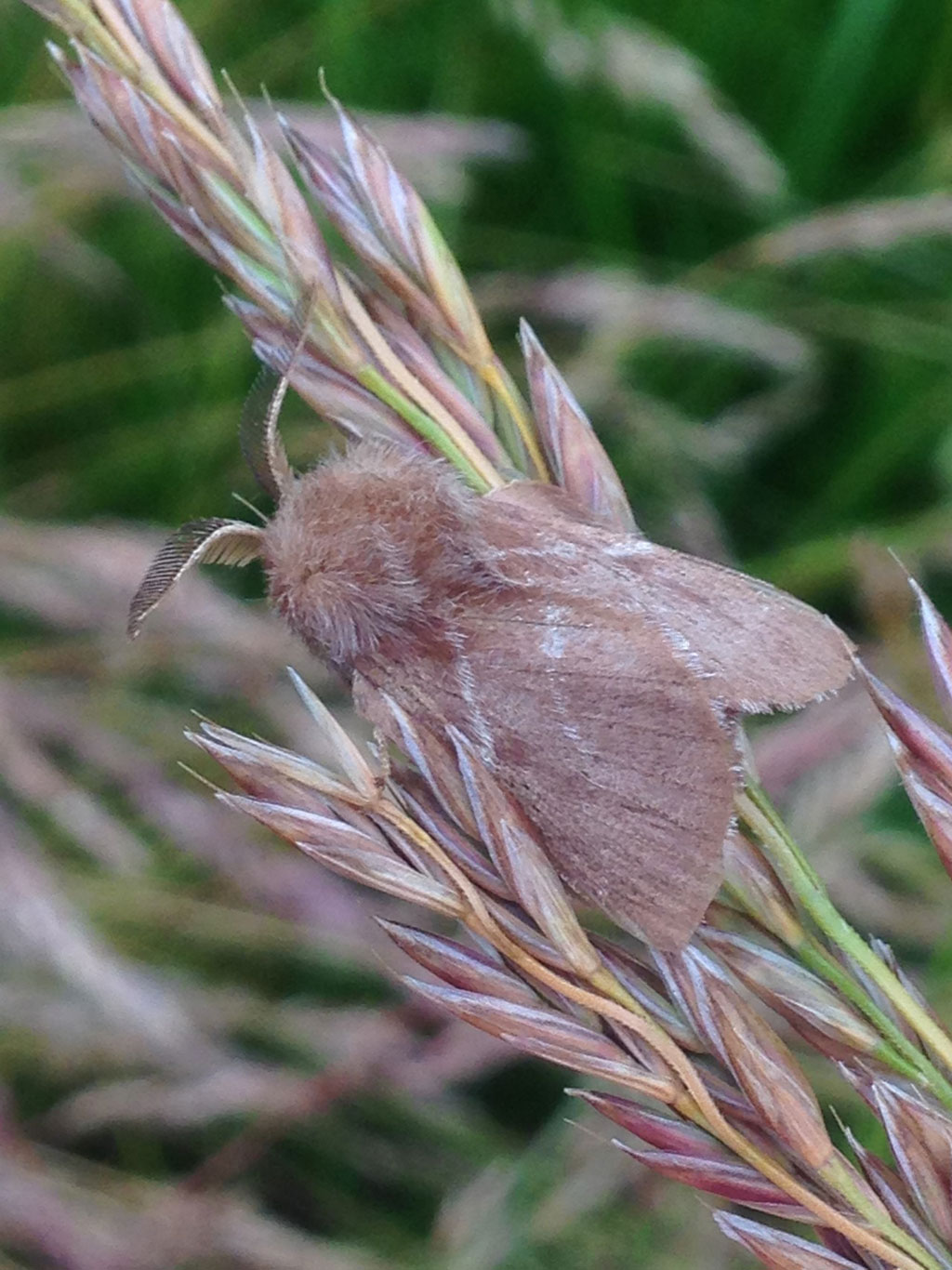
Common Name: Eastern tent caterpillar moth

Scientific Name: Malacosoma americana

Season: One generation, with caterpillars appearing first in April into late May, and adults by June.

Food: Caterpillars feed primarily on cherry trees, but may build nests on apple and crabapple as well.

Ecology*: As the name implies, the caterpillars of this moth form a silken nest in the crotch of tree branches, where caterpillars rest and molt. Caterpillars that leave the nest “scout” for leaves to feed from, dragging a trail of silk behind them that other caterpillars will follow. When the caterpillars reach their final molt, they leave the nest to pupate, and may be found several plants away from their actual host plant.

*Contrary to popular belief, a nest of tent caterpillars in your cherry tree will not outright kill the plant, and within a month’s time, trees recover. Adults produce a spongy mass of eggs on twigs of their host plant, which will overwinter.

July 1, 2016 32 views
moth nest
FI Moths

Eastern Tent Caterpillar Moth Nest

by Betty Ann Rubinow June 25, 2016

moth nest

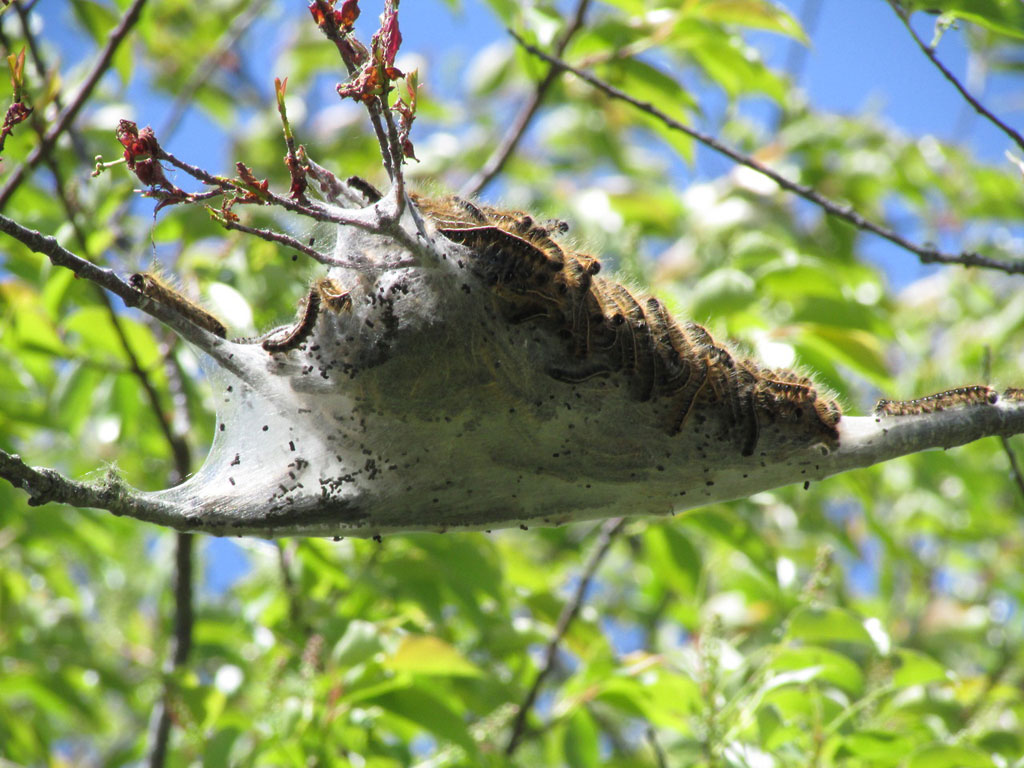
Common Name: Eastern tent caterpillar moth

Scientific Name: Malacosoma americana

Season: One generation, with caterpillars appearing first in April into late May, and adults by June.

Food: Caterpillars feed primarily on cherry trees, but may build nests on apple and crabapple as well.

Ecology*: As the name implies, the caterpillars of this moth form a silken nest in the crotch of tree branches, where caterpillars rest and molt. Caterpillars that leave the nest “scout” for leaves to feed from, dragging a trail of silk behind them that other caterpillars will follow. When the caterpillars reach their final molt, they leave the nest to pupate, and may be found several plants away from their actual host plant.

*Contrary to popular belief, a nest of tent caterpillars in your cherry tree will not outright kill the plant, and within a month’s time, trees recover. Adults produce a spongy mass of eggs on twigs of their host plant, which will overwinter.

June 25, 2016 29 views
moth
FI Moths

Eyed Paectes

by Betty Ann Rubinow June 20, 2016

moth

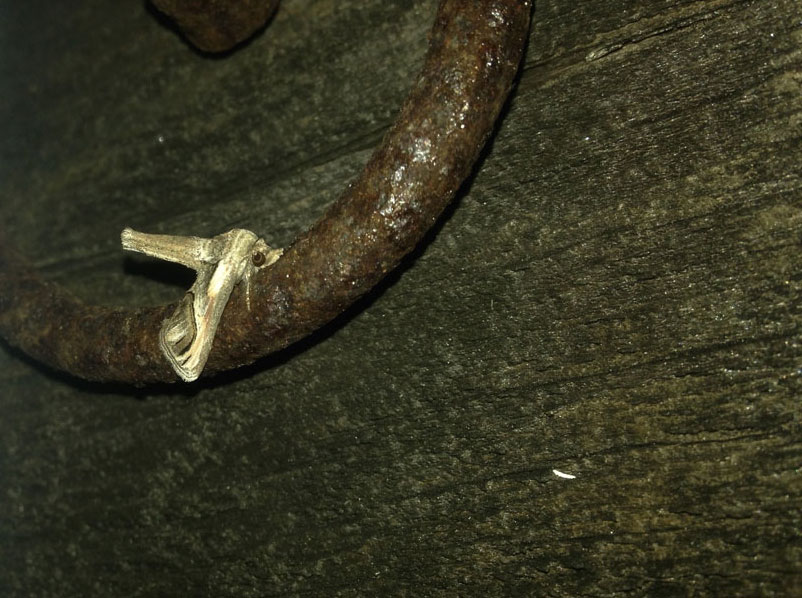
Common name: Eyed paectes, Fishers Island, NY, June 2017

Scientific name: Paectes oculatrix

Season: There are multiple generations of eyed paectes in the Northeast, with adults present by April through the fall.

Food: As caterpillars, they feed exclusively on poison ivy.

Ecology: Eyed paectes hold their abdomens upward while resting, which, in this photo, makes it appear as if they are T-shaped.

June 20, 2016 26 views
moth
FI Moths

Giant Leopard Moth

by Betty Ann Rubinow June 10, 2016

moth

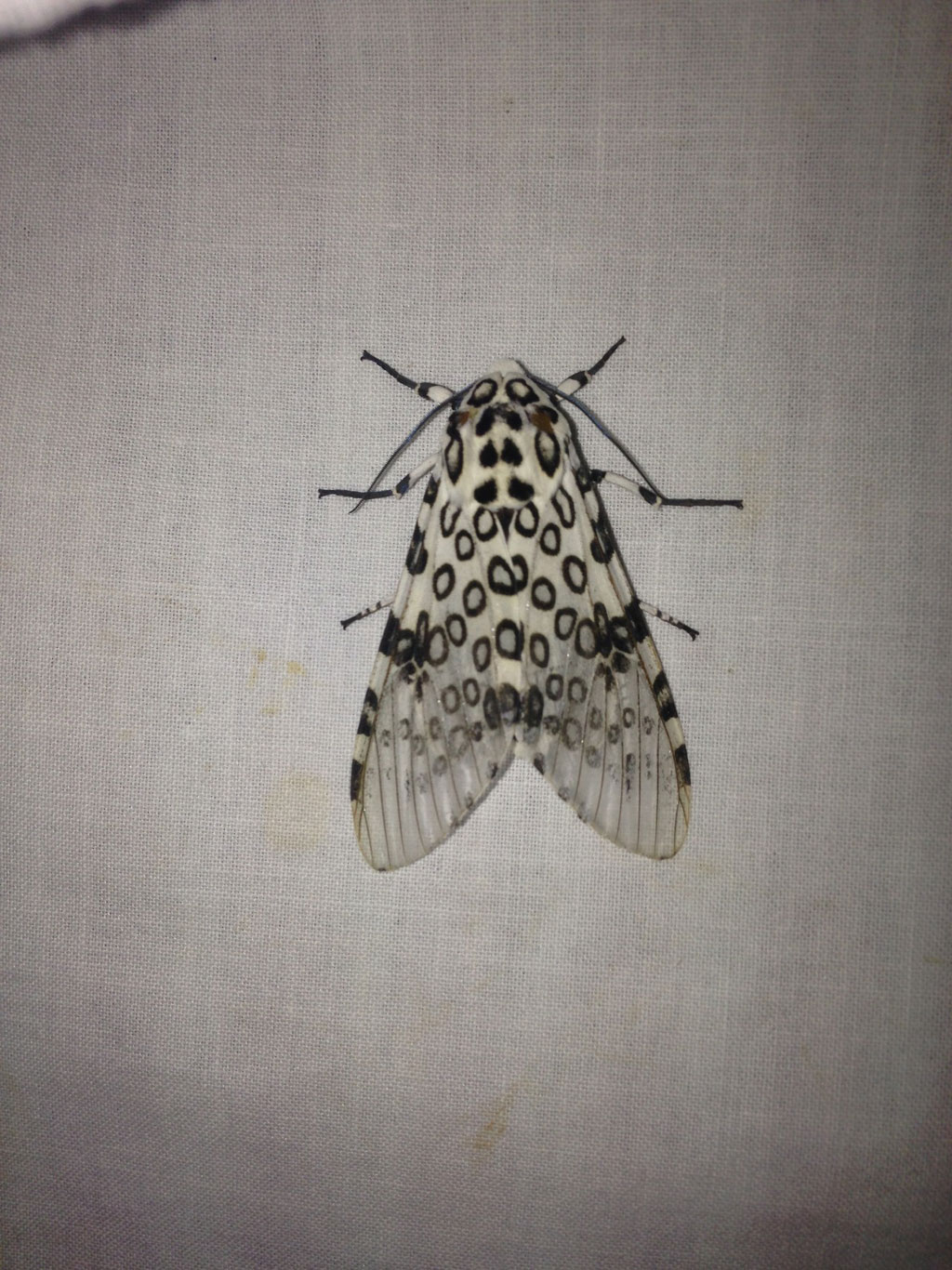
Common name: Giant Leopard Moth

Scientific name: Hypercompe scribonia, Fishers Island NY. June 2017.

Season: One generation a year in the Northeast, with adults in June, caterpillars through the summer and over the winter, then turn into pupae the following spring.

Food: A variety of broadleaf plants, such as dandelions and violets.

Ecology: A large moth, with a wingspan of three inches, lives up to its name, having many spots akin to a leopard. It has a beautiful metallic blue and orange abdomen hiding beneath its large wings. Mating sessions last more than 24 hours. When startled, the moth may emit yellow drops of liquid from the sides of its body. This is believed to be a defense against predators (who might taste the liquid and find the moth disgusting!).

June 10, 2016 33 views
moth
FI Moths

Grapeleaf Skeletonizer

by Betty Ann Rubinow June 5, 2016

moth

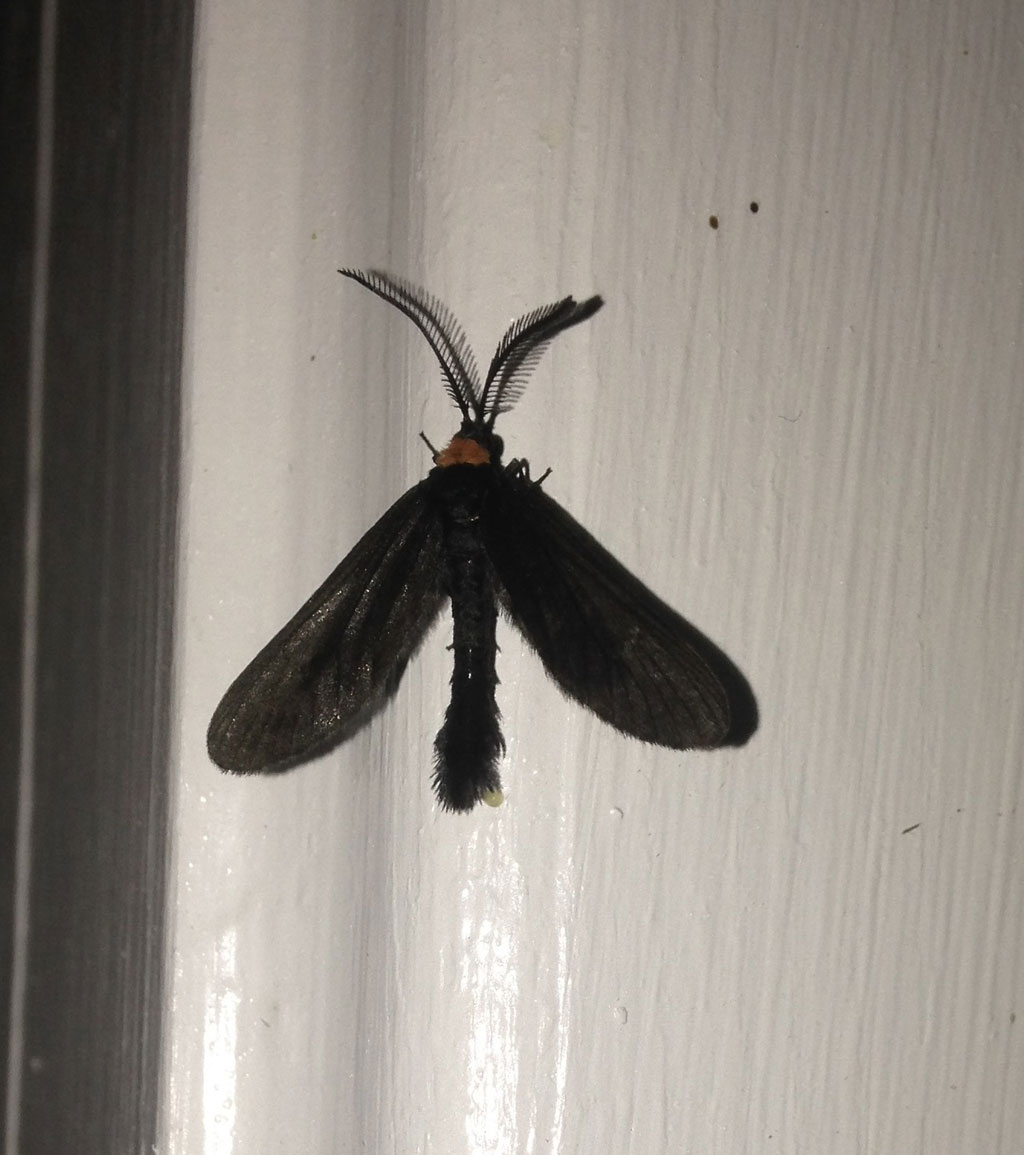
Common name: Grapeleaf skeletonizer, Fishers Island NY, June 2017

Scientific name: Harrisina americana

Season: At least two generations in the Northeast.

Food: Adults feed on grape leaves and the nectar of many flowers.

Ecology: Caterpillars are gregarious feeders (i.e., feed together in large groups) and are able to defoliate grapes, eating grape leaves down to the stems. They can be occasional pests in the Northeast, especially for vineyards. Otherwise, they are a welcome addition to the forest.

June 5, 2016 28 views
Newer Posts
Older Posts

Upcoming Events

Notice
There are no upcoming events.

Keep in touch

Facebook Instagram Youtube

Recent Posts

  • What to Do if You Find a Stranded Animal

  • Update on Phragmites Work and New Wetlands Regulations

  • SPOTTED in New London!

  • 2025 Fall Migratory Bird Count Results

  • Fall 2025 Migratory Bird Count

  • FIRST Summer Highlights 2025

  • Shorebirds Take Flight- The 2025 Season Wrap-Up

  • Buzz Be Gone- Final Spray of the Season

  • Silver Eel–Race Point Coastal Trail Opens with Dedication to Janet Harvey

  • August Shorebird Update

Explore

    • Home
    • Who We Are
    • What We Do
    • How To Help
    • News
    • Events

Connect

    • Join Us
    • Donate
    • Contact Us
Facebook Instagram Youtube
© 2026 All Right Reserved. Fishers Island Conservancy
Fishers Island Conservancy
  • Home
  • Who We Are
    • Our Mission
    • Our History
    • Our People
    • Contact Us
  • What We Do
    • Shorebird Monitoring
    • Annual Bird Counts
    • Marine Debris Clean Up
    • Island Sentinels
    • Research and Survey Team
    • Grassland Restoration
    • Mosquito Control
    • Invasive Plant Management
  • How To Help
    • Donate
    • Join Us
  • News
  • Events
    • Calendar