Fishers Island Conservancy
  • Home
  • Who We Are
    • Our Mission
    • Our History
    • Our People
    • Contact Us
  • What We Do
    • Shorebird Monitoring
    • Annual Bird Counts
    • Marine Debris Clean Up
    • Island Sentinels
    • Research and Survey Team
    • Grassland Restoration
    • Mosquito Control
    • Invasive Plant Management
  • How To Help
    • Donate
    • Join Us
  • News
  • Events
    • Calendar
Tuesday, April 14, 2026
Fishers Island Conservancy
  • Home
  • Who We Are
    • Our Mission
    • Our History
    • Our People
    • Contact Us
  • What We Do
    • Shorebird Monitoring
    • Annual Bird Counts
    • Marine Debris Clean Up
    • Island Sentinels
    • Research and Survey Team
    • Grassland Restoration
    • Mosquito Control
    • Invasive Plant Management
  • How To Help
    • Donate
    • Join Us
  • News
  • Events
    • Calendar
Fishers Island Conservancy
  • Home
  • Who We Are
    • Our Mission
    • Our History
    • Our People
    • Contact Us
  • What We Do
    • Shorebird Monitoring
    • Annual Bird Counts
    • Marine Debris Clean Up
    • Island Sentinels
    • Research and Survey Team
    • Grassland Restoration
    • Mosquito Control
    • Invasive Plant Management
  • How To Help
    • Donate
    • Join Us
  • News
  • Events
    • Calendar
Copyright 2026 - All Right Reserved
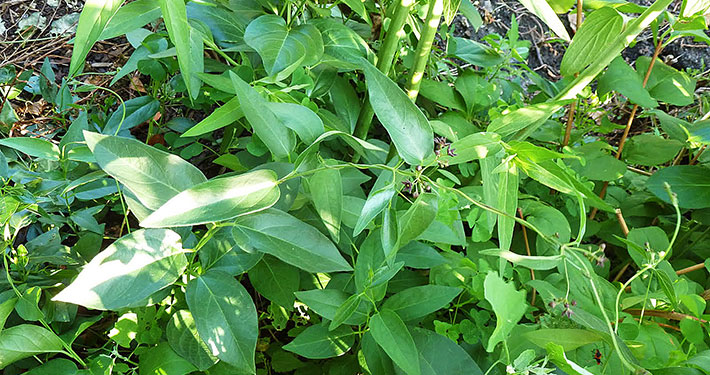
Black Swallow-wort
Invasive Plants

Black swallow-wort

by fic0n5erv August 23, 2017

(Vincetoxicum nigrum)

Description: These vines have shiny dark green leaves that are oval-shaped when mature, with stems that tend to twine around one another. The plant has very small, purple flowers with five petals. Swallow-worts develop milkweed-like pods by August that turn brown and split open in the fall, releasing fluffy seeds that are dispersed by wind. Unlike milkweed, however, they do not produce milky sap.

Impact: Black swallow-worts grow rapidly in open fields and roadsides where there is sun, pushing out native plants. The plant secretes toxins that prevent other plants from growing near them, as well as being toxic to livestock and pets. Of chief concern is its effect on the monarch butterfly, which recognizes the plant as its primary plant host, milkweeds. When monarchs lay their eggs on swallow-worts, their caterpillars eat the plant and die. Swallow-worts grow in habitats shared by milkweeds, outcompete milkweeds and may lead to a decline in monarch butterfly populations.

Management: Control depends entirely on removing swallow-worts before they can reproduce seeds. Cutting down to the stem and painting with herbicide is effective, but cutting or mowing without applying herbicide afterwards will only encourage regrowth. With large infestations, foliar herbicides can be used in early June and again in August. Seed pods should be removed and either burned or bagged, not composted. Management of black swallow-wort may be necessary for multiple summers to deal with younger shoots, but it will be much easier to handle after the initial treatment.
August 23, 2017 20 views
Porcelain berry
Invasive Plants

Porcelain berry

by fic0n5erv August 23, 2017

(Ampelopsis brevipedunculata)

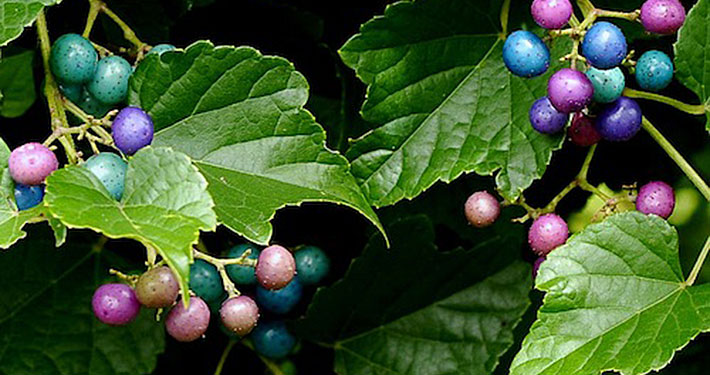
Description: Public enemy number one! This woody vine resembles grape leaves early in summer, but mature leaves will develop deep lobes. The vines can be broken easily by hand, while grape vines are very difficult to snap without tools. As the name implies, porcelain berry produces brilliant berries in late summer and fall that resemble porcelain, and one of the reasons it was introduced into the horticulture trade until it became invasive.

Impact: Porcelain berry forms thick mats in open fields and forests, covering plants at such a rate that they can rapidly block out sunlight and kill the plants underneath. Birds will also eat the berries during their migration, but the fruits are not as nutritious as native plants and so birds have to make more frequent stops to refuel.

Management: A large, thick mat of porcelain berry can often be traced back to a single root, and killing the taproot is key. You can easily pull this year’s growth out of trees by hand, and cut down towards the base of the stem with trimmers or loppers. Either remove the taproot through digging or painting the cut stems with herbicide to kill the plant. Removing porcelain berry before it fruits will help reduce regrowth.

August 23, 2017 18 views
yellow shouldered slug moth
FI Moths

Yellow-shouldered slug

by fic0n5erv August 17, 2017

yellow shouldered slug moth

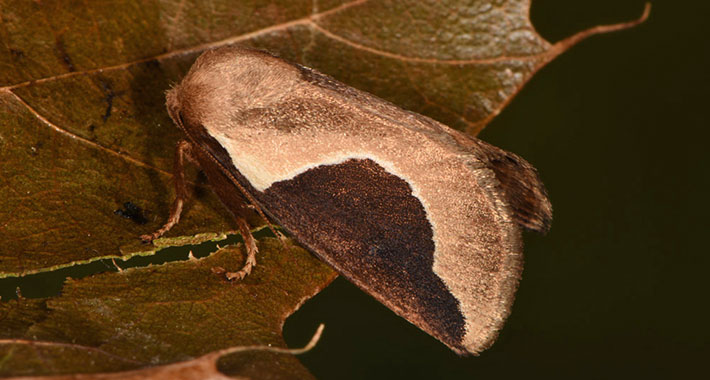
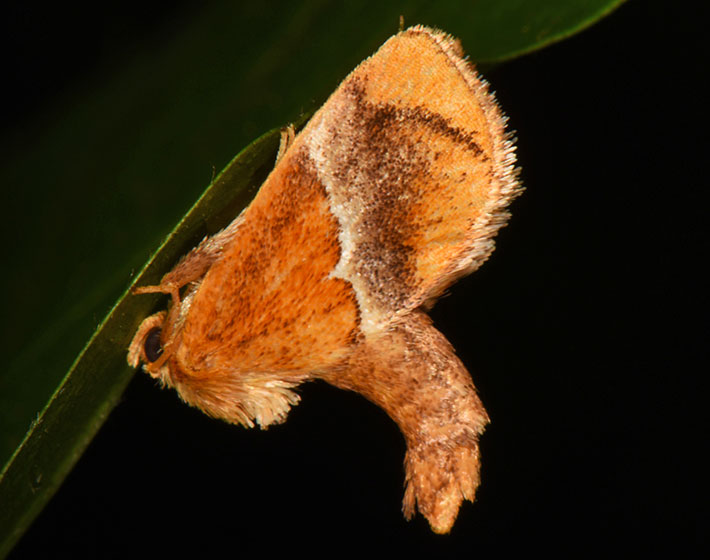
Common Name: Yellow-shouldered slug

Scientific Name: Lithacodes fasciola

Season: One generation, with adults in early summer and caterpillars by July.

Food: Many deciduous trees, including apple, basswood, beech, birch, blueberry, cherry, chestnut, hickory, locust, maple, oak, and willow.

Ecology: Like many individuals in this family, caterpillars of the yellow-shouldered slug do not resemble caterpillars at all, but rather appear like slugs, with their heads projected down towards the ground and transparent bodies. This is one of the most common type of slug caterpillar encountered in the eastern US, feeding on the underside of leaves in woodlands and forest edges. Adults commonly come to lights at night, and have a strange habit of turning their abdomens up in the air like a tail when at rest. Caterpillars overwinter as pupae.

Doug Tallamy Photo

August 17, 2017 19 views
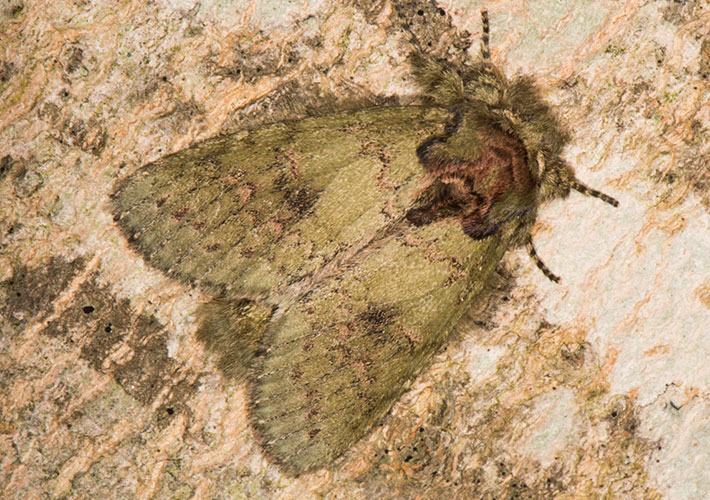
wavy line heterocampa moth
FI Moths

Wavy-lined heterocampa

by fic0n5erv August 17, 2017

wavy line heterocampa moth

Common Name: Wavy-lined heterocampa

Scientific Name: Heterocampa biundata

Season: One generation a year, with adults by June and caterpillars by July.

Food: Many deciduous woody plants, including basswood, beech, birch, cherry, hickory, maple, oak, walnut, willow, and witch hazel. Oak seems preferred in New England.

Ecology: Early molts of the wavy-lined heterocampa caterpillar sprout antler-like projections on their pronotum (the “shoulder” of the insect), but are harmless. Later molts will appear like the chewed edge of a leaf, which it uses to hide from birds looking for an easy meal. Adults, in comparison, appear dark and mossy, allowing them to blend in against the bark of trees. In the fall, caterpillars will turn reddish and overwinter, turning to pupae in the spring.

Doug Tallamy Photo

August 17, 2017 15 views
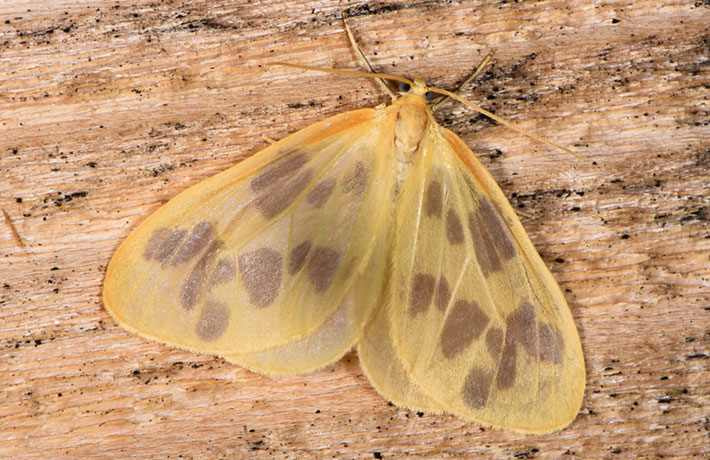
the beggar moth
FI Moths

The Beggar

by fic0n5erv August 17, 2017

the beggar moth

Common Name: The Beggar

Scientific Name: Eubaphe mendica

Season: Two generations, with caterpillars common by June.

Food: Maples and violets. Adults do not feed.

Ecology: This moth has nearly clear wings with very few scales, and bare patches that resemble holes in a beggar’s clothes, which is how the moth received its name. As a caterpillar, the beggar looks very much like a twig, and will use this camouflage to protect itself from being viewed as bird food. Caterpillars overwinter as pupae.

Doug Tallamy Photo

August 17, 2017 28 views
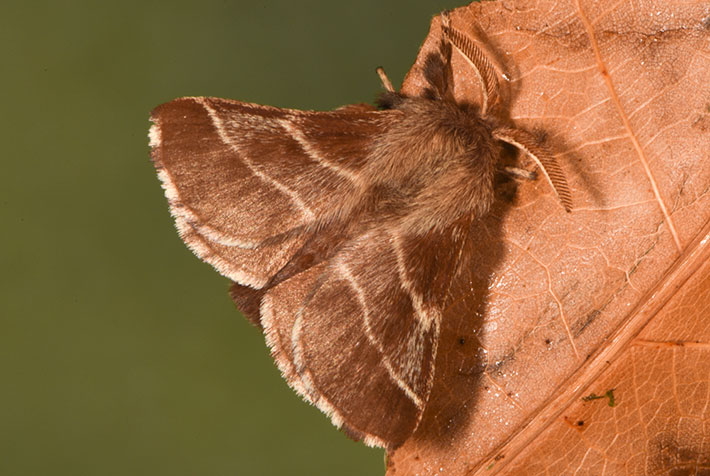
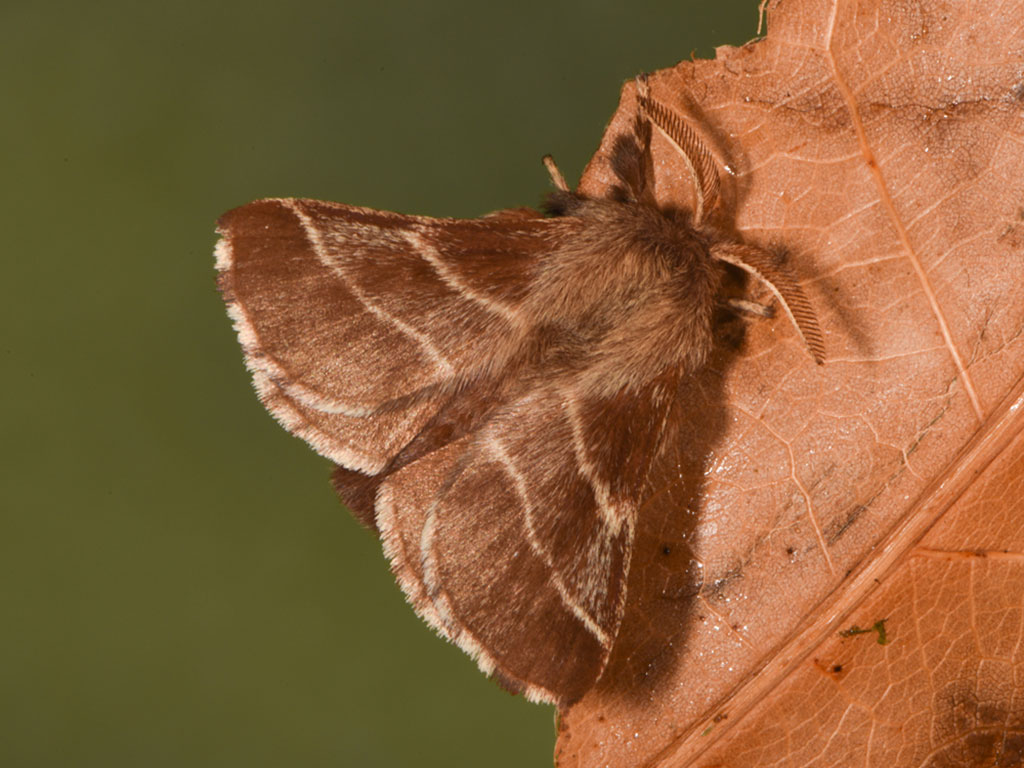
Eastern tent caterpillar
FI Moths

Eastern Tent Caterpillar Moth

by fic0n5erv August 17, 2017

Eastern Tent Caterpiller

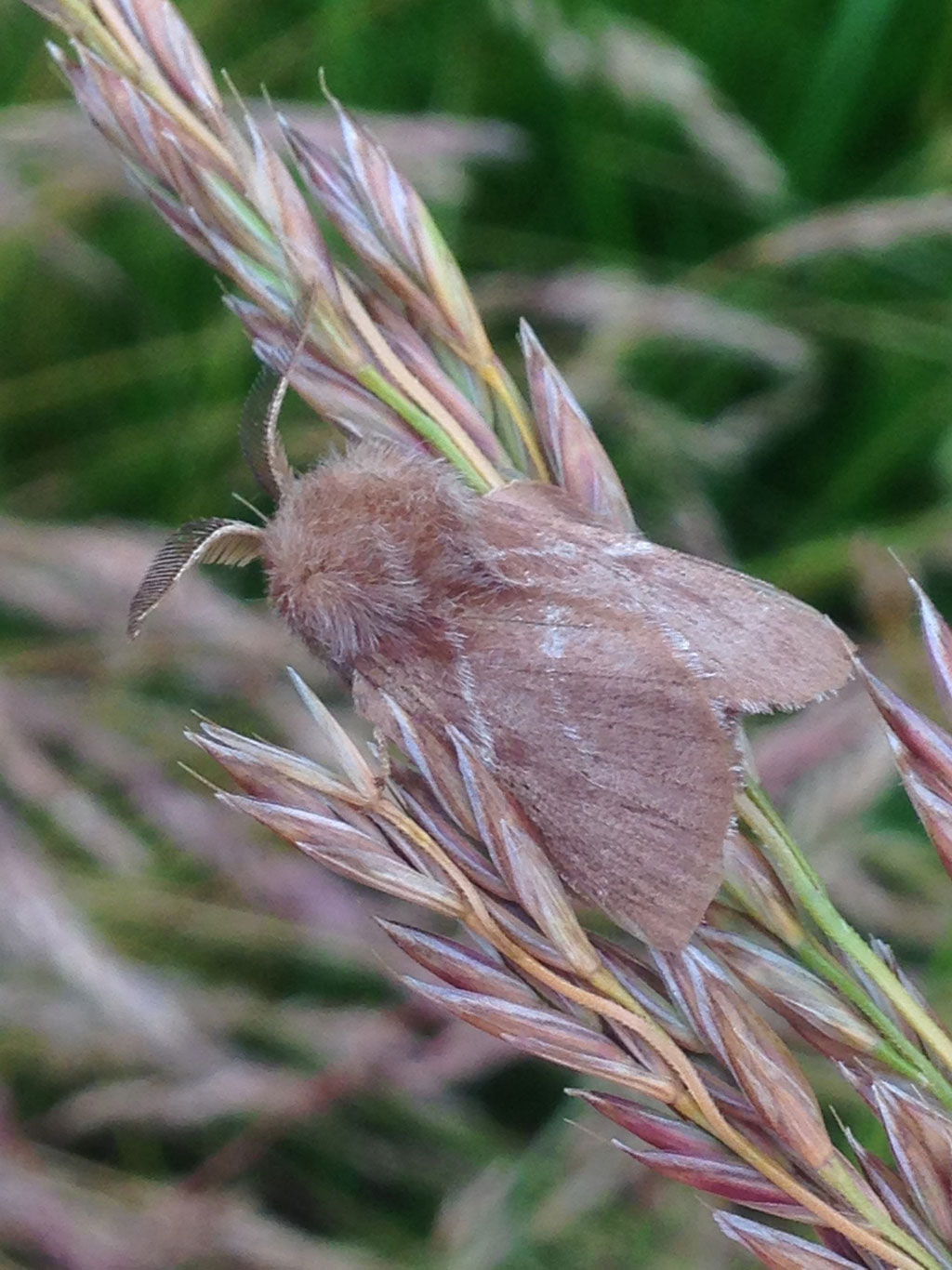
Common Name: Eastern tent caterpillar moth

Scientific Name: Malacosoma americana

Season: One generation, with caterpillars appearing first in April into late May, and adults by June.

Food: Caterpillars feed primarily on cherry trees, but may build nests on apple and crabapple as well.

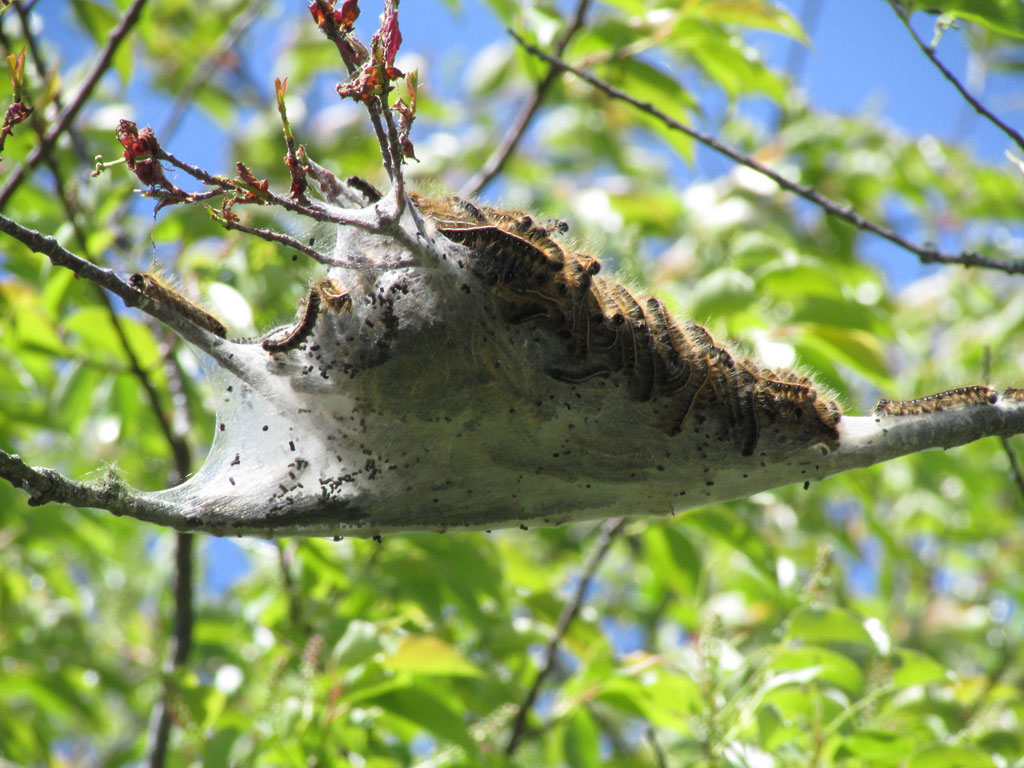
Ecology: As the name implies, the caterpillars of this moth form a silken nest in the crotch of tree branches, where caterpillars rest and molt. Caterpillars that leave the nest “scout” for leaves to feed from, dragging a trail of silk behind them that other caterpillars will follow. When the caterpillars reach their final molt, they leave the nest to pupate, and may be found several plants away from their actual host plant. Contrary to popular belief, a nest of tent caterpillars in your cherry tree will not outright kill the plant, and within a month’s time, trees recover. Adults produce a spongy mass of eggs on twigs of their host plant, which will overwinter.

Doug Tallamy Photo

caterpillar nest

Trees have adapted to eastern tent caterpillar nesting activity: Leaves will return after this nesting stage is completed. Adam Mitchell Photo

moth

Another view of eastern tent caterpillar moth. Adam Mitchell Photo

August 17, 2017 23 views
skiff moth
FI Moths

Skiff moth

by fic0n5erv August 17, 2017

skiff moth

Common Name: Skiff moth

Scientific Name: Prolimacodes badia

Season: One generation, with adults from May to June and caterpillars by July.

Food: Caterpillars feed on a variety of woody plants, including birch, blueberry, cherry, chestnut, oak, poplar, and willow.

Ecology: The common name of the moth refers to the shape of this caterpillar, whose shape bears resemblance to a boat, or skiff. Caterpillars have small white spots that resemble dead leaf tissue, helping them hide on the undersides of leaves from predators. Unlike other caterpillars of this family, which sting when touched, the skiff moth caterpillar releases foul smelling liquid when alarmed. Caterpillars overwinter as pupae.

Doug Tallamy Photo

August 17, 2017 30 views
Schinia florida moth
FI Moths

Primrose Moth

by fic0n5erv August 17, 2017

Schinia florida moth

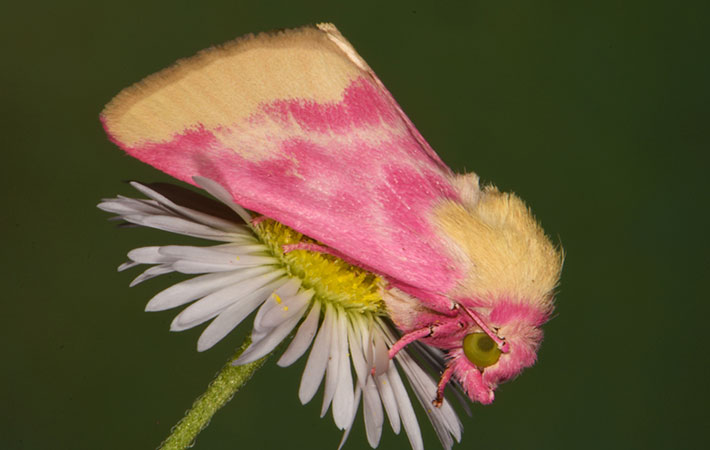
Common Name: Evening primrose flower moth

Scientific Name: Schinia florida

Season: One generation a year, with caterpillars from late July into September. Adults are present by June.

Food: Evening primrose

Ecology: Caterpillars of this moth prefer to feed on flowers and seed capsules of their host plant rather than leaves. Caterpillars will bore a hole into the seed pod and eats its way through until the pod is hollow. One can often find the bodies of these caterpillars sticking out of flower buds and seed pods as a result. The adults hide during the day by pushing themselves into partially closed flowers. Caterpillars overwinter as pupae.

Doug Tallamy Photo

August 17, 2017 28 views
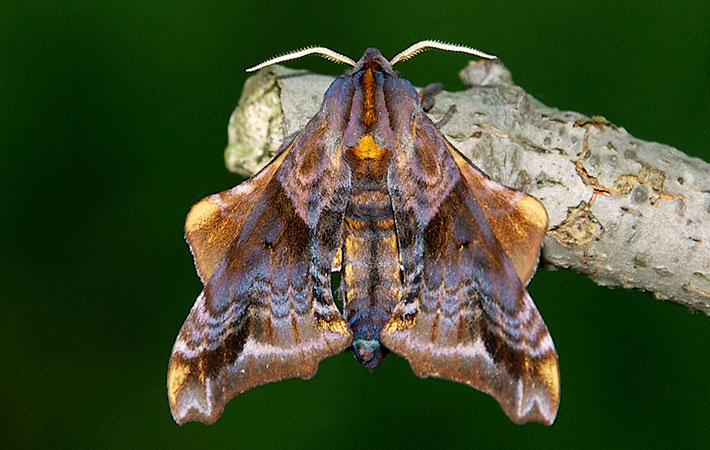
Paonias myops moth
FI Moths

Small-eyed sphinx

by fic0n5erv August 17, 2017

Paonias myops moth

Common Name: Small-eyed sphinx

Scientific Name: Paonias myops

Season: Two generations in New England, with adults by April and again in July; caterpillars by May and again in August.

Food: Cherry, hawthorn, and shadbush.

Ecology: Caterpillars are nocturnal, feeding during the night and hiding on damaged leaves or near the base of branches to avoid predation. Caterpillars seem to avoid new leaves and feed on older branches so as to not expose themselves. In contrast, the adults are quite conspicuous, bearing large eyespots on their hindwings that may startle nocturnal predators and give the adults a chance to escape. Caterpillars overwinter as pupae.

Doug Tallamy Photo

August 17, 2017 28 views
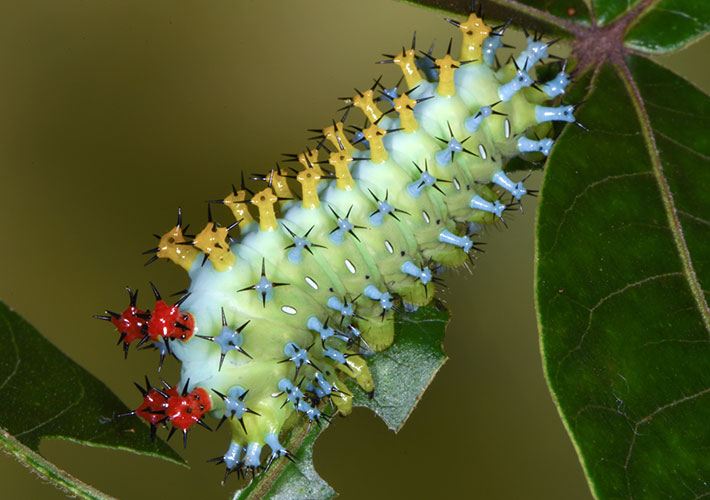
Hyalophora cecropia moth
FI Moths

Cecropia moth caterpillar

by fic0n5erv August 17, 2017

Hyalophora cecropia moth

Common Name: Cecropia moth, Robin moth

Scientific Name: Hyalophora cecropia

Season: One generation a year in New England, with adults flying late May into June, and caterpillars from June into the fall.

Food: Many different woody plants in the Northeast: alder, ash, basswood, birch, cherry, dogwood, elm, hawthorn, maple, oak, poplar, wax myrtle, and willow.

Ecology: One of the largest moths in the US, with a very large caterpillar to boot. Unfortunately, this species of moth is in decline, due to a parasitic fly that was initially released to handle gypsy moths, as well as loss of native host plants. Although caterpillars appear to have spikes on their body, they do not sting. Caterpillars will move to the base of host plants and form silken bag cocoons, where they will overwinter.

Doug Tallamy Photo

August 17, 2017 23 views
Newer Posts
Older Posts

Upcoming Events

Notice
There are no upcoming events.

Keep in touch

Facebook Instagram Youtube

Recent Posts

  • What to Do if You Find a Stranded Animal

  • Update on Phragmites Work and New Wetlands Regulations

  • SPOTTED in New London!

  • 2025 Fall Migratory Bird Count Results

  • Fall 2025 Migratory Bird Count

  • FIRST Summer Highlights 2025

  • Shorebirds Take Flight- The 2025 Season Wrap-Up

  • Buzz Be Gone- Final Spray of the Season

  • Silver Eel–Race Point Coastal Trail Opens with Dedication to Janet Harvey

  • August Shorebird Update

Explore

    • Home
    • Who We Are
    • What We Do
    • How To Help
    • News
    • Events

Connect

    • Join Us
    • Donate
    • Contact Us
Facebook Instagram Youtube
© 2026 All Right Reserved. Fishers Island Conservancy
Fishers Island Conservancy
  • Home
  • Who We Are
    • Our Mission
    • Our History
    • Our People
    • Contact Us
  • What We Do
    • Shorebird Monitoring
    • Annual Bird Counts
    • Marine Debris Clean Up
    • Island Sentinels
    • Research and Survey Team
    • Grassland Restoration
    • Mosquito Control
    • Invasive Plant Management
  • How To Help
    • Donate
    • Join Us
  • News
  • Events
    • Calendar