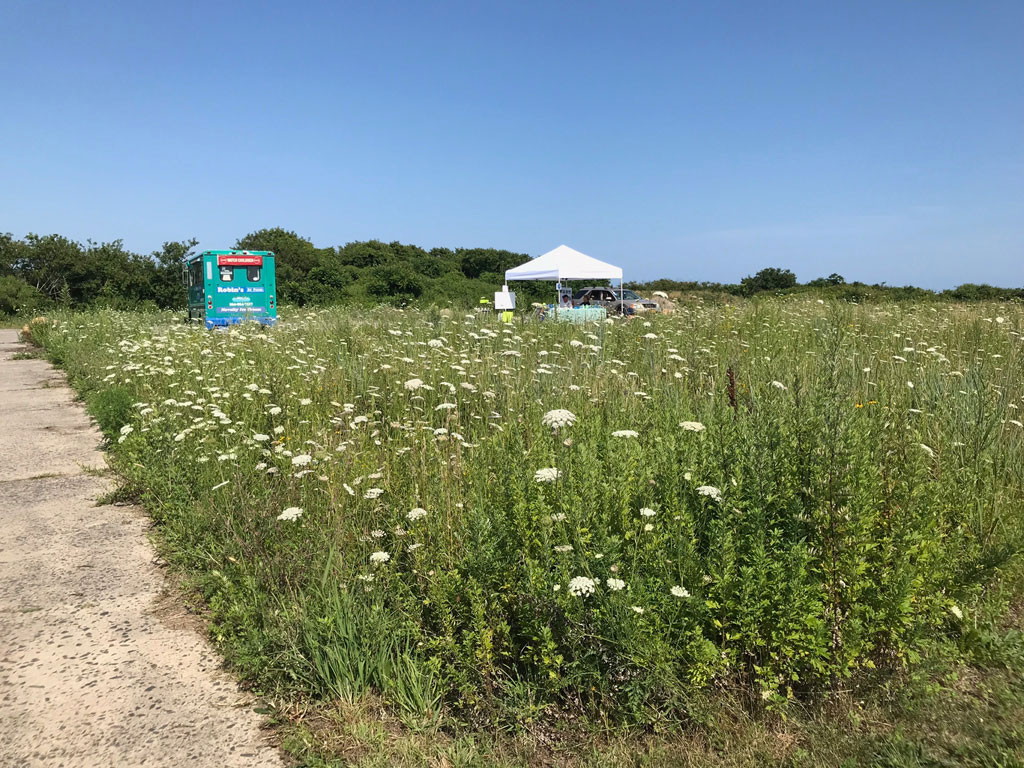
Fishers Island’s native grass meadows, grown from “Fishers Island Seed Mix”, were on full display for “Conservation on Parade” Aug. 3 in the Parade Grounds. FIConservancy Photo
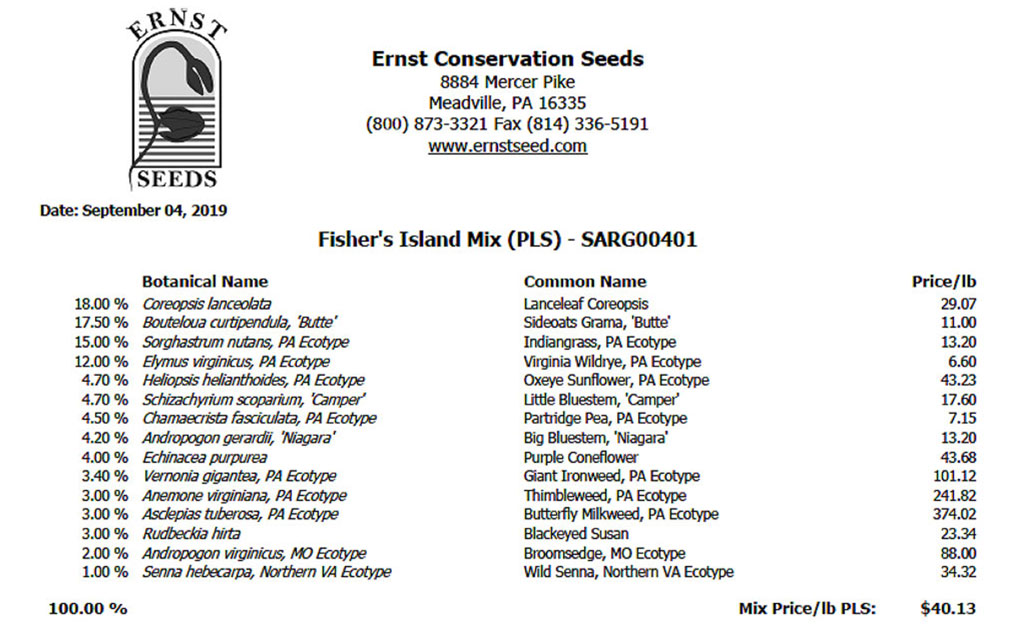
There have been numerous requests for “Fishers Island Seed Mix” used in FIConservancy’s grassland restoration project on the Parade Grounds and adjacent to South Beach and Elizabeth Airport.
Ernst Conservation Seeds, the largest native seed producer and supplier in the eastern United States, created a custom blend for Fishers Island. The seeds are listed below. Butterfly milkweed, however, is out of stock but will be available in the spring.
Seeds can be planted from mid-to-late October or in the spring. Call 800-873-3321 for further information. Learn more about planting meadows at the Ernst website: www.ernstseed.com>Planting Guides>Uplands, Meadows & Pollinator Planting Guide and www.ernstseed.com>Life Cycle of a Meadow.
Betsy Conger: 2019 Conservation on Parade
Betsy Conger writes:
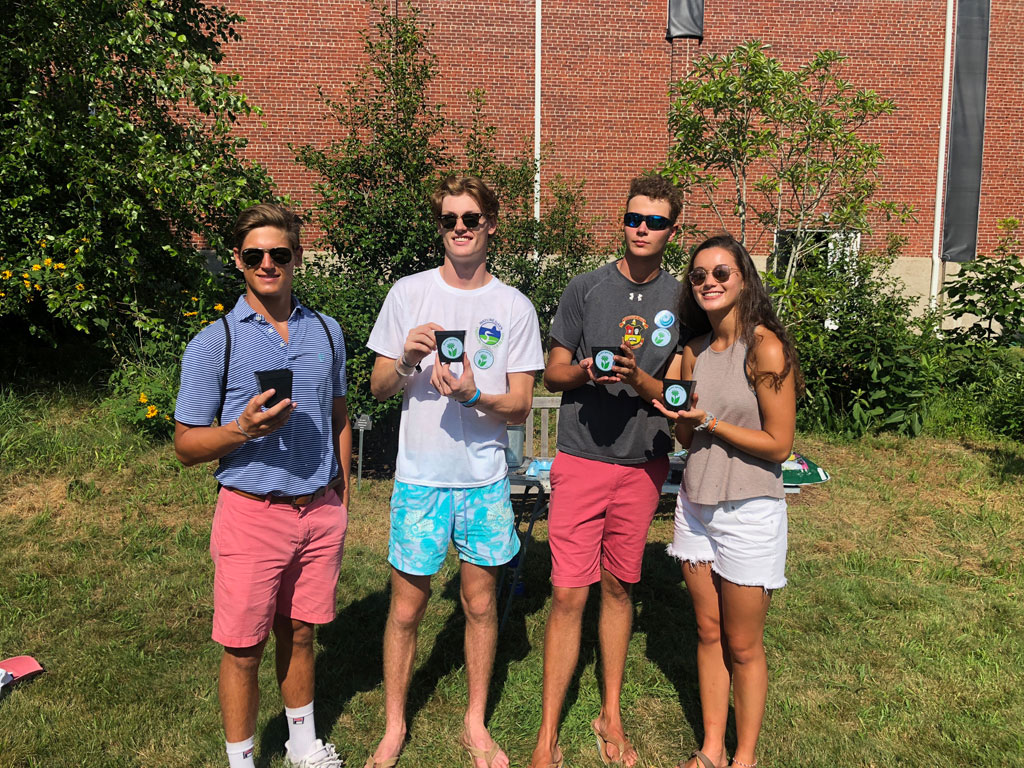
One of my favorite days last August was when the Island Sentinels had the opportunity to participate in FIConservancy’s “Conservation on Parade”.
The event ran from 3-6 p.m. at the Parade Grounds and was attended by a large number of Island residents of all ages. The day began with answering questions from our Fishers Island Community about being a Sentinel.
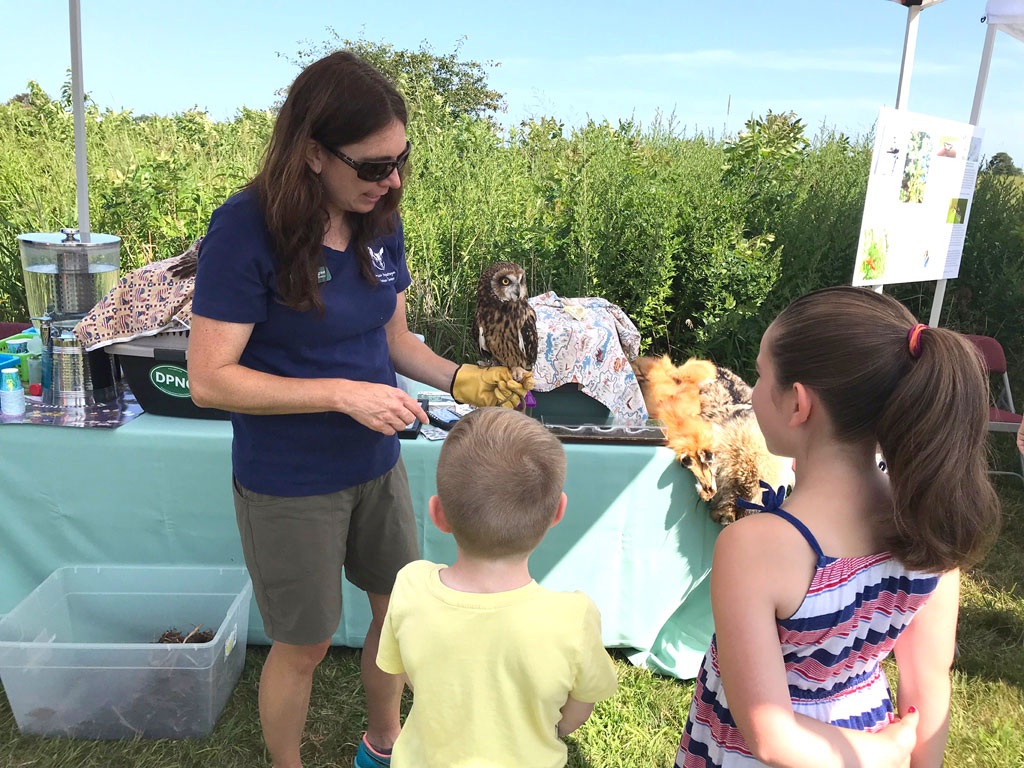
Many hands-on educational nature stations were set up for all to visit. My favorite was the close-up meeting with a real owl, sponsored by the Denison Pequotsepos Nature Center.
A great time was had by all…
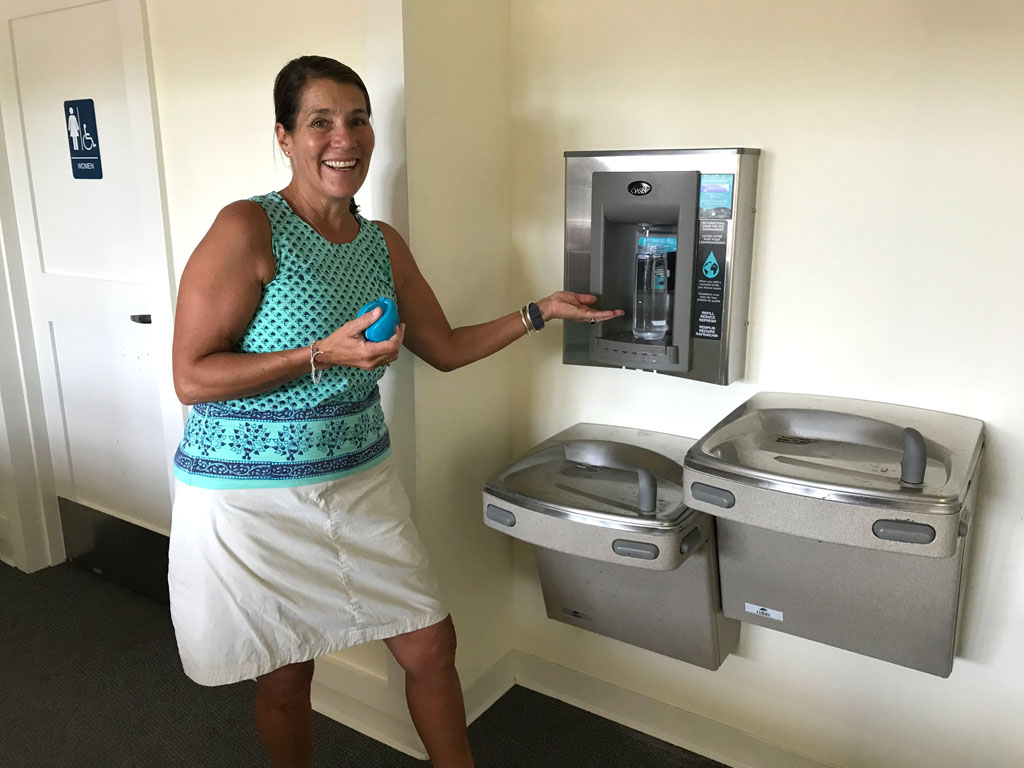
FIConservancy Vice President Jane Harvey fills water bottle from newly installed filtered water filling station on second floor of the Island Community Center.
FIConservancy has purchased two filtered water filling stations in an effort to help Island residents and guests reduce the use of bottled water. The two stations were installed in late August, one on the second floor of the Island Community Center near the fitness room, and the other inside the ferry terminal waiting room.
The community center no longer sells plastic water bottles. Instead, refillable glass water bottles are available for purchase. The community center has reported a positive response to the water filling station.
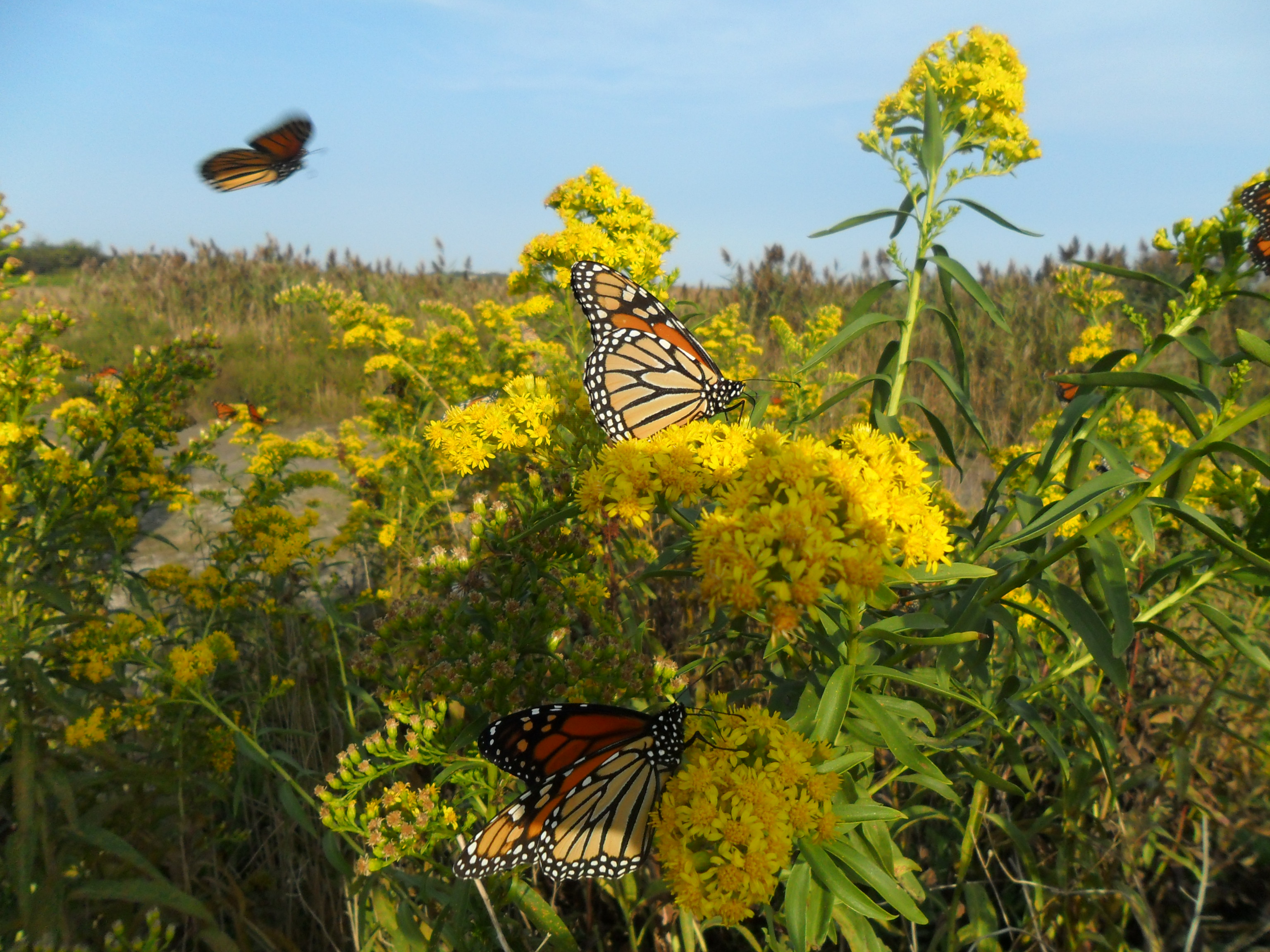
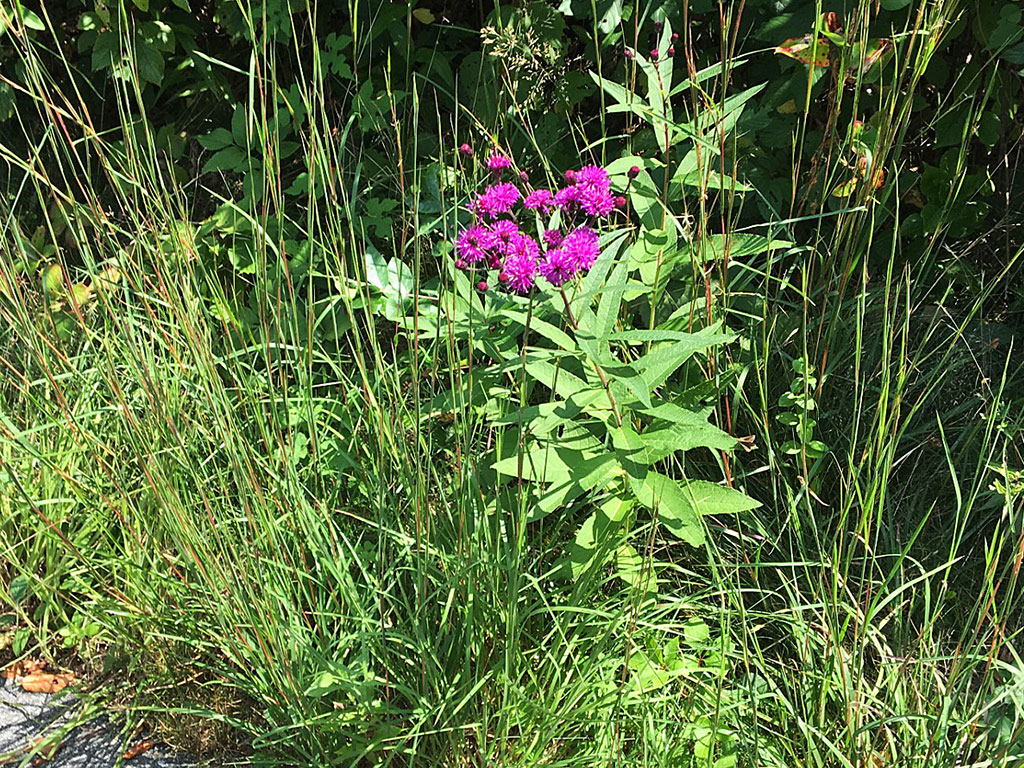
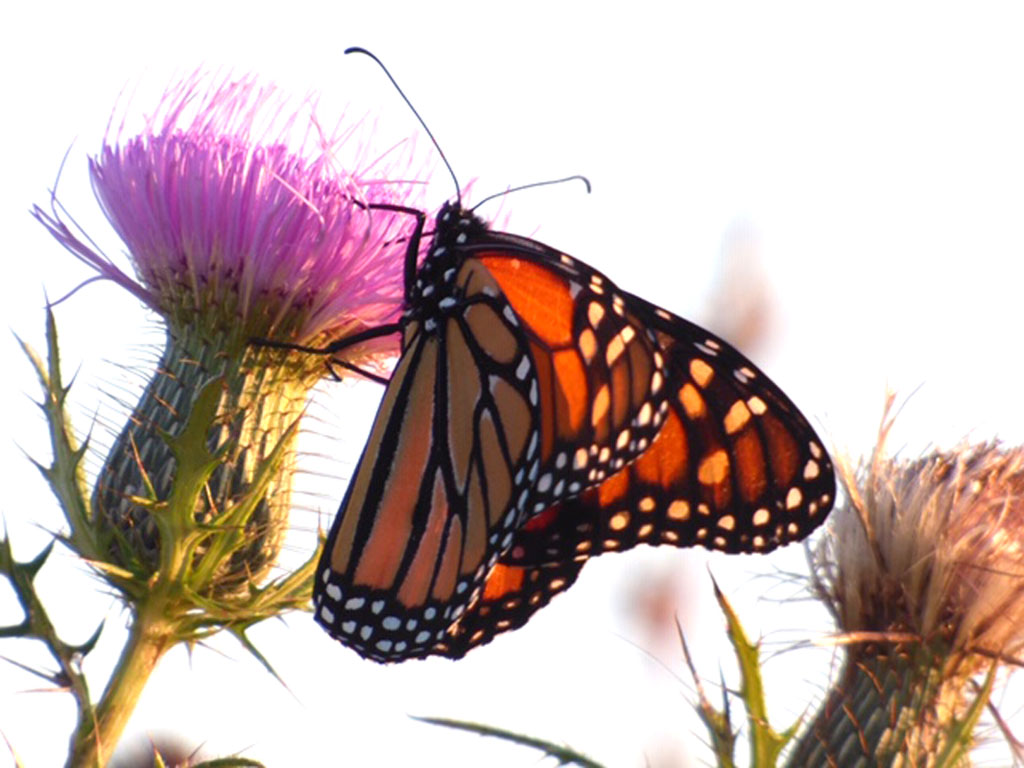
Monarch butterflies in pollinating stage particularly love goldenrod, which is mistakenly thought of as a prime allergen for hay fever sufferers. (Justine Kibbe Photo) Purple ironweed is another monarch butterfly favorite. (FIConservancy Photo)
There is a golden haze over parts of the meadows in FIConservancy’s restored grasslands. The Parade Grounds are filled with yellow goldenrod and purple ironweed, both preferred plants of the monarch butterfly in its pollinating stage.
It’s no wonder that monarch butterflies are attracted to the meadows: Milkweed in early summer for the caterpillar stage, and goldenrod and ironweed in late summer for the butterflies.
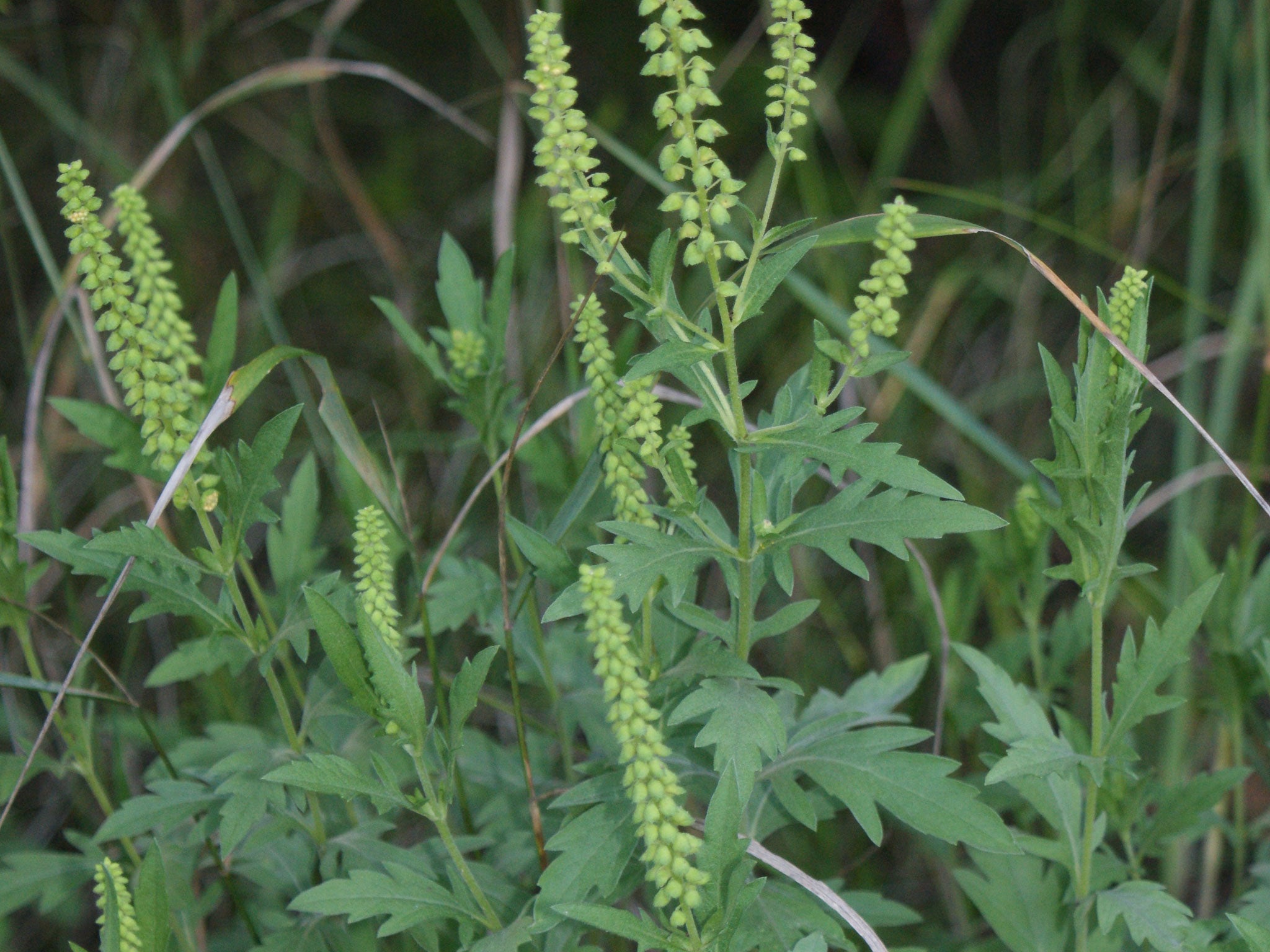
Contrary to popular opinion, goldenrod is not the enemy of hay fever sufferers. Rather, it is the ubiquitous ragweed (image below) that is the serious offender.
Ragweed is the prime source of fall allergies in North America. Independent.uk Photo
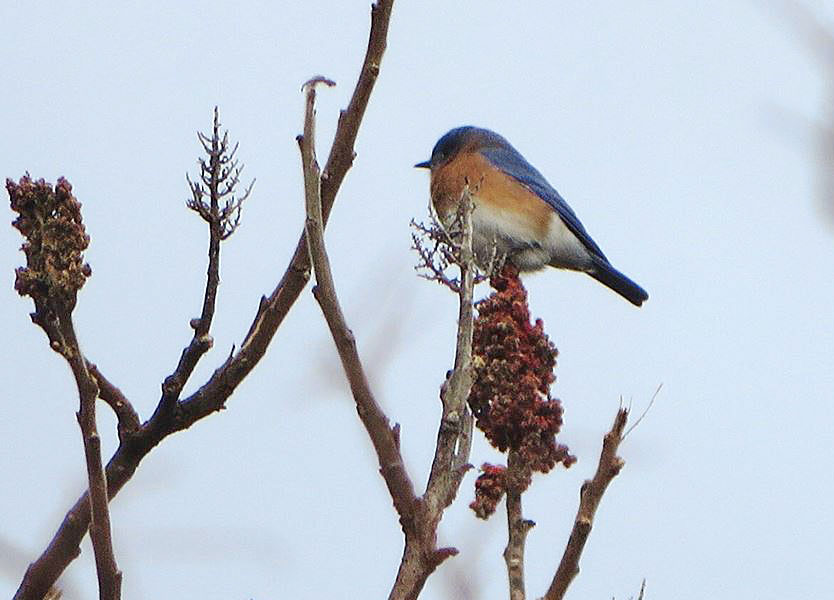
The Eastern bluebird was spotted on Fishers Island in 2017 after a 10-year absence, perhaps because of the return of its preferred meadowland habitat through FIConservancy’s grassland restoration project. John H. Thatcher, Jr. was instrumental in founding FIConservancy. Justine Kibbe Photo
FIConservancy in August received an unexpected gift of $50,000 in memory of John H. Thatcher, Jr., a key founder and longtime president of the Fishers Island Conservancy.
“So much of the good fortune in life that I have enjoyed, with both my family and my career, traces back to the interest that John Thatcher took in me 50 years ago and to the direction he provided,” said the donor, Peter Wendell.
Mr. Wendell grew up in northern New Jersey, a few towns away from Mr. Thatcher’s initial home in Englewood, N.J. In the 1960s and 1970s, Mr. Thatcher was an energetic alumnus for Princeton University and volunteered for the university’s Alumni Schools Committee. He recruited many high school seniors from the area, who subsequently enrolled at Princeton. Mr. Wendell was among that group.
“I never would have considered attending Princeton had it not been for John’s energetic recruitment and, I’m sure, his successful lobbying of the Princeton Admissions Office to admit me!” Mr. Wendell said.
“Since my family did not have the means to pay, Princeton provided a full-tuition scholarship, in addition to a great education, which brought a transformative change to my life. My wife also attended Princeton, as did several of our children and their spouses. With the support of several of my professors at Princeton, I was fortunate to attend Harvard Business School.
“I had not seen John in many years and had never met his wife or family, but when I read of his passing and his deep interest and important role in the Fishers Island Conservancy, it seemed an appropriate place to honor his memory.”
Mr. Wendell’s gift comes at a time when FIConservancy is attempting to demonstrate to the community the critical need to sustain the Island’s natural environment.
“We are so grateful for Peter Wendell’s heartfelt gift to FIConservancy,” said FIConservancy President Tom Sargent. “We are not surprised that John’s influence reached beyond the shores of Fishers Island. His passion still extends to everything that we do here, including the grassland restoration of nearly 170 acres in the Parade Grounds and adjacent to South Beach and Elizabeth Airport into what are now acres of meadows.”
Best Summer Stewardship for Least Tern Shorebirds!
Thank you to our caring and watchful community! With the help of your stewardship, several species of shorebirds are once again thriving on Fishers Island.
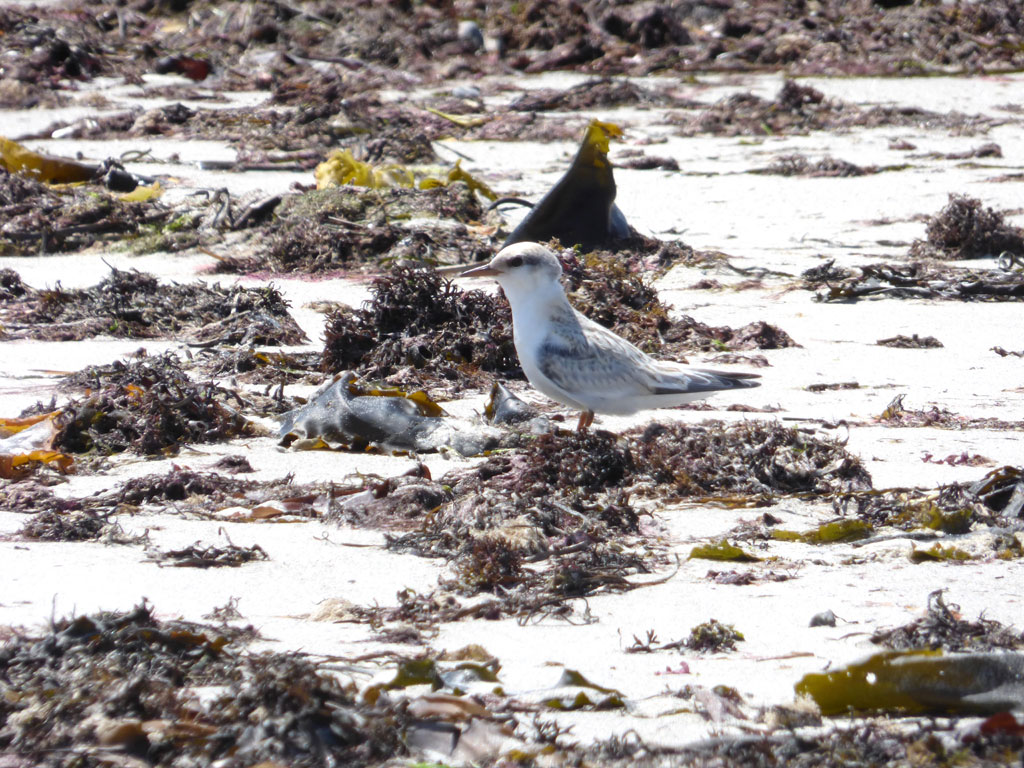
This month, two more least tern chicks successfully hatched and were fed by parents within Sanctuary of Sands, parallel to Elizabeth Field runway. This brings that family of least terns (two pair & one single) to a total of seven birds.
On behalf of FIConservancy, I would like to personally thank every Island resident and visitor who continues to leash dogs and dispose of trash properly within this wonderfully healthy and abundant marine ecosystem that provides critical habitat for our returning shorebirds—now in increasing “numbers” for a tiny island!
With gratitude,
Justine Kibbe, FIConservancy Naturalist
From the Field, Field Note by Justine Kibbe, Aug. 26, 2019
Conservation on Parade 2019
Kim Hargrave, education director at Denison Pequotsepos Nature Center in Mystic, Conn. explains to children how owls can rotate their heads 270 degrees. FIConservancy Photos
Live animals, giant tomato plant-eating caterpillars, birds and butterflies were on display Sat. Aug. 3 at FIConservancy’s second annual “Conservation on Parade”.
Parents and children strolled through meadow paths in the restored grassland of the Parade Grounds visiting white tents that popped up among native grasses and wildflowers. Children learned about living creatures from land and sea, and hopefully learned what happens to marine animals and our coastline when trash is discarded into the sea.
The extra large green caterpillar pictured below is the tobacco hornworm or the Carolina Sphinx moth in its adult form. This caterpillar feeds on plants in the nightshade family, including tobacco, potato and tomato, and was found on a tomato plant in the garden of FIConservancy President Tom Sargent.
The other caterpillar picture below is the milkweed tussock caterpillar. It feeds on tougher, older leaves of milkweed plants. (Monarch butterflies eat younger, tender leaves.) You can touch the milkweed tussock caterpillar, but they are poisonous if ingested.
Children also flocked to the face painting artist who creativity was appreciated by all! (Wes Walters face painting photos)
Thanks to Adam Mitchell, PH.D., assistant professor of entomology at Tarleton State University in Texas, for this information and for participating in this event.
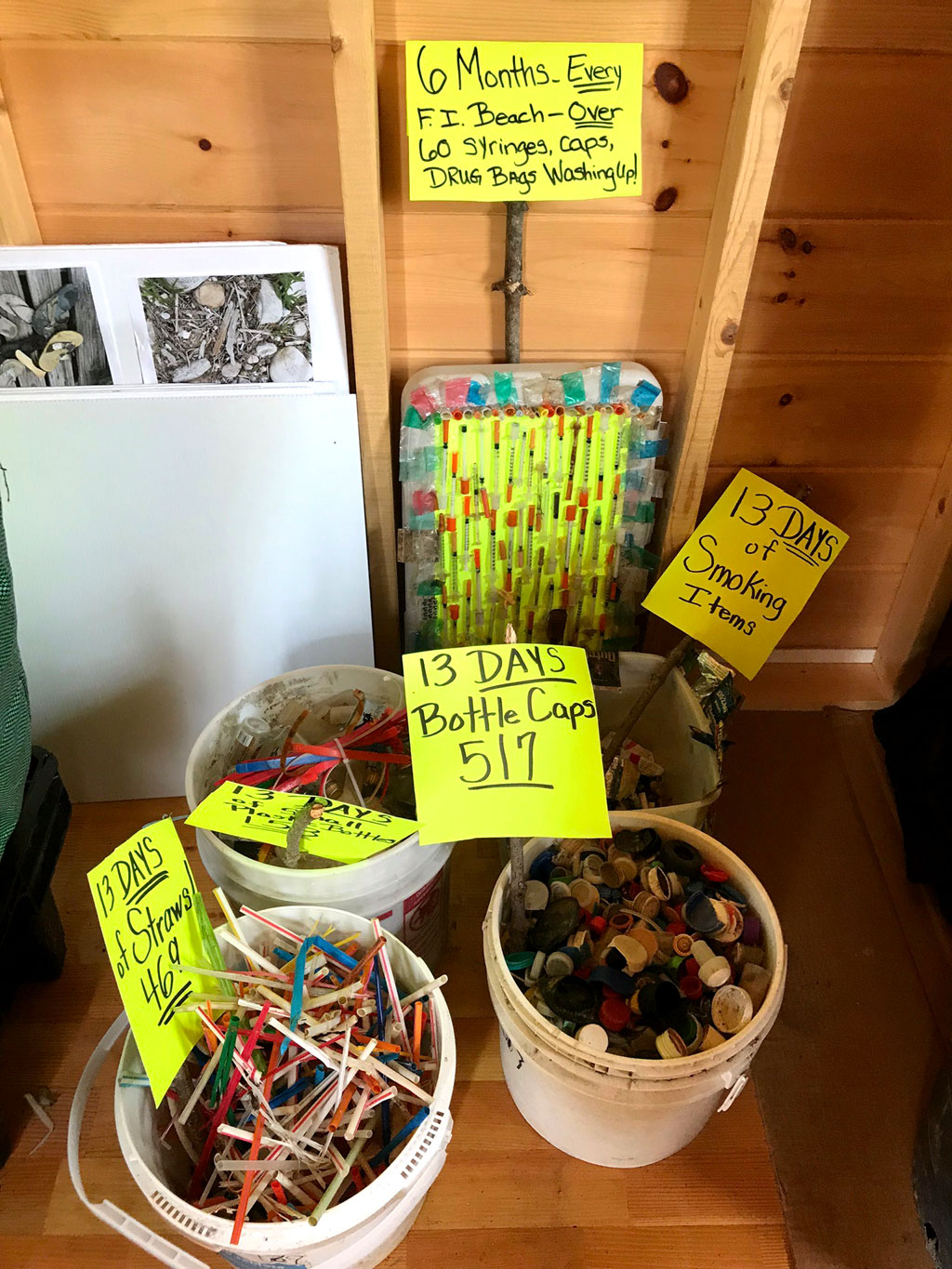
Marine debris organized for display at FIConservancy’s Aug. 3, “Conservation on Parade”.
FIConservancy continues to battle the tide of marine debris and its relentless assault on Fishers Island shores.
“By now, we have all seen the impact of marine debris and the importance of helping to sustain shoreline life. Our beach cleanup program is more important than ever, as we face the growing challenges of protecting and preserving our natural world,” said Kristen Peterson, FIConservancy executive director.
MARINE DEBRIS UPDATE:
January-July 2019:
January, 251 pounds marine debris collected
February, 835.5 pounds marine debris collected
March, 825 pounds marine debris collected
April, 480 pounds marine debris collected
May, 431 pounds marine debris collected
June, 769 pounds marine debris collected
July, 345 pounds marine debris collected
January-June, over 441 hrs work
(January-February: Over 21 syringes collected)
In 2018, FIConservancy removed:
Over 2,000 pounds of beach and coastal debris;
Over 500 plastic bottles;
Over 179 pieces of fishing gear, lines and lures;
Over 172 pieces of line
Over 1,000 pieces (24 pounds) of small plastic (in three hours!)