Fishers Island Conservancy
  • Home
  • Who We Are
    • Our Mission
    • Our History
    • Our People
    • Contact Us
  • What We Do
    • Shorebird Monitoring
    • Annual Bird Counts
    • Marine Debris Clean Up
    • Island Sentinels
    • Research and Survey Team
    • Grassland Restoration
    • Mosquito Control
    • Invasive Plant Management
  • How To Help
    • Donate
    • Join Us
  • News
  • Events
    • Calendar
Saturday, April 11, 2026
Fishers Island Conservancy
  • Home
  • Who We Are
    • Our Mission
    • Our History
    • Our People
    • Contact Us
  • What We Do
    • Shorebird Monitoring
    • Annual Bird Counts
    • Marine Debris Clean Up
    • Island Sentinels
    • Research and Survey Team
    • Grassland Restoration
    • Mosquito Control
    • Invasive Plant Management
  • How To Help
    • Donate
    • Join Us
  • News
  • Events
    • Calendar
Fishers Island Conservancy
  • Home
  • Who We Are
    • Our Mission
    • Our History
    • Our People
    • Contact Us
  • What We Do
    • Shorebird Monitoring
    • Annual Bird Counts
    • Marine Debris Clean Up
    • Island Sentinels
    • Research and Survey Team
    • Grassland Restoration
    • Mosquito Control
    • Invasive Plant Management
  • How To Help
    • Donate
    • Join Us
  • News
  • Events
    • Calendar
Copyright 2026 - All Right Reserved
News

Summer Internship Opportunity

by Betty Ann Rubinow April 20, 2021

Island Sentinels, founded in 2014
A Fishers Island Conservancy Program

Sentinels are the eyes and ears of FI Conservancy
on Fishers Island

Requirements:

Love of the outdoors and passion for the environment and environmental conservation.

Responsibilities:

Monitor multiple sites across the Island and record field observations through data collection and photographs. Work in John Thatcher Native Garden. Upload digital photos to iNaturalist Fishers Island Atlas of Life Project. Participate in weekly meetings, sharing ideas, observations, and experiences in the field with other Sentinels.

Benefits:

Being part of a team working to improve the environment, studying and carefully observing the coastline of Fishers Island, contributing to biodiversity by working in John Thatcher Native Garden under expert supervision, adding to 9000 observations recorded by Island Sentinels, contributing photos to and learning about iNaturalist, an international citizen science effort, which has attracted millions of observations of flora and fauna.

Application Deadline: June 1, 2021

Interested applicants should provide a statement about why they are interested in becoming a member of the Island Sentinels team.

For more information and to send an application statement:

Email Stephanie Hall, Island Sentinel director: fiskhall@gmail.com

Program Director: Stephanie Hall, molecular biologist
Program Advisor: Marina Caillaud Danforth, plant/insect geneticist
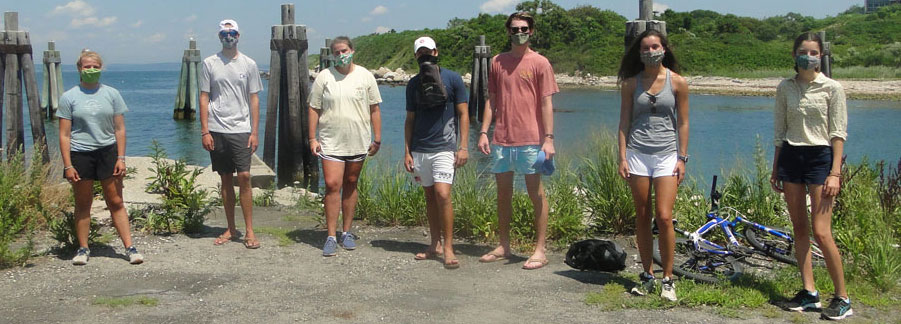
2020 Island Sentinels (l-r) Caroline Toldo, Nicolas Hall, Izzie Reid, Wilson Thors, Gardner Thors, Betsy Conger, and Alexa Rosenberg. Stephanie Hall Photo
April 20, 2021 19 views
News

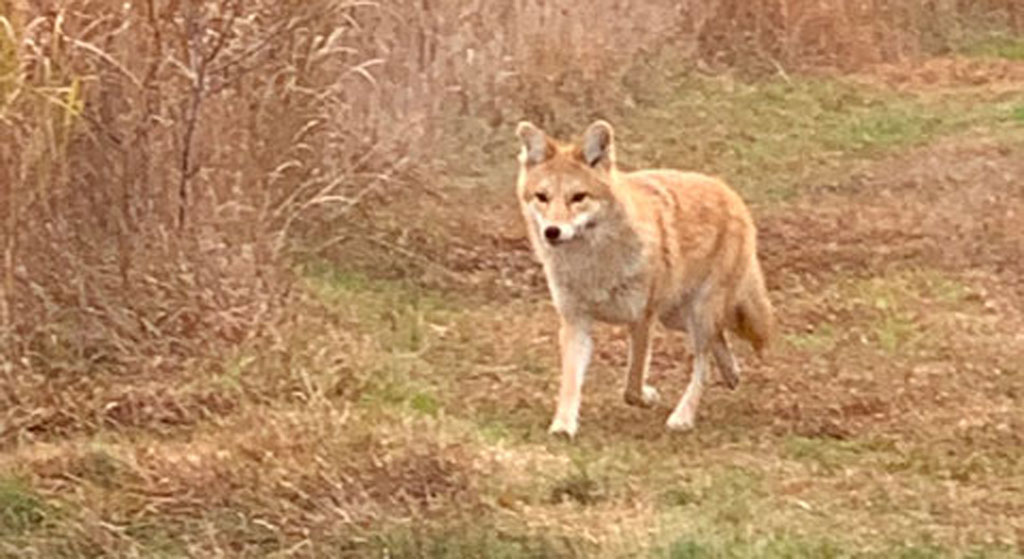
Fishers Island’s Coyotes Are Here to Stay

by Betty Ann Rubinow April 16, 2021

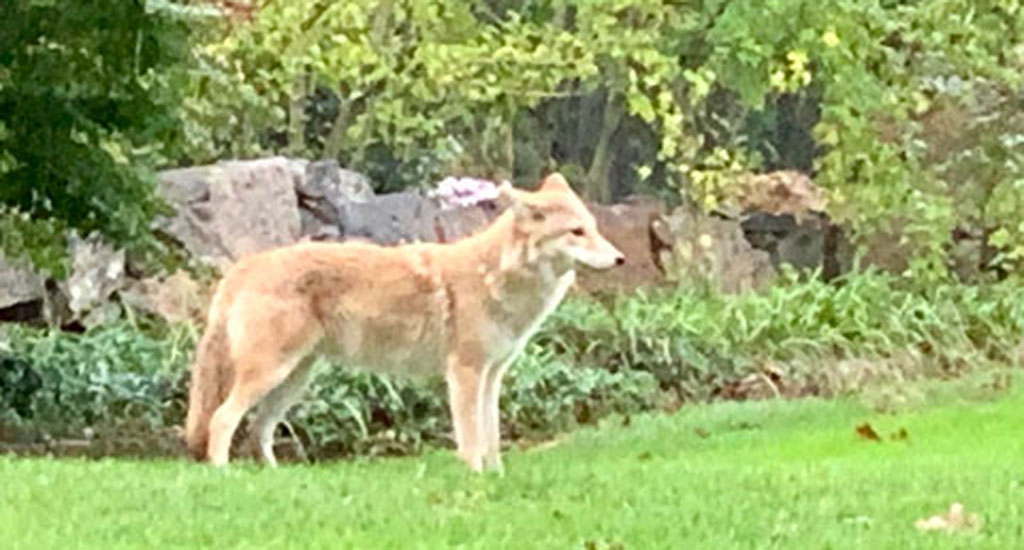
Coyote at Middle Farms Driving Range, Nov. 1, 2020. Thought to be one of the most adaptable animals on earth, coyotes have “plasticity”, enabling them to adapt to changes in food availability, cover and habitat. Eastern coyotes are part western coyote (62 percent), western wolf (14 percent), eastern wolf (13 percent), and domestic dog (11 percent). Prue Gary Photo

Island residents were “up in arms” last fall after a bold daytime coyote attack led to the death of a beloved family pet. Coyote sightings on Fishers Island are no longer unusual. Unfortunately, nothing can be done to control their numbers.

Other than dealing with a bold coyote, this adaptable species is here to stay. In fact, indiscriminate killing of coyotes encourages more breeding. Also, coyotes self-regulate their population by having larger or smaller litters depending on availability of territory and food.

Mass killings of coyotes began in the 1850s. Since then, their geographical range has tripled in the United States, an estimated 40 percent since the 1950s. Originally restricted to the western two-thirds of North America, the species now stretches across most of the continent, from the Atlantic to the Pacific seaboard and from Alaska to Panama.

Biologists theorize that the coyote expanded east to fill a vacant ecological niche left by the extirpation of gray wolves, cougars and jaguars. By 1920, coyotes were established in northern New York State.

Coyotes are programmed to pursue and kill prey, but they are also opportunistic feeders and will take advantage of the most available food source. They will consume small mammals, birds, livestock, pets, fruits, vegetables, carrion and garbage. Their habitat has expanded to include not only forests and fields, scrublands and wetlands, but also major cities, wooded suburbs, parks, golf courses and beach fronts.

The first coyote was spotted on Fishers Island between 12-15 years ago. At least one breeding pair was documented in 2017. It is difficult to know how many are on the Island, and frequent sightings are often thought to be the same coyote. Coyotes are smart, become easily habituated to human environments and have few natural enemies other than the great horned owl, which may take a few pups.

Scientists, however, are quick to remind the public that coyotes can play an integral role maintaining healthy ecosystems. They hunt foxes, raccoons, opossums and skunks, and provide rodent control by killing destructive, vegetation-eating rodents that comprise 80% of a coyote’s diet. Their primary foods are rodents, fruits, berries and insects.

Preventing coyotes from associating humans with food or shelter is the best method for minimizing conflicts with them. Eliminate easy access to outside food sources, such as dog food, bird seed and garbage. Supervise pets while outside; keep cats indoors.

Sent as eblast April 16, 2020

April 16, 2021 15 views
News

FI School Seniors are Finalists in 2021 Connecticut Science & Engineering Fair

by Betty Ann Rubinow April 1, 2021

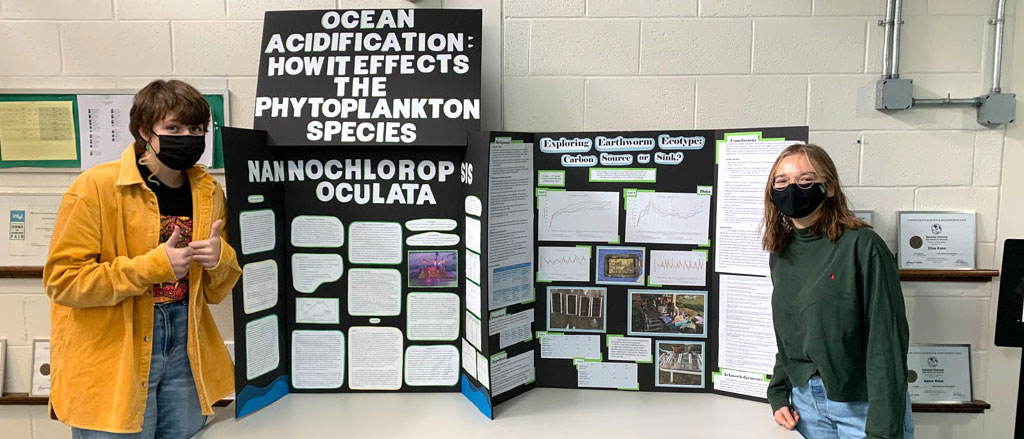
(l-r) Arabella Hatfield and Lillian Kane are proud finalists in the 2021 Connecticut Science & Engineering Fair.

Arabella Hatfield and Lillian Kane, two senior honors physics students at Fishers Island School, were State Finalists in the recent 2021 Connecticut Science & Engineering Fair. The annual competition is open to all 7th-12th grade students in Connecticut schools and Fishers Island.

Both Arabella and Lillian benefited from Fishers Island Conservancy grants to purchase equipment needed to execute their experiments in Carol Giles’s science classes.

Arabella used the fluorometer, purchased for use by oceanography students at school, to measure phytoplankton population density for her experiment: Ocean Acidification: How it Effects the Phytoplankton Species Nannochloropsis Oculata.

Lillian used her grant to purchase oxygen and carbon dioxide probes for her experiment: Exploring Earthworm Ecotypes: Carbon Source or Sink?

Awards

Arabella:

Environmental Sciences Award with CACIWAC—HS Finalist, CSF Medallion

Lillian:

PepsiCo/Pfizer Life Sciences Awards—Finalist – Life Science Senior High – CFS Medallion

Petit Family Foundation Women in Science & Engineering Awards—High School Finalist – Medallion

Future Sustainability Awards—High School Finalist – Medallion

Alexion Biotechnology Awards—3rd Place – Biotechnology Senior High – $300 & plaque

NASA EARTH System Science Award—Certificate and $25 gift card given by CSEF

University of Connecticut – Early College Acceptance—UCONN Early College Experience Program: Life Sciences – Co-Op $100 Gift Certificate

April 1, 2021 22 views
News

A Rite of Spring Returns: Planned Burning on the Parade Grounds

by Betty Ann Rubinow March 25, 2021

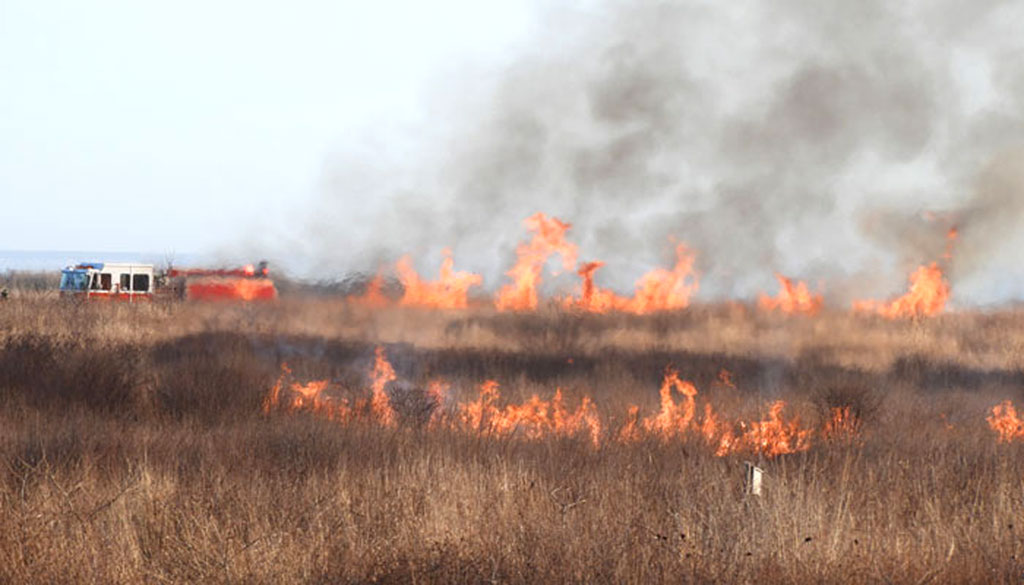
Fishers Island Fire Department maintains careful control over planned burning in the Parade Grounds Sanctuary in March. Jane Ahrens Photo

By Tom Sargent
President, Fishers Island Conservancy

March 25, 2021

Among the many things that were delayed by the pandemic was the annual spring burn of the Parade Grounds Sanctuary grassland. This critical land management tool has been undertaken for generations.

Set fires are a natural way to remove woody plants and invasive species as well as a way to release natural nitrogen back to the soil. Typically the Fishers Island Conservancy burns only 1/3 of the acreage so any grassland dwellers have plenty of room to relocate. Fire is a part of the natural world and birds and animals have evolved to respond to these rhythms. The burn is our most effective weapon in managing this native habitat. Last year, as the shutdowns loomed, we were forced to abandon this annual rite.

What a difference a year makes

On a chilly early spring evening this past week, our friends and partners at the Fishers Island Fire Department pulled up with their crew and equipment. Led by Chief Jeff Edwards and the Conservancy’s own Donnie Beck, they began by back-burning near Elizabeth Field and then progressed towards the center of the Sanctuary.

Once creating these fire breaks, they moved east towards South beach, setting controlled small fires along the way. The wind took over and spurred these fires across the center of the Sanctuary. The sound of the waves, the spring peepers, and the crackling of the fires was astounding. The choreography of the fire department was fantastic to see and it seemed as though half the island turned out to watch the dance.

They marshaled the fire through the Parade Grounds, never letting this new found predator out of their grasp. Flames, heat, and smoke roared as the monster consumed its prey. Then suddenly, it was over. Only smoke, ash, and small pits of flame remained as the beast was satiated. All was calm and quiet. The Red Wings returned to their perches calling out their territories. The peepers chorus, never disrupted, continued their spring song. We watched as the silhouettes of the firefighters moved slowly to their trucks, flashing lights doused, the rumbling of their diesel engines disappearing into the dusk.

To witness a short intense grassfire is to be filled with fear and awe. To watch it under controlled settings with the oversight of an experienced fire crew is to be filled with admiration and gratitude. So, THANK YOU to the Fishers Island Fire Department for all they do for the Fishers Island Conservancy and the community as a whole. It is partnerships like these that make Fishers Island such a special place. We are all friends and neighbors who share a common love for the island. Here’s to spring and an end to the pandemic and being once again able to gather with old friends.

March 25, 2021 18 views
News

A Cautionary Tale For Fishers Island Seagrass: Florida’s Seagrass Disaster

by Betty Ann Rubinow March 23, 2021

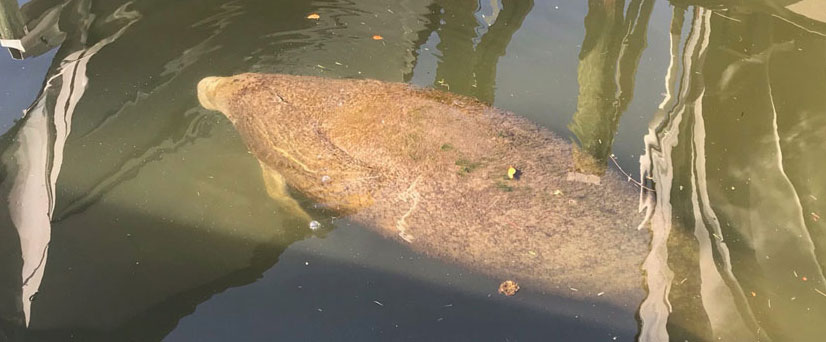
A healthy manatee drifts under dock in Vero Beach, FL amidst reflections of boats on lifts. Disappearing seagrass causing a feeding crisis for manatees is farther up the east coast near Merritt Island. FIConservancy Photo.

Manatees are starving to death in Florida. These gentle giants, weighing up to 1200 pounds, feed almost exclusively on seagrass and eat 9 percent of their body weight everyday.

Seagrass has long been in trouble in Florida’s increasingly polluted Indian River Lagoon Estuary. But scientists say that this year, in main manatee feeding areas, there’s almost no seagrass left for these herbivores to eat, causing them to become “severely emaciated” and die.

Fishers Island seagrass does not have to support the voracious appetites of manatees, but “our” seagrass forms the base of a highly productive marine food web, providing foraging areas and shelter for young fish and invertebrates, and food for migratory waterfowl and sea turtles.

This unique habitat also improves water quality by filtering polluted runoff, absorbing excess nutrients, storing greenhouse gases like carbon dioxide, and trapping sediment, reducing the force of wave energy, thereby reducing coastal erosion.

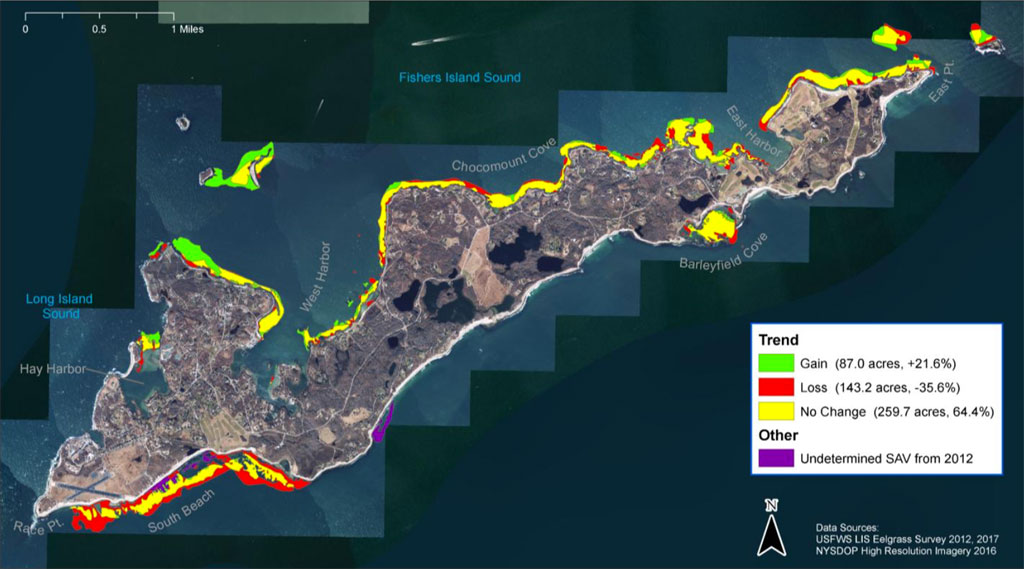
Fishers Island has 94 percent of the remaining eelgrass in New York waters of Long Island Sound and 25 percent of all eelgrass in the Sound. (Eelgrass is a form of seagrass and gets its name from its long, eel-like leaves.)

Decimation of once abundant and protective eelgrass meadows in Long Island Sound, prompted The Nature Conservancy to evaluate eelgrass areas and boating patterns around Fishers Island. The study concluded that boating activity, particularly in summer months, presents a grave threat to Fishers Island eelgrass meadows.

The Fishers Island Seagrass Management coalition has been working to raise awareness about the serious threat to seagrass, and to designate seagrass management areas (SMA) to guide and balance effective use and protection of seagrass ecosystems around Fishers Island.

The loss of seagrass along any shore, whether through pollution or summer boating, is a recipe for irreparable environmental harm.

Changes in eelgrass distribution around Fishers Island from 2012 to 2017, published Feb. 28, 2019 in The Nature Conservancy report: An Evaluation of Eelgrass Extent and Vessel Use Patterns Around Fishers Island, New York.

March 23, 2021 26 views
News

Tread Lightly: It’s Mating Season

by Betty Ann Rubinow March 20, 2021

Tread Lightly: It’s Mating Season

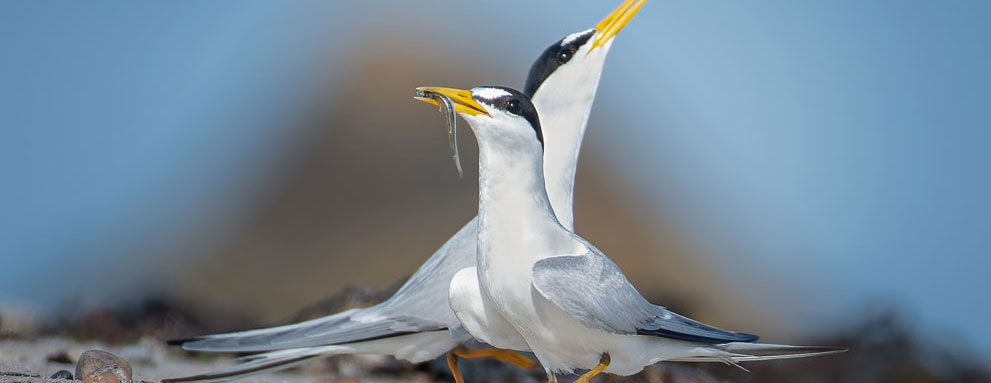
Mating ritual of least terns on South Beach. “What wild creature is more accessible to our eyes and ears, as close to us and everyone in the world, as universal as a bird?” said Nature Historian David Attenborough. Todd McCormack Photos…View McCormack Fishers Island portfolio here.

With time, patience and a camera, seasonal resident and amateur photographer Todd McCormack headed to South Beach and was rewarded with the courting ritual of least terns.

“From what I could tell, there were two male suitors at first. Elaborate dances took place circling each other, one without and then with the fish offering,” Mr. McCormack said.

Least terns are the smallest of all terns and have a clearly defined mating ritual. Once the circling is complete and an appropriate mate is selected, the male, with a small fish in its beak, stands on the back of the female waving the fish back and forth like watching a long point at Wimbledon.

The signal to copulate is when the female rotates her head toward the male and eats the fish.

“It was all pretty fun to watch,” Mr. McCormack said. “For me, it seems one of the things the Fishers Island Conservancy does is encourage people to be in nature while respecting and observing its mysteries.”

After an absence of many years, a breeding pair of least terns was sighted in Sanctuary of Sands, South Beach, June 2018. These birds breed between April and August, usually remaining within the breeding territory between 3 and 5 months. Please leash dogs and tread carefully, particularly on the western end of South Beach (Sanctuary of Sands), where least tern and piping plover nests are mere scrapes in the sand.

In photos below, Todd McCormack observes the mysteries of nature (clockwise from left): male tern with fish prepares for mating ritual, tern in flight with small fish, piping plover chick not far from its nest (near tern nests), tern “challenging” photographer, beach walker keeps safe distance offering a size contrast between man and little nine-inch bird.

Sent as eBlast 3/23/21

March 20, 2021 17 views
News

Birds of Prey at Risk from Rodent Poison

by Betty Ann Rubinow February 25, 2021

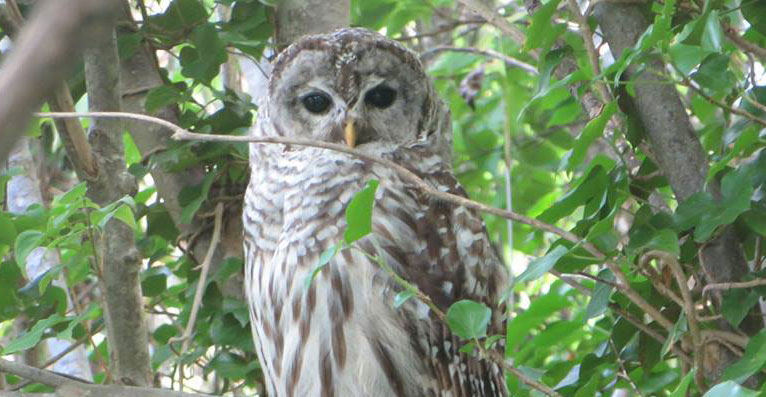
This young barred owl is typical of birds of prey at risk of ingesting anticoagulant rodenticides used to kill nuisance rodents, like mice and rats. Justine Kibbe Photo

Scientists agree that there is no such thing as a safe poison. That unfortunate truth applies to anticoagulant rodenticides (AR), which have been used for decades to kill nuisance rodents like mice and rats.

Rodenticides are anti-coagulants placed in bait stations to attract mice and rats. After feeding, rodents die from internal bleeding, but not immediately. While still alive, they are a food source for raptors, and after death, for scavengers. Ingestion transfers the poison to the birds.

A 2020 Tufts Wildlife Clinic study reported that 100 percent of the red-tailed hawks in the study tested positive for exposure to anticoagulant rodenticides. For the study, Clinic Director Maureen Murray, a wildlife veterinarian, sampled 43 red-tailed hawks, which were admitted to the clinic but did not survive due to their injury or illness.

Ms. Murray focused on these hawks, because they are most commonly seen at the clinic and are generalist predators, which offered a sense of how widespread the contamination is in the food chain.

“The ability of these rodenticides to permeate the food chain and ecosystems is pretty remarkable,” said Ms. Murray. “Other studies have shown residues in songbirds and insects. And that’s what this study reflects. Red-tailed hawks eat a lot of small mammals, but they also eat birds, reptiles, or amphibians that they might scavenge. Ultimately, their prey base is very contaminated.”

First generation ARs, chlorpophacinone, diphacinone and warfarin, were followed in the 1970s by a second generation of more toxic anticoagulant rodenticides (SGAR), brodifacoum, bromadiolone, difenacoum, difethialone. This study found that SGARs were more prevalent in the hawks than ARs.

In 2008, the U.S. Environmental Protection Agency (EPA) began tightening rules regarding sales and use of SGARs. This study’s findings are meant to measure the effectiveness of the EPA’s approach to regulating SGARs in preventing exposure of wildlife species.

Ms. Murray encouraged anyone looking for pest control solutions to consider approaches other than ARs: Find out where the mice or rats are coming in, plug up holes in the house or around windows, take away food and water sources, and clean out nesting sites.

February 25, 2021 22 views
News

Robins Are Unwitting Enablers of Wildly Invasive Chinese Privet Shrub

by Betty Ann Rubinow February 20, 2021

Robins Are Unwitting Enablers of Wildly Invasive Chinese Privet Shrub

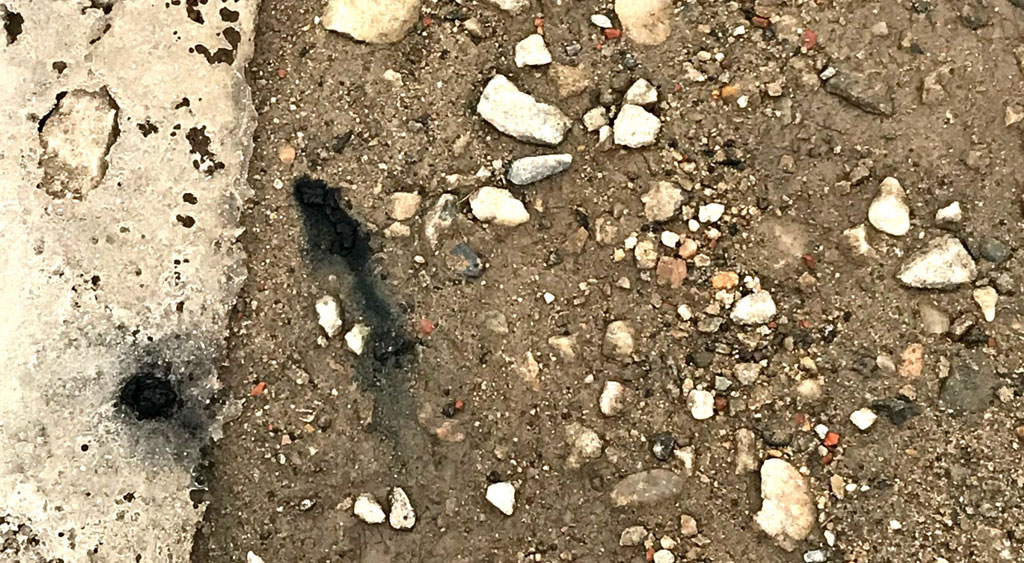
Blurry black images (l) are winter robins regurgitating and dispersing seeds of highly invasive Chinese privet shrub, Feb. 13 (r). Tom Sargent Photos

Robins, the first signs of spring, actually spend winters in the north, if food sources are plentiful. On Fishers Island, that is not a problem. There is a seemingly endless supply of fat berries that carpet invasive Chinese privet shrubs in winter.

Notorious for producing dense thickets, the Chinese privet, found throughout Fishers Island, is choking out native plants that provide food for native insects, which in turn provide food for bird hatchlings.

Ironically, the robins pictured above are spreading the very seeds that can lead to fewer insects needed to feed their young. The robins are regurgitating Chinese privet berries, which are filled with seeds, further spreading growth of the wildly invasive Chinese privet, known for its aggressive growth, prolific root and stump sprouting, copious seed production, and widespread seed dispersal by birds.

The robin has a long and especially stretchy esophagus, so it can store many berries quickly. After some preliminary digestion, it regurgitates the seeds, making more room for more berries. Robins also can consume huge quantities of berries before nightfall in winter, allowing  them to survive cold temperatures until they can eat again at daybreak.

In addition to the privet’s impact on natural landscapes, its blue berries are toxic to humans (and dogs) and can cause symptoms such as nausea, headache, abdominal pain, vomiting, diarrhea, weakness and low blood pressure.

Chinese Privet was introduced into the United States in the 1800s as an ornamental plant primarily used as a privacy hedge. Privet usually grows from 5 to 12 feet but can grow as tall as 30 feet.

February 20, 2021 20 views
Marine Debris Annual Report

2021 Marine Debris Report

by Beth Jepsen January 1, 2021

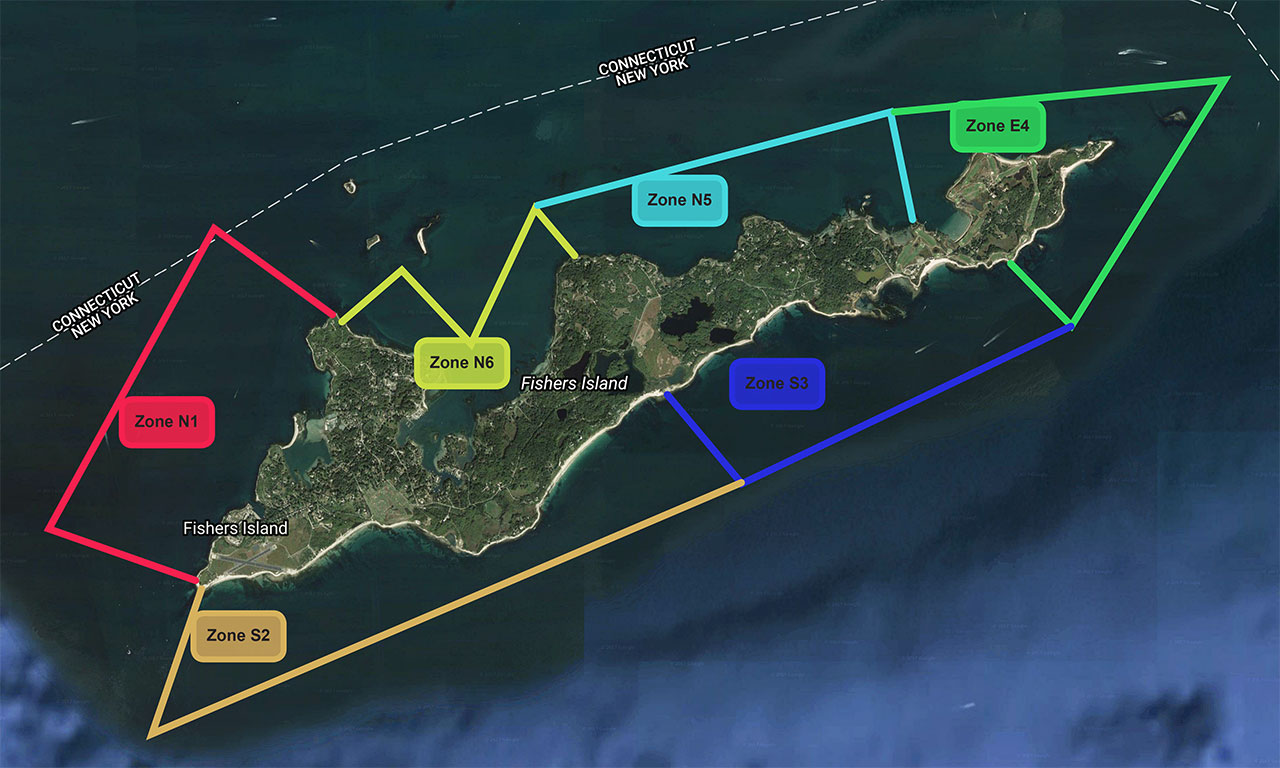
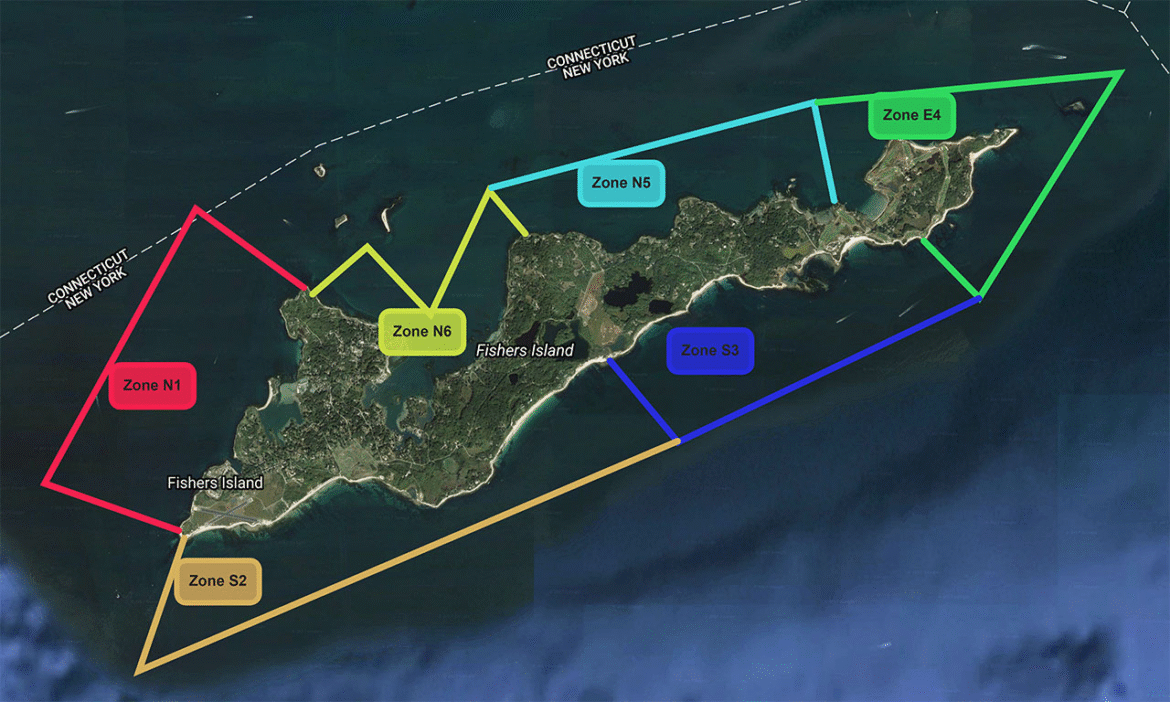
2021 Marine Debris – Zone Summary Report

ZONEWEIGHT (LBS)TIME (HOURS)
No Zone3425
E41071115.5
N11010123.5
N596977.5
N6994111
S22,258274
S31,275159
S4145
TOTAL7,651892.5

2021 Marine Debris – Monthly Summary Report

ZONEWEIGHT (LBS)TIME (HOURS)
JANUARY77175
FEBRUARY80568.5
MARCH1073101.5
APRIL868100
MAY512100
JUNE806102
JULY749104
AUGUST35150
SEPTEMBER76587.5
OCTOBER00
NOVEMBER00
DECEMBER951114
TOTAL7,651892.5

January 1, 2021 31 views
Marine Debris Annual Report

2020 Marine Debris Annual Report

by Anna White December 31, 2020

2020 Marine Debris – Monthly Summary Report

ZONE WEIGHT (LBS) TIME (HOURS)
JANUARY 832 56
FEBRUARY 1,442 54.5
MARCH 1,627 122
APRIL 613 62
MAY 1,154 95.5
JUNE 1,328 114.5
JULY 783 97.5
AUGUST 1,181 141.5
SEPTEMBER 755 84.5
OCTOBER 982 107
NOVEMBER 1,210 94
DECEMBER 1,317 66
TOTAL 13,224 1,095

Monthly Marine Debris Reports

  • Marine Debris March 2026

    April 1, 2026
  • Marine Debris Winter Reports

    February 27, 2026
  • Marine Debris November 2025

    February 27, 2026
  • Marine Debris October 2025

    October 1, 2025
  • Marine Debris September 2025

    September 1, 2025
  • Marine Debris August 2025

    August 1, 2025

Annual Reports

  • 2025 Marine Debris Annual Report

    March 17, 2026
  • 2024 Marine Debris Annual Report

    December 31, 2024
  • 2023 Marine Debris Annual Report

    December 31, 2023
  • 2023 Marine Debris Report

    January 1, 2023
  • 2022 Marine Debris Annual Report

    December 31, 2022

Marine Debris Stewards

  • Constant Battle Marine Debris

    March 18, 2018
  • John Peishoff’s 889th Lobster Pot

    October 1, 2017
  • Earthday EVERYday

    April 9, 2017
December 31, 2020 15 views
Newer Posts
Older Posts

Upcoming Events

Notice
There are no upcoming events.

Keep in touch

Facebook Instagram Youtube

Recent Posts

  • What to Do if You Find a Stranded Animal

  • Update on Phragmites Work and New Wetlands Regulations

  • SPOTTED in New London!

  • 2025 Fall Migratory Bird Count Results

  • Fall 2025 Migratory Bird Count

  • FIRST Summer Highlights 2025

  • Shorebirds Take Flight- The 2025 Season Wrap-Up

  • Buzz Be Gone- Final Spray of the Season

  • Silver Eel–Race Point Coastal Trail Opens with Dedication to Janet Harvey

  • August Shorebird Update

Explore

    • Home
    • Who We Are
    • What We Do
    • How To Help
    • News
    • Events

Connect

    • Join Us
    • Donate
    • Contact Us
Facebook Instagram Youtube
© 2026 All Right Reserved. Fishers Island Conservancy
Fishers Island Conservancy
  • Home
  • Who We Are
    • Our Mission
    • Our History
    • Our People
    • Contact Us
  • What We Do
    • Shorebird Monitoring
    • Annual Bird Counts
    • Marine Debris Clean Up
    • Island Sentinels
    • Research and Survey Team
    • Grassland Restoration
    • Mosquito Control
    • Invasive Plant Management
  • How To Help
    • Donate
    • Join Us
  • News
  • Events
    • Calendar