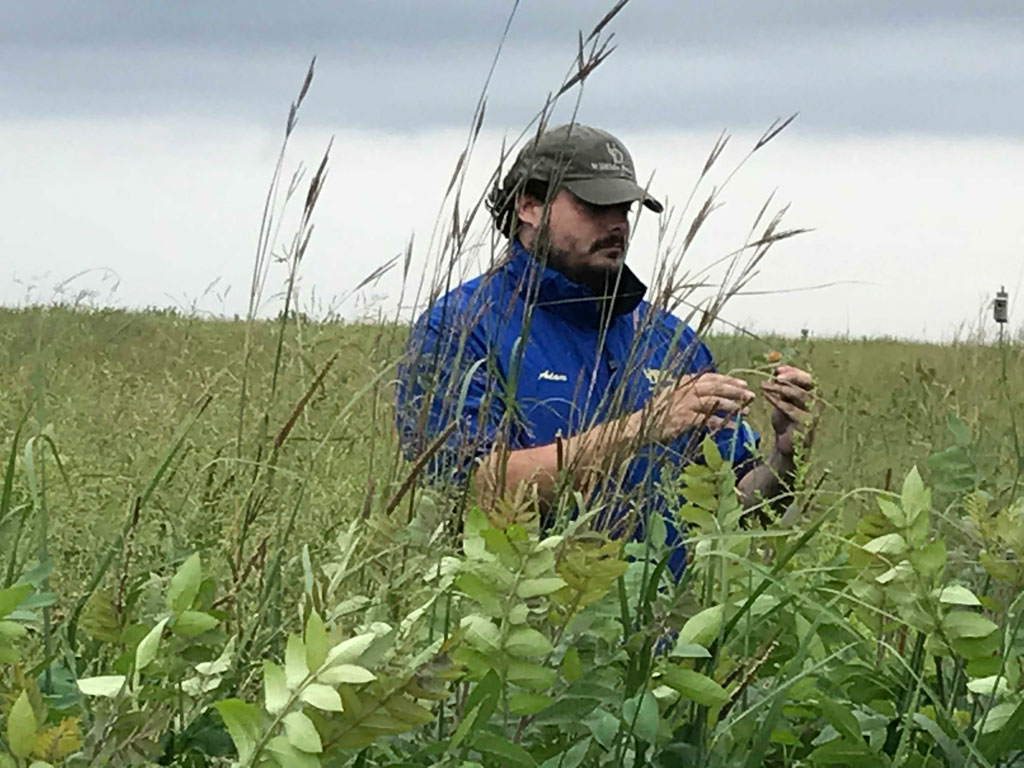
Dr. Adam Mitchell has worked closely with the Fishers Island Conservancy for more than a decade, beginning in 2014 as a graduate researcher supporting the Conservancy’s grassland restoration efforts. His involvement grew out of the Conservancy’s need for long-term, science-based monitoring to better understand how restoration work was affecting wildlife on Fishers Island.
Entomologist Adam Mitchell briefly stepped away from Bug Tent at Nature Day to find more insects to show visitors (2018)
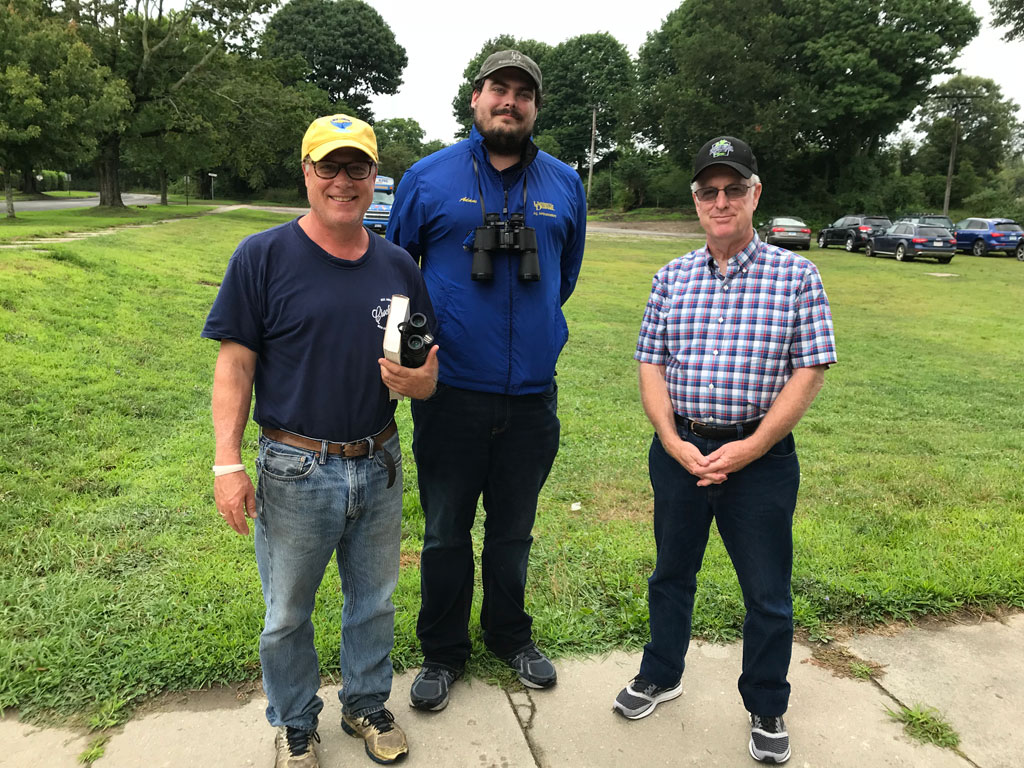
Outside the Movie Theater, (l-r) FIConservancy President Tom Sargent and entomologists Adam Mitchell and Doug Tallamy prepare for the start of “Conservation on Parade”. (2018)
Dr. Mitchell attended the University of Delaware as a PhD student beginning in the summer of 2014 and was supported through funds provided by the Fishers Island Conservancy to conduct research related to how invasive plants affect grassland food webs and to help restore habitat for grassland birds on the island. His doctoral research focused on Conservancy-managed properties including the Parade Grounds, Elizabeth Field, and other restoration sites.
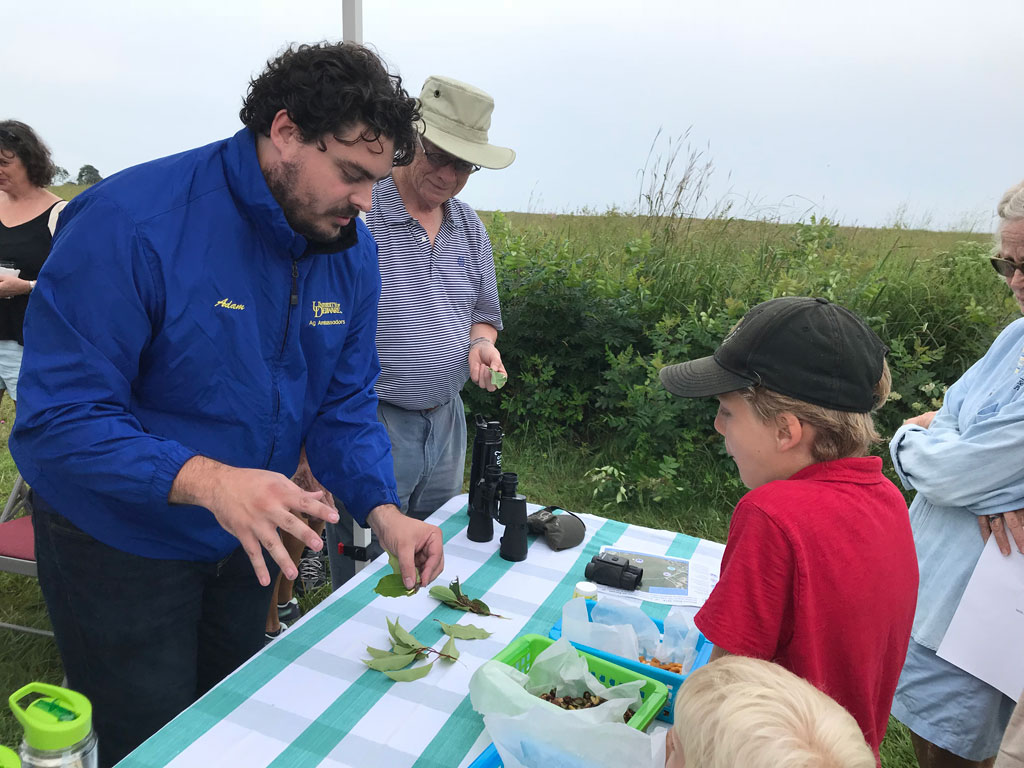
Adam Mitchell, entomologist, talks about a variety of caterpillars (2018)
A major component of Dr. Mitchell’s work with the Conservancy has been bird monitoring. Through repeated surveys and seasonal counts, he helped document how bird communities responded to invasive plant removal and the reintroduction of native vegetation. Outside of his doctoral research, Dr. Mitchell assisted with ongoing spring and fall migratory bird counts that contributed to a long-term dataset tracking changes in bird biodiversity on Fishers Island. These data have played an important role in guiding restoration strategies and identifying areas where additional management was needed.
Between 2014 and 2016, Dr. Mitchell investigated changes in plant and arthropod biodiversity in response to invasive plant dominance and restoration treatments such as prescribed burns, mowing, and targeted herbicide applications. His findings showed that where invasive species were dominant, both native plant and arthropod diversity declined, particularly among specialized plant-feeding insects and their predators. Some arthropods increased in areas dominated by invasive plants and were found to be invasive themselves, highlighting how invasive plants can facilitate the introduction of other invasive species.
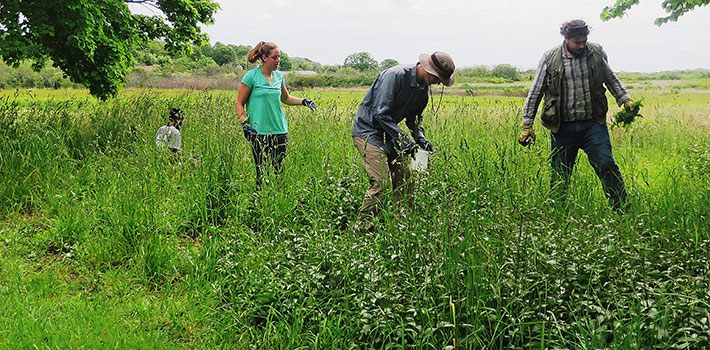
Three University of Delaware undergraduates and Adam Mitchell, PhD candidate (right), clear invasives in Parade Grounds. Justine Kibbe Photo
Dr. Mitchell’s research reinforced the idea that healthy grasslands depend on more than grasses alone. His work emphasized the importance of diverse native plant communities, including forbs, shrubs, and trees, in supporting insect populations that birds rely on for food. This science-based approach continues to shape how the Conservancy manages grasslands today, with an emphasis on biodiversity rather than single-species solutions.
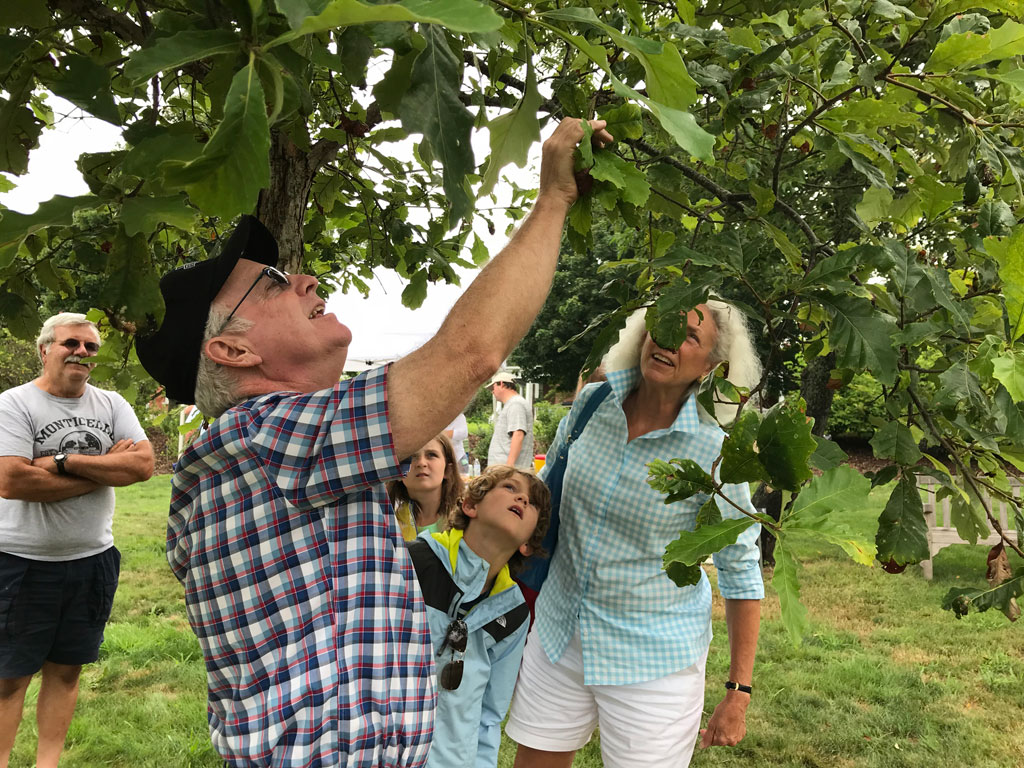
Doug Tallamy, entomologist, points out large polyphemus caterpillar hidden in oak tree in Demonstration Garden. He had seen a tiny caterpillar egg in this tree weeks ago and, against all odds, found the full-grown caterpillar in the same tree Aug. 11 at the beginning of “Conservation on Parade” (2018)
Since 2016, Dr. Mitchell has also trained and supervised the Fishers Island Weed Team, supporting invasive plant removal efforts across the island. This team later evolved into the Fishers Island Research and Survey Team (FIRST) in 2024. Through FIRST, Dr. Mitchell remains actively involved in monitoring native biodiversity on the island, including plants, insects, birds, and bats, while guiding research priorities and supporting long-term data collection.
Dr. Mitchell completed his doctorate in 2019 and is now an Assistant Professor at Tarleton State University. His long-standing partnership with the Fishers Island Conservancy reflects a shared commitment to using long-term ecological data, especially bird and biodiversity monitoring, to inform conservation and land management decisions on Fishers Island.