Fishers Island Conservancy
  • Home
  • Who We Are
    • Our Mission
    • Our History
    • Our People
    • Contact Us
  • What We Do
    • Shorebird Monitoring
    • Annual Bird Counts
    • Marine Debris Clean Up
    • Island Sentinels
    • Research and Survey Team
    • Grassland Restoration
    • Mosquito Control
    • Invasive Plant Management
  • How To Help
    • Donate
    • Join Us
  • News
  • Events
    • Calendar
Saturday, April 11, 2026
Fishers Island Conservancy
  • Home
  • Who We Are
    • Our Mission
    • Our History
    • Our People
    • Contact Us
  • What We Do
    • Shorebird Monitoring
    • Annual Bird Counts
    • Marine Debris Clean Up
    • Island Sentinels
    • Research and Survey Team
    • Grassland Restoration
    • Mosquito Control
    • Invasive Plant Management
  • How To Help
    • Donate
    • Join Us
  • News
  • Events
    • Calendar
Fishers Island Conservancy
  • Home
  • Who We Are
    • Our Mission
    • Our History
    • Our People
    • Contact Us
  • What We Do
    • Shorebird Monitoring
    • Annual Bird Counts
    • Marine Debris Clean Up
    • Island Sentinels
    • Research and Survey Team
    • Grassland Restoration
    • Mosquito Control
    • Invasive Plant Management
  • How To Help
    • Donate
    • Join Us
  • News
  • Events
    • Calendar
Copyright 2026 - All Right Reserved
News

Shoreline Superstars Embrace Adopt-A-Beach Competition

by Betty Ann Rubinow October 2, 2021

Shoreline Superstars Embrace Adopt-A-Beach Competition

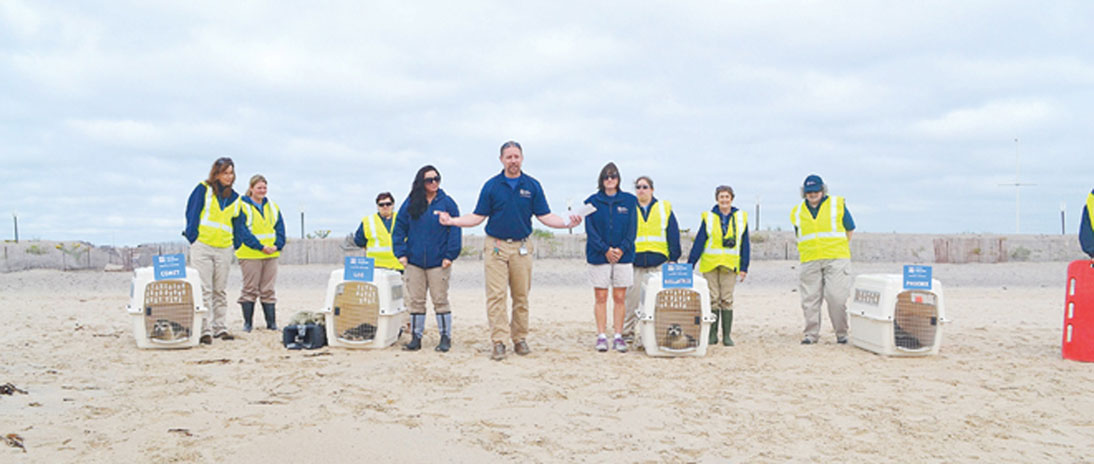
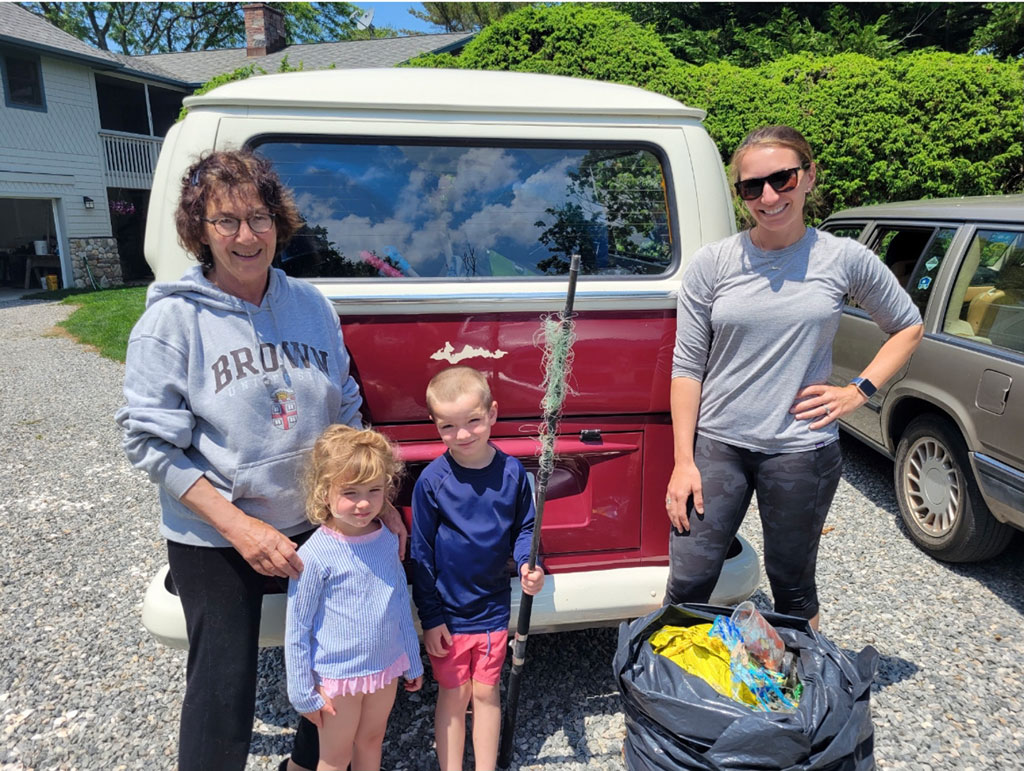
(l-r) The Kinsolving/Farrar family, the Tombari/Enright family and (not pictured) the Webel family collected the most marine debris this summer in FIConservancy’s Adopt-A-Beach competition.

FIConservancy’s first community marine debris program was a great success thanks to all who participated. We’re thrilled to announce that the Kinsolving/Farrar, Tombari/Enright and Webel families collected the most marine debris throughout the season. Please join us in celebrating these shoreline superstars!

With the help of all those who joined in, we’re off to a great start expanding our coverage and collection of marine debris, helping to protect our waters and wildlife. But this is a never-ending process.

FIConservancy has cleared and hauled away over 10 tons of marine debris in the past two years alone. We are lucky and grateful to have Michele Klimczak, FIConservancy’s Marine Debris Coordinator, clearing this pollution year-round, sorting, weighing, reusing whatever possible in creative ways and properly disposing of the rest. But Michele is just one person, and there is more shoreline to cover and more debris than she alone can collect.

We hope you’ll continue to “bring a bag” when you visit the beach anytime of year. You can reach out to Michele to coordinate pick up or label your bag (your name, date and shoreline location) and leave it in the FIConservancy truck when it’s parked by the movie theater. Michele was recently off-Island for a month and shared the following anecdote:

“While I was away, folks were texting and emailing me so I had them dump the debris into the back of the truck. When I got back, I sorted over 90 pounds of debris collected in my absence, which was the best homecoming gift!”

We’re so encouraged and heartened by this story and how the Fishers Island community comes together to make a difference. Let’s keep it up! We’re looking forward to engaging even more of our community in this effort next summer.
October 2, 2021 20 views
News

Destructive Spotted Lanternfly An Increasing Threat

by Betty Ann Rubinow September 29, 2021

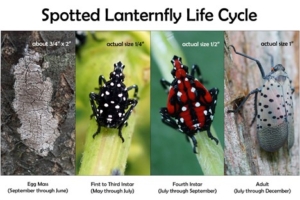
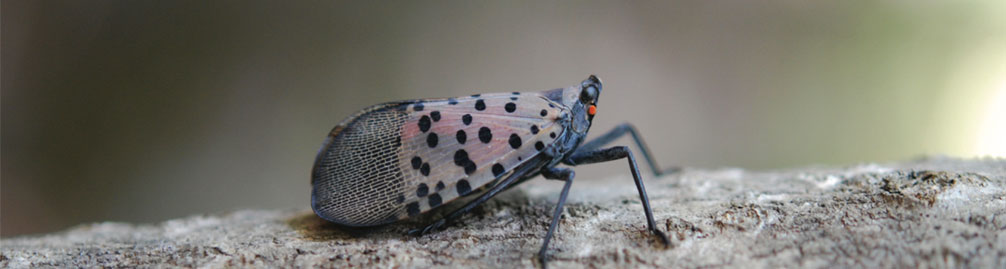
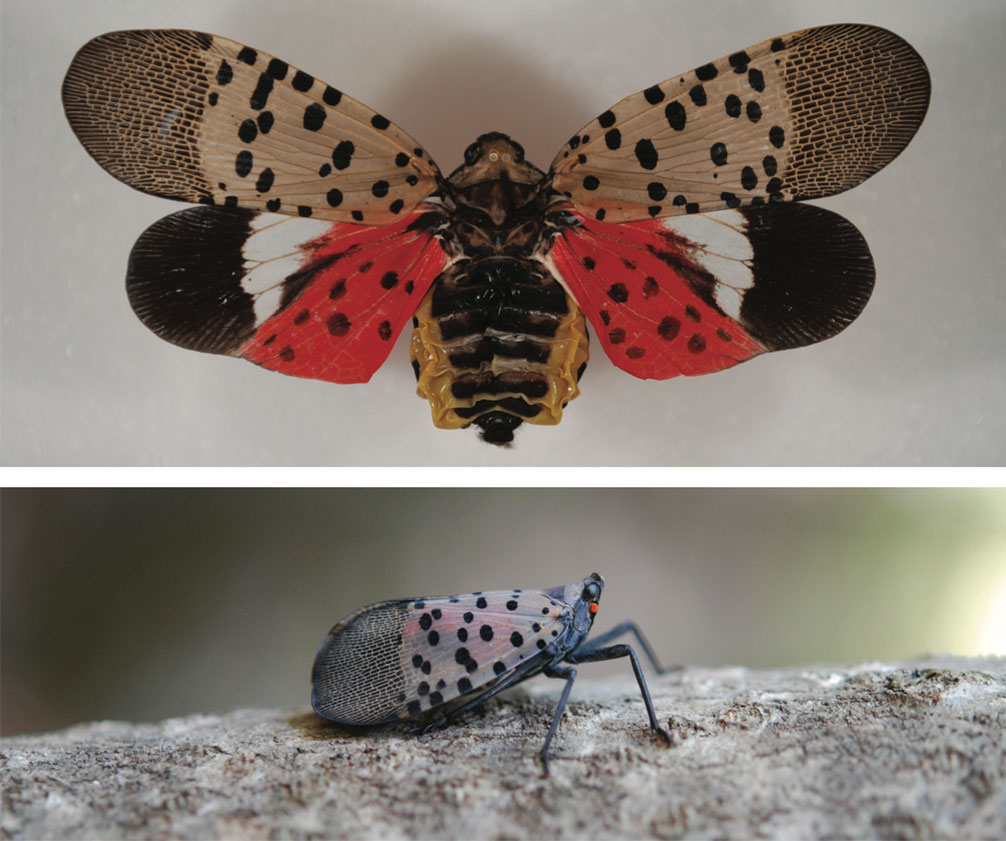
The destructive spotted lanternfly: Wings open and wings closed.

Be on the lookout for the colorful but treacherous spotted lanternfly (SLF). Relatively new to the U.S., it is an invasive insect from China that is known to feed on 70 different types of plants and trees. SLF adults emerge in July and are active until the first hard frost.

This insect was first spotted in Pennsylvania in 2014, and by July 2021 had spread to about half of Pennsylvania, New Jersey, Maryland, Delaware, Virginia, eastern Ohio and Indiana.

Closer to home, the the SLF has been found in western Connecticut, parts of New York state, and on Sept. 29, Rhode Island reported a second credible sighting in West Greenwich, RI. This insect usually spreads by hopping rides on vehicles as they move from state to state.

The U.S. Dept of Agriculture has issued a thorough SLF Pest Alert pdf with information about the SLF and what you can do about it. If you see an SLF, take pictures and report it to New York State via its SLF reporting form. Scraping its grey egg masses from trees and man-made outdoor items is vital to slowing its spread. Egg masses can be double bagged and discarded, or placed in alcohol or bleach to kill them.

Indicating the significance of this dangerous pest, FIConservancy posted advance warnings about the SLF in 2018 and 2020.

Thanks for your help.

September 29, 2021 22 views
Bird CountsNews

Fall 2021 Migratory Bird Count Results

by Betty Ann Rubinow September 23, 2021

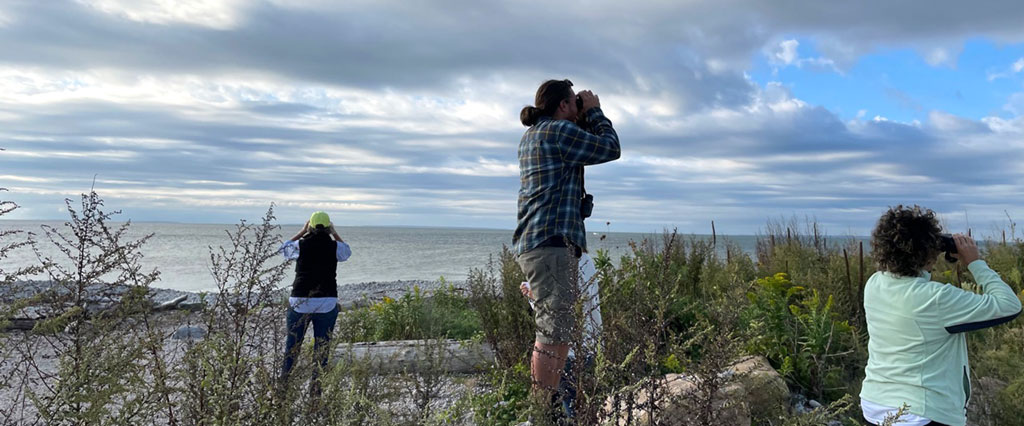
Bird watchers scan the skies looking for birds to include in the biannual migratory bird count on Fishers Island. Kristen Peterson Photo

Another glorious day on Fishers Island greeted bird watchers who participated in the Fall 2021 Migratory Bird Count, Sun. Sept. 19.

Thirty-nine species were recorded, which is slightly lower than the 45 species sighted in Fall 2019. (See list of bird species below.)

Following Audubon bird count rules, birders made 15 five-minute stops from West End to East End. At each timed stop, birders counted birds and called out what they saw.

Results from bird counts help scientists and conservation organizations chart bird populations and help us get a sense of the numbers of different bird species in our area.

We are fortunate that Fishers Island is on the Atlantic Flyway, a major north-south flyway for migratory birds in North America. Migrating songbirds descend on woods and thickets, along ponds and next to streams, to feed on the insects that fuel their migrations.

University of Delaware team of Emily Baisden and Will Aleida led the bird count and answered questions about migratory birds.

Species sighted in Fall 2021 Migratory Bird Count on Fishers Island:

American Kestrel, Black Crow, Blue Jay, Catbird, Cedar Waxwing, Chickadee, Chipping Sparrow, Cormorant, Connecticut Warbler, Downey Woodpecker, European Starling, Goldfinch, Herrier Hawk, Herring Gulls, House Wren or Marsh Wren, Marsh/Goshawk, Merlin, Mockingbird, Mourning Dove, Nighthawk, Northern Parula, Osprey, Phoebe, Raven, Red Bellied Woodpecker, Red-tailed Hawk, Ring Necked Pheasant, Robin, Ruby Throated Hummingbird, Song Sparrow, Starling, Swainson’s Warbler, Towhee, Tree Sparrow, Tree Swallow, White Breasted Nuthatch, White Egret, Yellow-rumped Warbler, Yellow Throated Chickadee.

September 23, 2021 21 views
News

Become a First Responder with Mystic Aquarium’s Animal Rescue Program

by Betty Ann Rubinow September 23, 2021

Mystic Aquarium’s Animal Rescue Program is offering virtual training to become a First Responder on Fishers Island.

Mystic Aquarium’s Animal Rescue Program is offering virtual training to become a First Responder on Fishers Island. First Responders are called to assist when animals are found in distress on the Island. The deadline for completing certification is October 10.

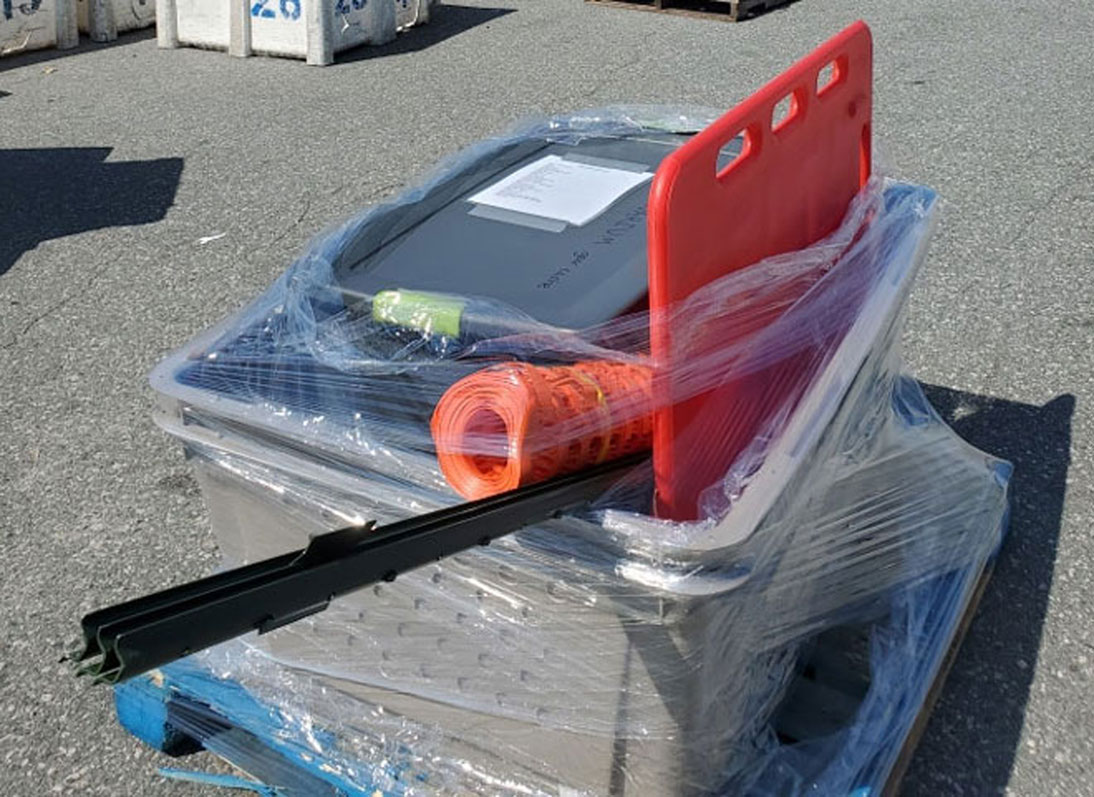
FIConservancy, working with the Animal Rescue Program, will store supplies on Fishers Island, should they be needed in case an animal is beached or requires transportation to the aquarium for care. (See picture of animal rescue supplies below.)

Sarah Callan, Assistant Manager of Mystic Aquarium’s Animal Rescue Program welcomes potential volunteers:

There is no obligation. Start the process and watch the training video. It’s fine if you decide being a First Responder is not for you. You only become a responder in our system once you complete the quiz and sign up for our Google Classroom (details below).

There is no time commitment. When we receive an animal distress call on our hotline, we search our system for First Responders on Fishers Island. We will start calling our list of responders to see who is available. If you are, great! If you aren’t, no worries. We move on to the next person on our list. If you are available to respond, you will log the hours you volunteer for that day on our online “Better Impact” system.

It’s easy to get started:

First, click here to sign up on Mystic Aquarium’s new volunteer “Better Impact” database page.

Next, click here to view the training video.

The following links will take you to documents that explain the process in further detail:

Guide to becoming a First Responder

Important Dates

First responders are an integral part of our program. We look forward to having you on our team!

Sarah Callan
Assistant Manager, Animal Rescue Program
55 Coogan Boulevard
Mystic, Connecticut 06355
Office: 860-572-5955 x 134
Cell: 860-625-1169
Hotline: 860-572-5955 x 107
www.mysticaquarium.org

FIConservancy, working with the Animal Rescue Program, will store supplies on Fishers Island, should they be needed in case an animal is beached or requires transportation to the aquarium for care. Email FIConservancy’s Stephanie Hall (fiskhall@gmail.com) with questions, sightings or for assistance.

September 23, 2021 17 views
News

Fall 2021 Migratory Bird Count

by Betty Ann Rubinow September 1, 2021

Fall 2021 Migratory Bird Count

(l-r) Barred owl and red-tailed hawk are often spotted on Migratory Bird Counts. Justine Kibbe Photos

Mark your calendars for the 2021 Fall Migratory Bird Count Sunday, Sept. 19, 8 a.m.-10:30 a.m. Meet at the Island Community Center. Bring binoculars.

Following Audubon bird count rules, birders will make 15 five-minute stops from West End to East End. At each timed stop, birders count birds and call out what they see.

Results from bird counts help scientists and conservation organizations chart bird populations and help us get a sense of the prevalence of different bird species in our area.

We’re fortunate that Fishers Island is on the Atlantic Flyway, a major north-south flyway for migratory birds in North America. Migrating songbirds descend on woods and thickets, along ponds and next to streams, to feed on the insects that fuel their migrations.

University of Delaware team of Emily Baisden and Will Almeida will lead the bird count and answer all questions about migratory birds.

September 1, 2021 16 views
EventsNews

Nature Days August 7

by fic0n5erv August 3, 2021

Please join us for Nature Days “Conservation on Parade” at the Parade Grounds and Fishers Island Movie Theater this Saturday, August 7th, from 3-6pm.

Explore a variety of great activities and expert-led stations for all ages including:

  • Birds, living creatures, marine life and marine debris
  • Underwater seagrass footage captured December-July by Nick Hall
  • Info about the native garden and what we can do to promote a healthy habitat at home
  • The ever-popular ice cream truck, plus snacks and beverages
  • My Octopus Teacher film

And more!

Thanks to Will Almeida, Emily Baisden and Katharine Owens, PhD for joining us to share their expertise.

We can’t wait to see you there!

August 3, 2021 18 views
News

View Fishers Island Moths With An Expert

by Betty Ann Rubinow July 13, 2021

View Fishers Island Moths With An Expert

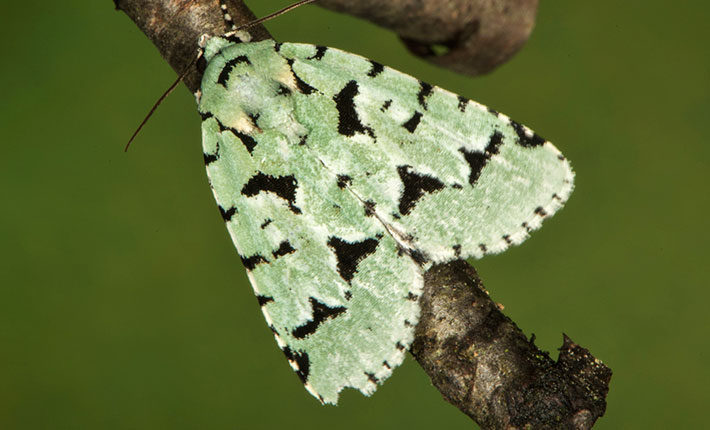
(l-r) Small-eyed sphinx and green marvel moths. Images captured on Fishers Island by nationally-recognized Delaware entomologist Doug Tallamy.

Don’t miss a rare opportunity to marvel at the numbers and diversity of moths on Fishers Island this Friday night July 16 from 9 p.m.-10 p.m. (and later!) outside the State Troopers barracks adjacent to the Parade Grounds.

Texas entomologist Adam Mitchell PhD is organizing and presenting the Moth Event. Dr. Mitchell is intimately familiar with the flora and fauna of Fishers Island having spent several summers here preparing his PhD thesis.

“We will be setting up a mercury vapor lamp, which projects light with high lumen (light) capacity. This should attract moths, beetles and other nocturnal insects to a bedsheet that we will hang near the lamp to provide a place for insects to rest,” Dr. Mitchell said.

“Large moths start to take flight between 9 p.m. and 10 p.m. and continue until dawn. The mercury vapor lamp will be on all night, as different species take flight at different times. Our purpose is to determine the diversity of native moths on the Island and to continue developing a species inventory for FIConservancy.

“I’ll be near the sheet likely until midnight and will return before dawn to take photos, inventory, and remove the sheet–otherwise the birds will have a very bountiful breakfast!”

Continue learning about flora and fauna Saturday, July 17 at 10 a.m., when Dr.Mitchell will lead a walking tour of native grasslands at the Parade Grounds.

July 13, 2021 16 views
News

States Push Back Against Releasing Balloons

by Betty Ann Rubinow June 21, 2021


States Push Back Against Releasing Balloons
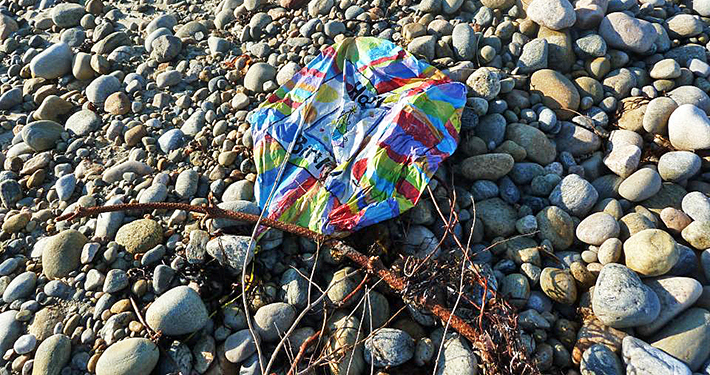
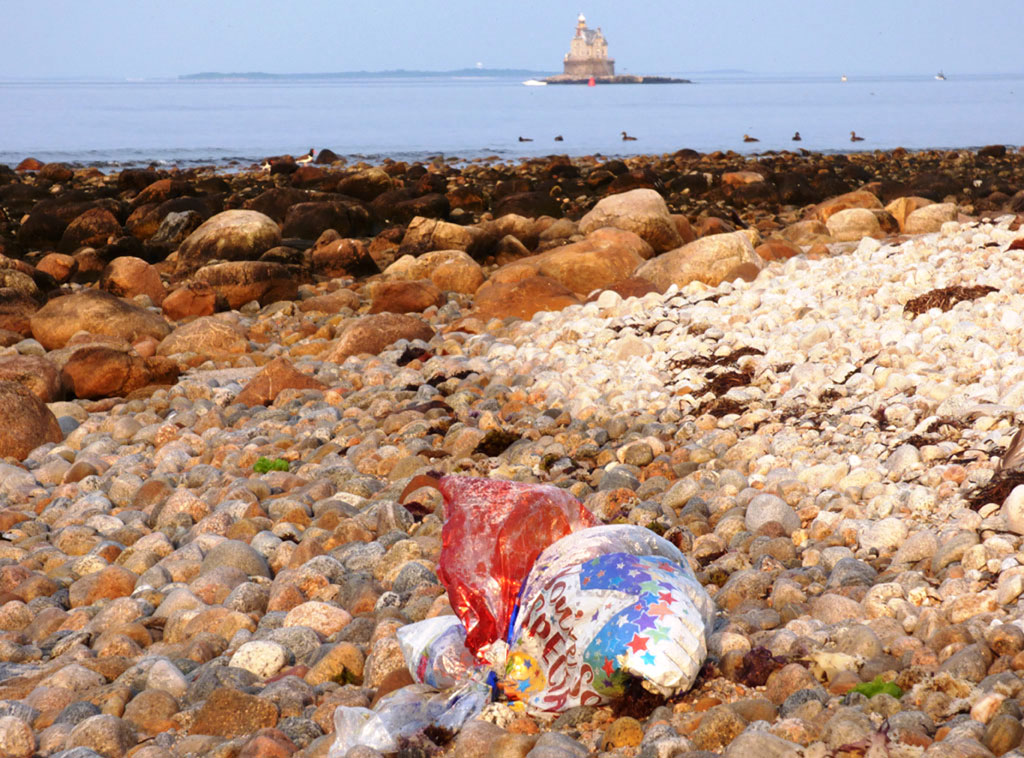
Deceptively festive, balloons–both Mylar and “biodegradable natural latex rubber”–pose a grave threat to marine life and add to mountains of marine debris. Justine Kibbe Photo

Connecticut, California, Florida, Tennessee and Virginia have laws on the books that limit massive balloon releases, and a New York State Senate/Assembly bill introduced in March would impose stiff penalties for the intentional release of even one balloon.

But are people listening? Dead or injured sea turtles, dolphins, whales and other marine species, as well as terrestrial animals tell a different story. It is estimated that over 100,000 marine mammals die each year from plastic entanglement or ingestion, including five percent of all dead sea turtles that had ingested “natural” latex balloons.

“Biodegradable natural latex rubber” balloons appeal to eco-conscious consumers, but actually fuel corporate “greenwashing” programs, which are reportedly unsubstantiated claims of environmentally friendly and safe products. In reality, many additional chemicals must be added to shape milky natural rubber latex sap into the products we know as balloons.

Animals are usually killed from stretchy balloons blocking digestive tracts, preventing the ingestion of nutrients, leading to starvation and death. Animals also can become entangled in balloons and attached ribbons making them unable to move or eat.

Another hazard of balloon releases is related to power loss. Some power companies estimate that 16-20% of annual outages are due to balloons. Metallic or foil balloons that conduct electricity interacting with power lines are reportedly almost always the culprit.

https://www.youtube.com/watch?v=5fd1I9rHY-A
Mylar balloon floats in water next to jellyfish, the favorite food of sea turtles. When a turtle mistakes the balloon for food, the balloon can clog its digestive system, causing the turtle to starve to death. Some experts have said a springtime breeze can carry balloons for miles, taking them from points inland to Long Island Sound and to the four species of sea turtles that inhabit Connecticut waters.

June 21, 2021 22 views
News

Carpenter Bees Are Important Native Pollinators

by Betty Ann Rubinow June 15, 2021

Carpenter Bees Are Important Native Pollinators

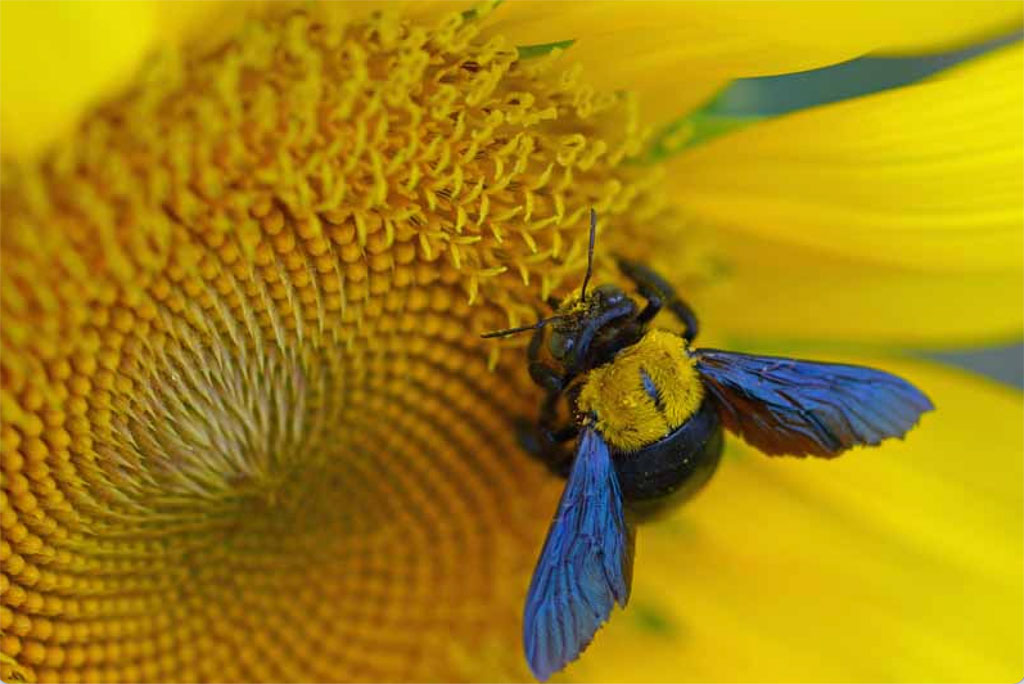
Carpenter bees not only drill through wood, but they also pollinate flowers. They are easily identified by their large size and sleek black abdomens as opposed to smaller bumble bees that have fuzzy black and gold striped abdomens.

Many people think of carpenter bees as nuisance insects that require extermination. In fact, these bees are important native pollinators.

It’s difficult to keep that in mind when this largest of native bees is boring perfectly round holes into the eaves, posts, beams, and/or decks of your home. Prevention, however, is the key to protection.

One way to keep some carpenter bees a safe distance from your home is to pound a 2 x 4 of unfinished wood into a corner of your property. Above video taken by FIConservancy President Tom Sargent shows that this technique has proven successful on Fishers Island!

Carpenter bees love untreated wood, so all exposed wood surfaces should be painted with a primer and two coats of exterior paint. Stains and varnishes also offer some protection but are less effective than paint.

Prevention is best done in early spring before nesting activity begins, and holes should be filled in the fall, only after the bees have emerged from the nest.

These bees will not eat your house like carpenter ants or termites. They do not eat wood but rather drill through it to create space to lay eggs and often will return annually to the same nesting area. The damage they cause is usually minor and cosmetic in nature. But over time, if left unchecked, the damage can worsen and lead to more serious problems.

Large male bees buzz around the nest to protect the nesting area, but they have no stingers. The females have stingers, and will sting only when provoked.

Carpenter bees are vital to our native plant communities and gardens, feeding on nectar and transferring pollen. With a decline in native bee pollinators due to diseases, pests, pesticides, stress and malnutrition, maintaining a healthy population of carpenter bees is more important than ever.

June 15, 2021 28 views
News

Marine Debris Repurposed!

by Betty Ann Rubinow April 22, 2021

Marine Debris Repurposed!

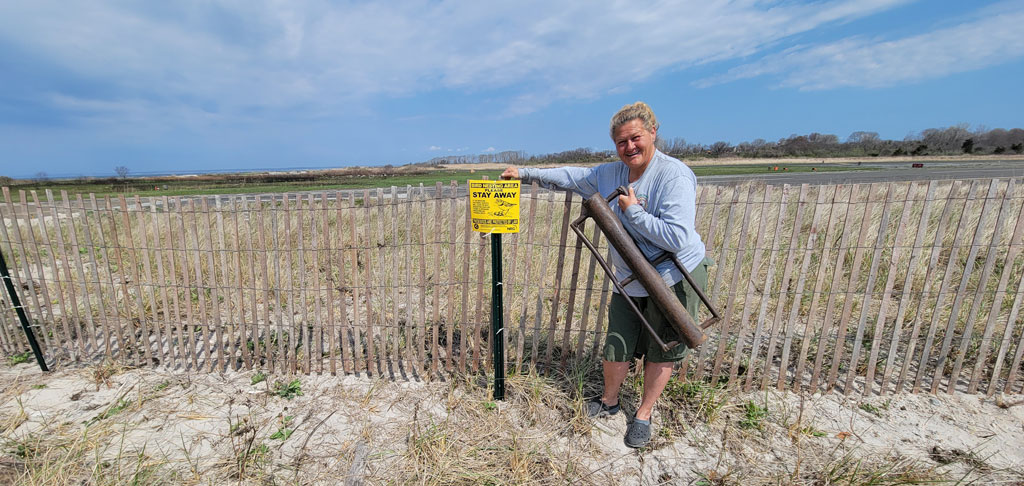
(Clockwise) Geb Cook, District Manager of FIFerry District; Michele Klimczak, FIConservancy’s Marine Debris Coordinator; full length of fencing installed on South Beach; rolled fencing that washed up on Fishers Island. Michele Klimczak and Geb Cook Photos

In late April, Michele Klimczak discovered a roll of wooden fencing that had washed up on a beach in the area of Clay Point Road. Michele, FIConservancy’s Marine Debris Coordinator, has cleared tons of marine debris from Fishers Island shores in recent years.

“I think this fencing is from Ocean Beach in New London,” Michele said. “It’s not unusual for their fencing to roll into the water. I try to reuse and repurpose what I can and had a great idea for this fencing!

“Why not install it on South Beach to protect the nesting area of shorebirds!

“The fencing was partially buried, and I couldn’t budge it. So I asked Joe Brock if he could use his machinery with a digger scoop to pull it out of the sand. He gladly offered to help, dug up the fencing and dumped it into the back of my truck.”

Geb Cook, District Manager of FIFerry District and Gordon Murphy, FIFerry Business Manager, helped Michele carry and install the fencing at Bud’s Hole/Sanctuary of Sands. Geb and Gordon brought supports for the fencing and a tool to secure them in the ground.

Geb and Michele cleared and hauled away all of the cans and plastic waste from the brush in and around the dune that is a nesting ground for shorebirds. The fence is meant to deter walkers from climbing the dune. A bright yellow nesting bird sign is posted on the fence for an extra measure of caution.

“This was truly a team effort!” Michele said.

Sanctuary of Sands on South Beach adjacent to Elizabeth Airport runway is part of the area, including the Parade Grounds, owned by the Town of Southold and managed by the FIFerry District. This area is also part of FIConservancy’s 12-year program to restore and maintain grasslands.

April 22, 2021 21 views
Newer Posts
Older Posts

Upcoming Events

Notice
There are no upcoming events.

Keep in touch

Facebook Instagram Youtube

Recent Posts

  • What to Do if You Find a Stranded Animal

  • Update on Phragmites Work and New Wetlands Regulations

  • SPOTTED in New London!

  • 2025 Fall Migratory Bird Count Results

  • Fall 2025 Migratory Bird Count

  • FIRST Summer Highlights 2025

  • Shorebirds Take Flight- The 2025 Season Wrap-Up

  • Buzz Be Gone- Final Spray of the Season

  • Silver Eel–Race Point Coastal Trail Opens with Dedication to Janet Harvey

  • August Shorebird Update

Explore

    • Home
    • Who We Are
    • What We Do
    • How To Help
    • News
    • Events

Connect

    • Join Us
    • Donate
    • Contact Us
Facebook Instagram Youtube
© 2026 All Right Reserved. Fishers Island Conservancy
Fishers Island Conservancy
  • Home
  • Who We Are
    • Our Mission
    • Our History
    • Our People
    • Contact Us
  • What We Do
    • Shorebird Monitoring
    • Annual Bird Counts
    • Marine Debris Clean Up
    • Island Sentinels
    • Research and Survey Team
    • Grassland Restoration
    • Mosquito Control
    • Invasive Plant Management
  • How To Help
    • Donate
    • Join Us
  • News
  • Events
    • Calendar