Annual Bird Counts
Why We Monitor Birds
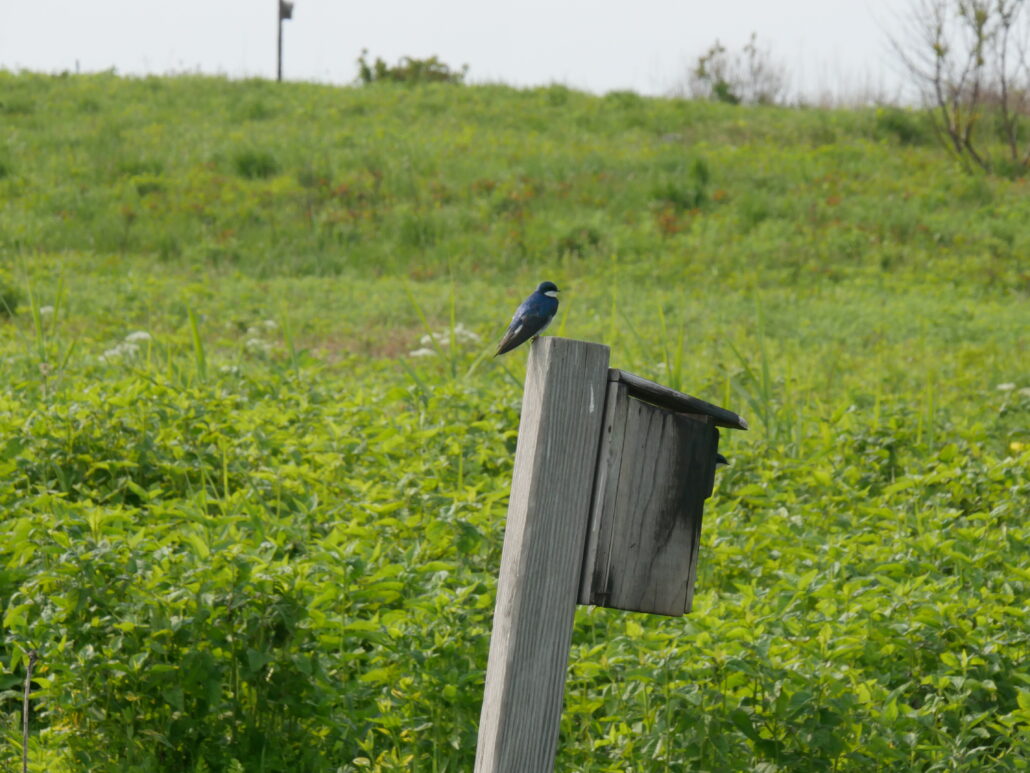
Since 2014, FI Conservancy has conducted seasonal bird counts every spring and fall to better understand the bird communities that use the island. These counts help us track which species are present, how many are observed, and how bird populations change over time. We also document uncommon and notable sightings that add to our understanding of Fishers Island’s role in regional migration.
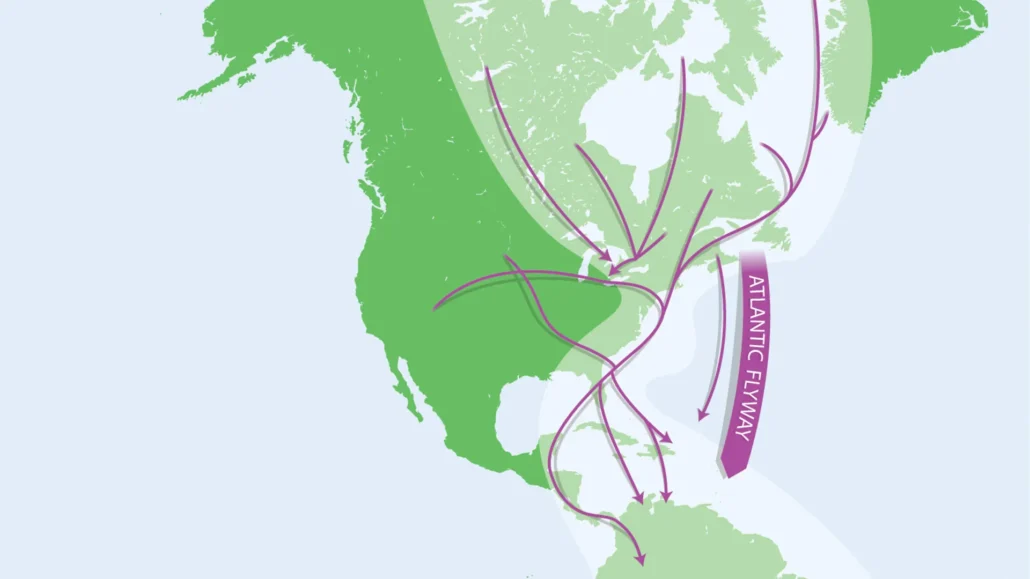
Fishers Island sits along the Atlantic Flyway, making it an important stopover and habitat for both resident and migratory birds. By returning to the same sites year after year, these bird counts provide valuable insight into how birds are using the island and how local habitats are supporting them.
Birds are strong indicators of ecosystem health. Because they respond quickly to changes in habitat, food availability, and climate, shifts in bird populations often reflect broader environmental changes.
By consistently monitoring birds, we are able to…
track long term trends in species diversity and abundance
identify early signs of habitat loss or environmental stress
better understand how climate change is influencing migration timing and behavior
evaluate how restoration and land management efforts are supporting wildlife
These observations help guide conservation decisions and strengthen the scientific foundation behind the Conservancy’s work.
How the Bird Counts Are Conducted
FI Conservancy follows a standardized bird count method developed by the Audubon Society to ensure consistency and reliability across years.
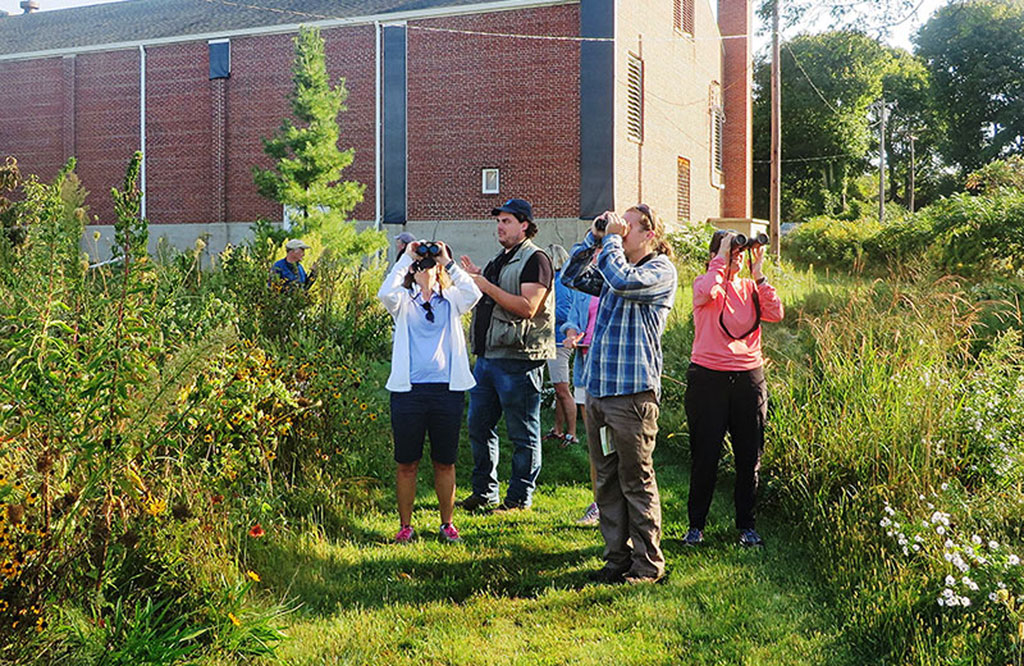
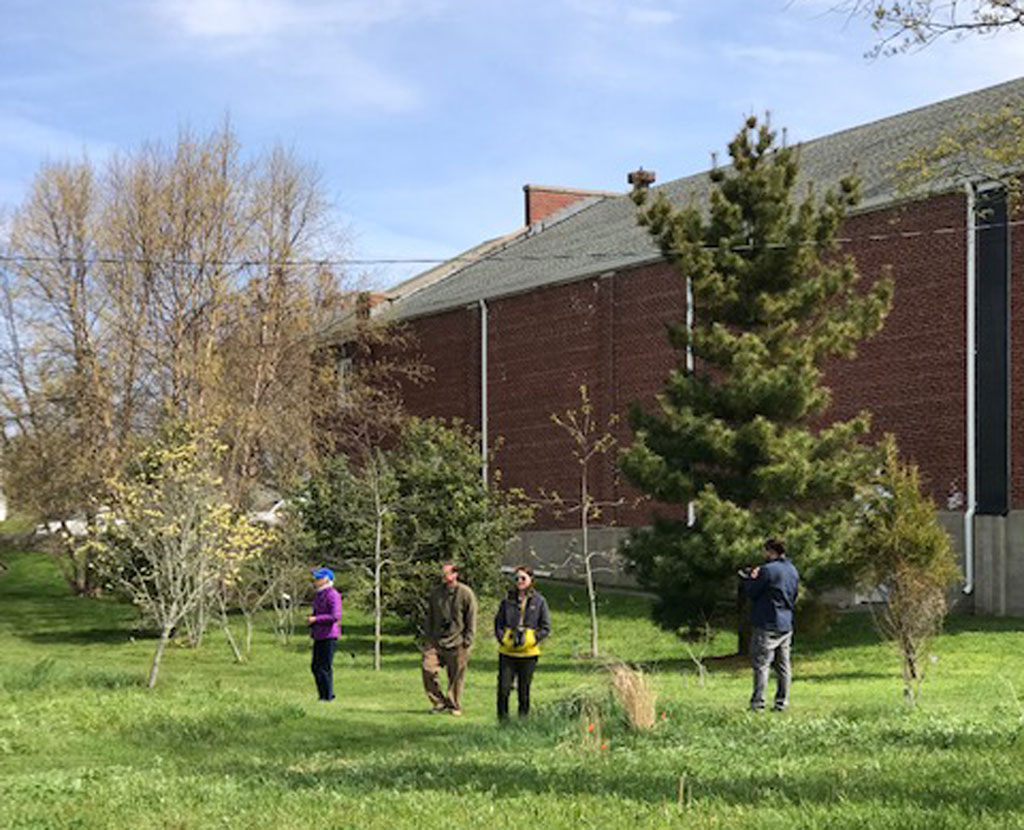
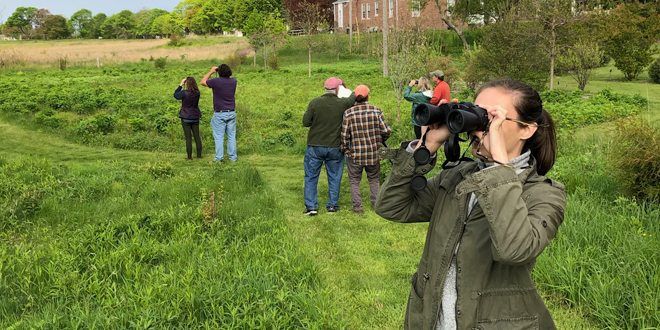
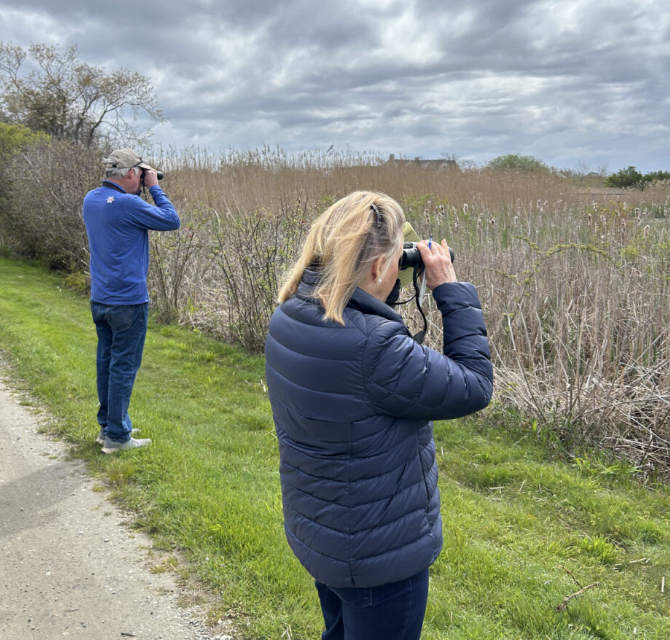
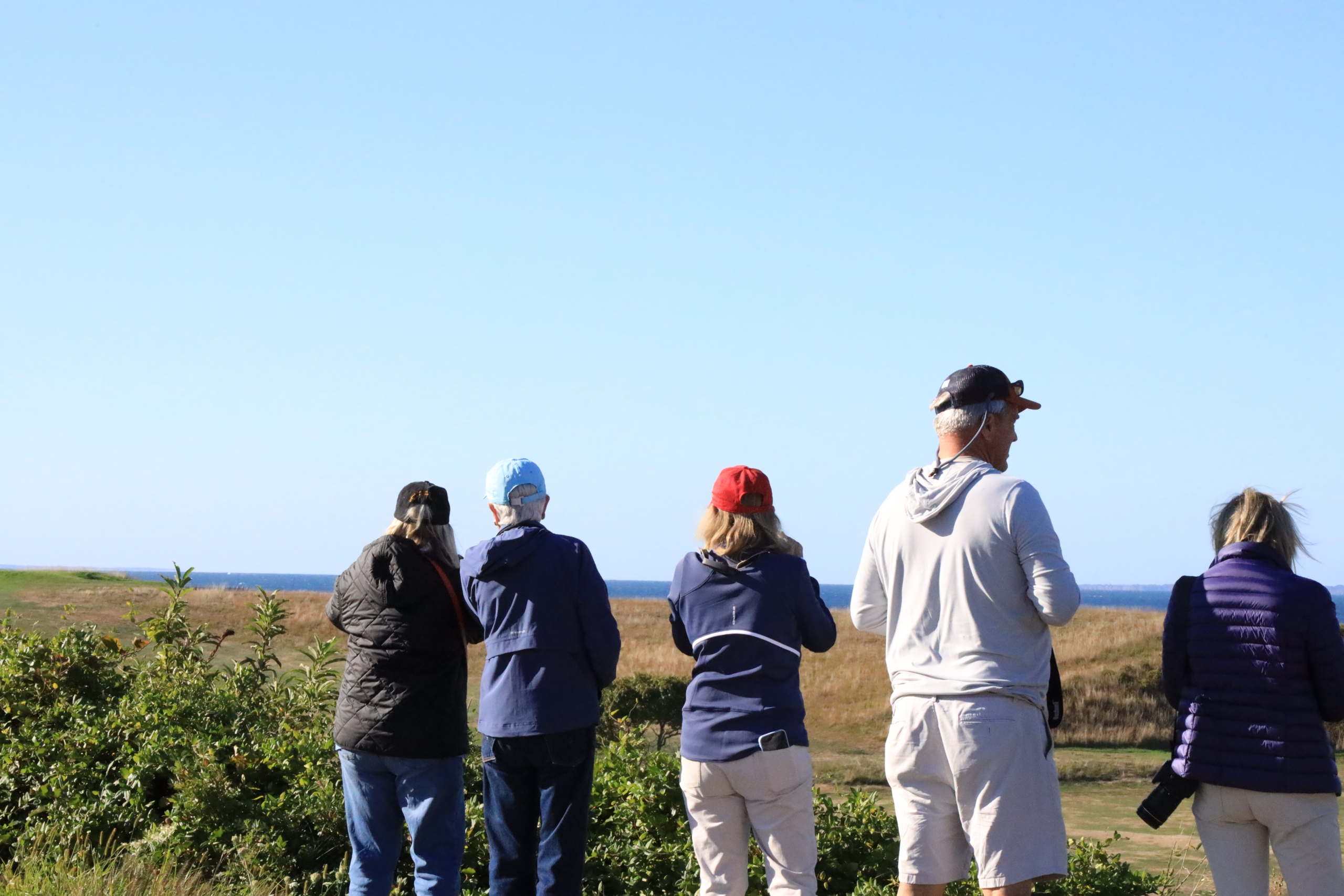
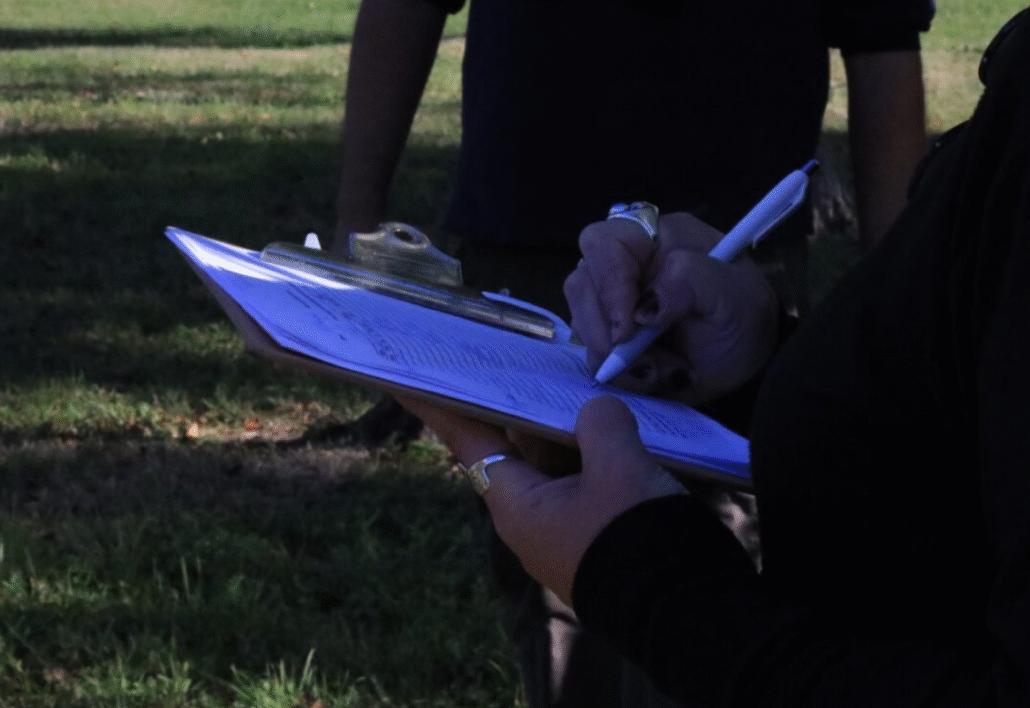
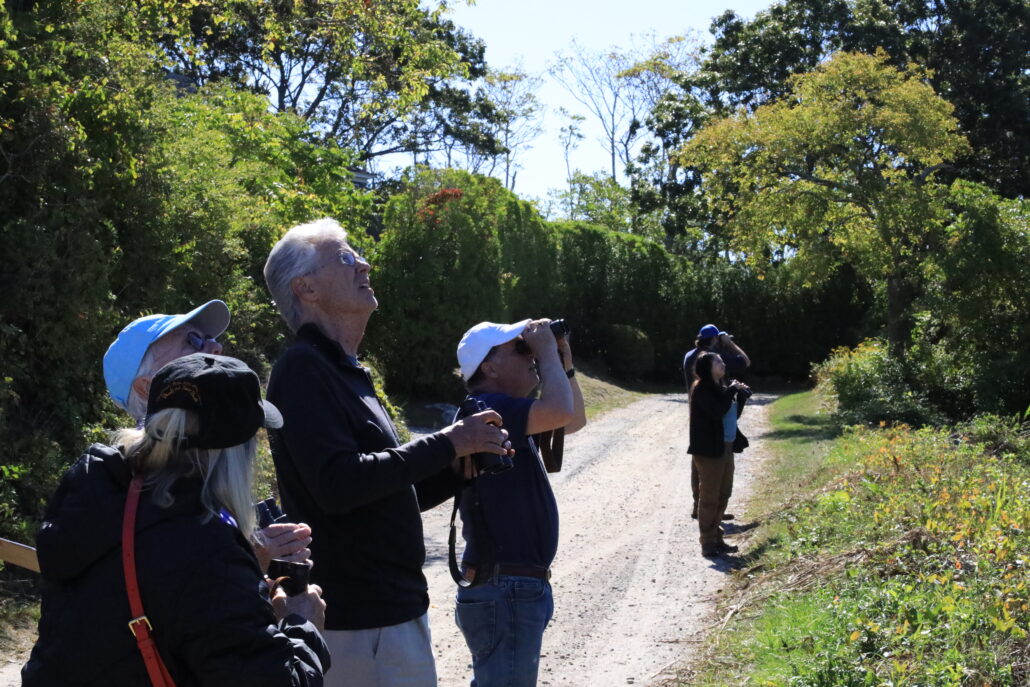
During each count, observers visit 15 fixed locations across the island, moving from the West End to the East End. At each site, observers stop for five minutes and record all birds seen or heard during that time.
Using the same locations, timing, and methods for each count allows us to compare results from season to season and year to year. Counts are conducted by trained observers who follow established protocols, helping ensure the data reflects real changes in bird populations rather than differences in observation methods.
What the Data Shows
Consistent monitoring over time gives us a clear picture of bird activity on Fishers Island and how it changes from season to season and year to year.
One way we visualize this information is through a bar chart showing the number of species recorded during each spring and fall count from 2014 to 2024. Spring counts consistently show higher species diversity than fall counts. This pattern reflects Fishers Island’s role as an important stopover along the Atlantic Flyway, where large numbers of migratory birds pass through during spring migration.
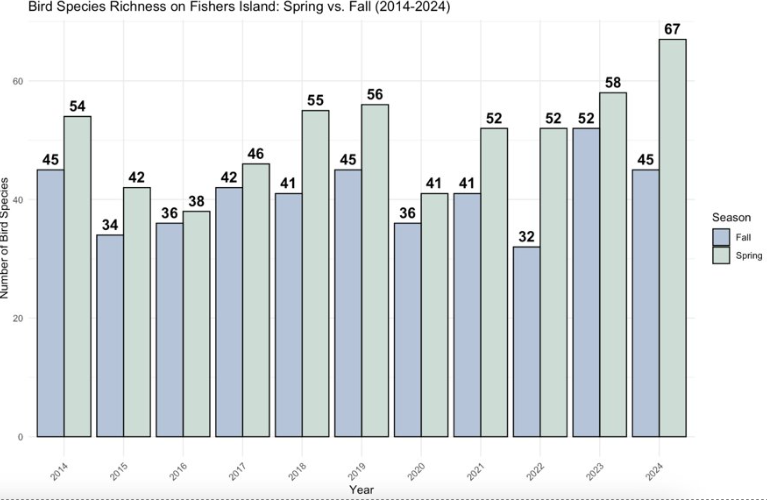
On average, counts record about 47 species in the spring and 35 species in the fall. These numbers highlight how heavily birds rely on the island during peak migration periods.
Together, these visual tools help translate years of observations into a clearer understanding of how birds are using Fishers Island and why protecting these habitats matters.
As bird populations and migration patterns continue to shift, long term monitoring becomes increasingly important. The Fishers Island Conservancy remains committed to continuing these counts each spring and fall, building a growing dataset that supports both local and regional conservation efforts.
Through careful observation and consistency, bird counts help us understand the health of the island today and make informed decisions that support birds and their habitats into the future.