Our History
Fishers Island Conservancy was established in 1985 to protect the land, waters, and wildlife that define Fishers Island. From the beginning, the Conservancy sought to balance thoughtful stewardship with scientific understanding, ensuring that the island’s natural resources would be protected for future generations.
Fishers Island has long been recognized for its ecological importance. Surrounded by the waters of Long Island Sound and shaped by coastal habitats, grasslands, wetlands, and freshwater ponds, the island supports a remarkable diversity of plant and animal life. These ecosystems are not only beautiful, but fragile.
By the early 1980s, growing environmental concerns made it clear that Fishers Island needed a coordinated conservation effort. The Conservancy was formed to help address these concerns and advocate for the long-term health of the island’s environment.
In its earliest years, the Conservancy operated less like a traditional land conservation group and more like an environmental response organization. Longtime island resident Joe Henderson, who has observed the Conservancy’s work for decades, once described the early organization as functioning almost like a “fire department,” mobilizing quickly to respond to environmental threats as they appeared.
1980s-1990s – Early Environmental Advocacy
In its early years, much of the Conservancy’s work focused on protecting the waters surrounding Fishers Island.
During the 1980s and 1990s, dredging of the Thames River to accommodate larger submarines at the New London submarine base raised concerns about the disposal of dredged material in nearby waters. These threats were tied to broader military and commercial activity in the Thames River and New London Harbor area, making Fishers Island’s surrounding waters part of a much larger regional environmental debate.
Proposed offshore dumping sites near Fishers Island threatened marine habitats and fisheries. The Conservancy became actively involved in opposing disposal practices that could damage the island’s surrounding waters and ecosystems.
Protecting Marine Resources
Fishers Island historically supported a small but sustainable lobster fishery, protected by a designated lobster fishing zone surrounding the island.
During the 1990s, pressure from outside fishing interests and growing environmental concerns about dredge spoil dumping led to conflicts over fishing rights and marine protections.
These disputes became known locally as the “lobster wars,” highlighting the connection between conservation, local livelihoods, and the long-term health of Long Island Sound.
Leadership of John H. Thatcher Jr.
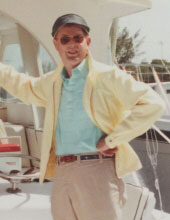
The early direction of the Conservancy was strongly shaped by John H. Thatcher Jr., whose leadership helped guide the organization during its formative years.
Born in Brooklyn and raised in New Jersey, Thatcher spent his childhood summers on Fishers Island, where he developed a deep appreciation for the island’s natural environment. That connection later inspired his commitment to conservation and his leadership within the Fishers Island Conservancy.
Thatcher was known for bringing a scientific mindset and determined persistence to environmental issues. He was deeply concerned with protecting the island’s waters, wildlife, and habitats, and he played an important role in shaping several of the Conservancy’s early initiatives.
One of his most lasting contributions was helping establish a non-toxic mosquito control program in 1985, replacing widespread chemical spraying with more environmentally responsible larval control methods. Working with seasonal applicators (originally the “mosquito girls”) the program remains in use today.
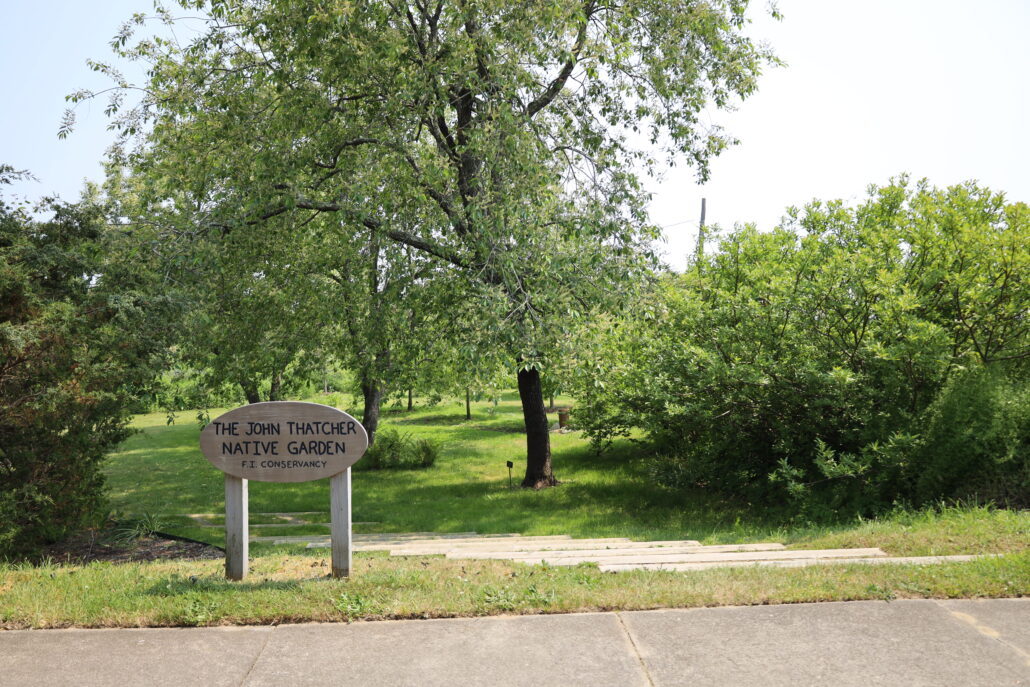
In recognition of his lasting impact, the John Thatcher Native Garden was created as both a tribute to his legacy and a living example of the Conservancy’s commitment to native plants and habitat restoration.
The creation of the John Thatcher Native Garden was also a true community effort. Pat Schiestl, then manager of the Big Club and an early Conservancy board member, generously donated time and support to the project. Gerrit Goss, a landscape designer and early board member, designed much of the garden. Big Club staff contributed countless hours planting native plugs throughout the space, helping bring the garden to life as a shared conservation effort and a lasting reflection of Thatcher’s vision for restoring native plant communities on Fishers Island.
Today, the garden continues to serve as a reminder of the Conservancy’s early commitment to practical conservation and the importance of community involvement in protecting the island’s natural landscapes
Water Quality and Harbor Protection
During the 1990s, the Conservancy began addressing water quality concerns in Fishers Island’s harbors.
Testing revealed contamination in areas such as Hay Harbor and Silver Eel Cove, often linked to aging septic systems and drainage issues.
Thatcher helped organize water sampling efforts to better understand the problem.
Tom Sargent was among those who assisted with early morning water sampling trips, helping collect and document data that would guide improvements to harbor water quality. This work reflected the Conservancy’s early commitment to field-based, science-driven conservation.
Early 2000s – Recognizing Habitat Loss
By the early 2000s, attention turned to a new environmental challenge: the rapid loss of native habitats across Fishers Island.
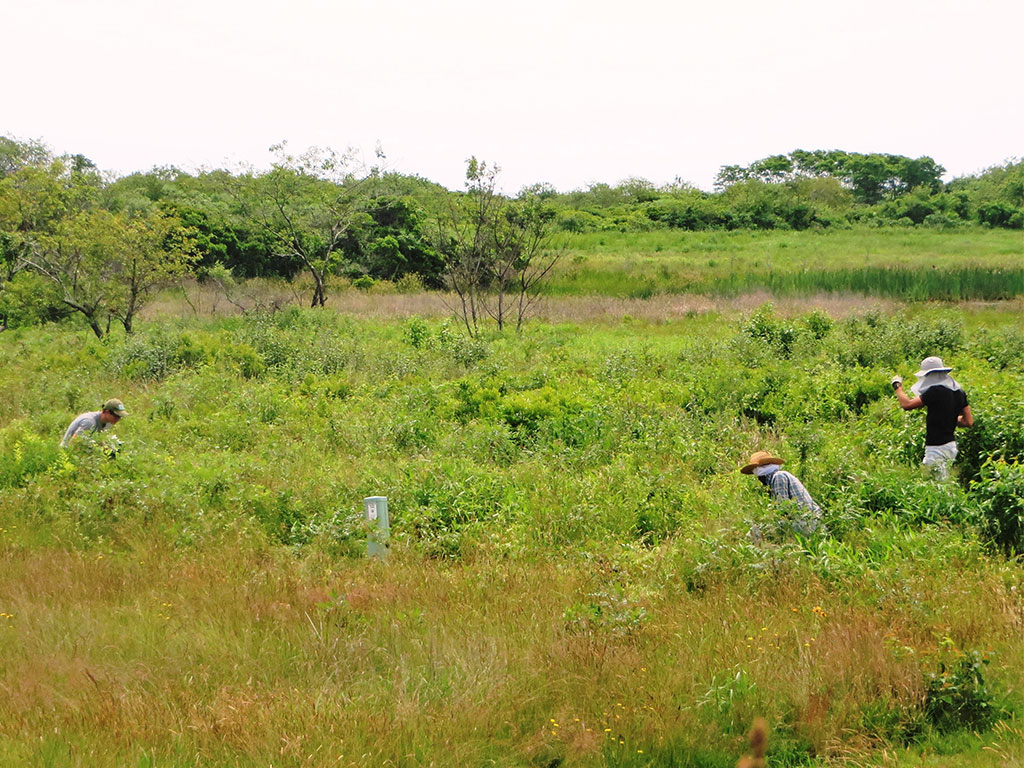
Grasslands were gradually disappearing as invasive vines and shrubs spread across the landscape. A presentation circulated around 2000-2002 helped raise awareness that the island’s grasslands – among its most important wildlife habitats – were in decline.
This moment marked a shift in the Conservancy’s work from responding to individual environmental threats toward actively managing and restoring habitats. In many ways, the organization was moving from a largely defensive role to a more proactive stewardship model.
2010 – Habitat Committee and Island-Wide Planning
In 2010, island resident Joe Henderson helped organize a Habitat Committee and Technical Committee, bringing together representatives from several Fishers Island organizations to address the growing spread of invasive species and the loss of native grasslands.
Drawing on input from organizations across Fishers Island, the committees began viewing the island as one connected ecological system rather than a collection of individual properties.
A field report prepared on October 10, 2010 warned that invasive species such as bittersweet, honeysuckle, clematis, bullbriar, porcelain berry, kudzu, crown vetch, and phragmites were spreading rapidly and overwhelming native vegetation.
The report concluded that “standing still is not an option.” It also helped lay the groundwork for a more coordinated, island-wide approach to habitat restoration.
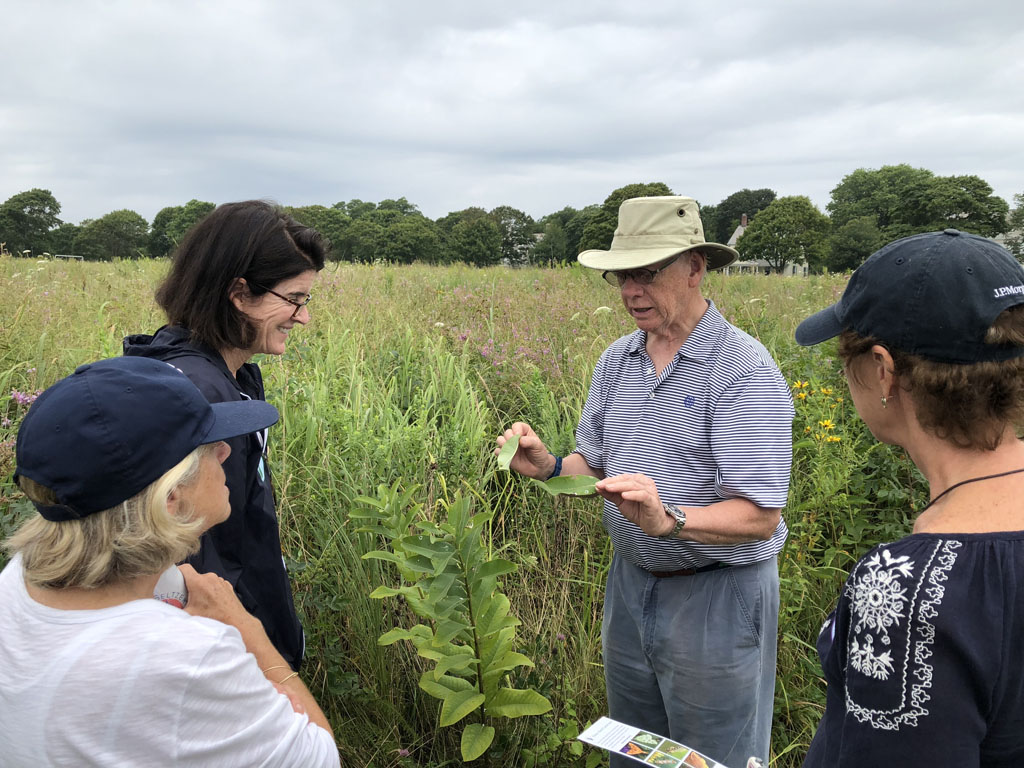
Grassland Restoration
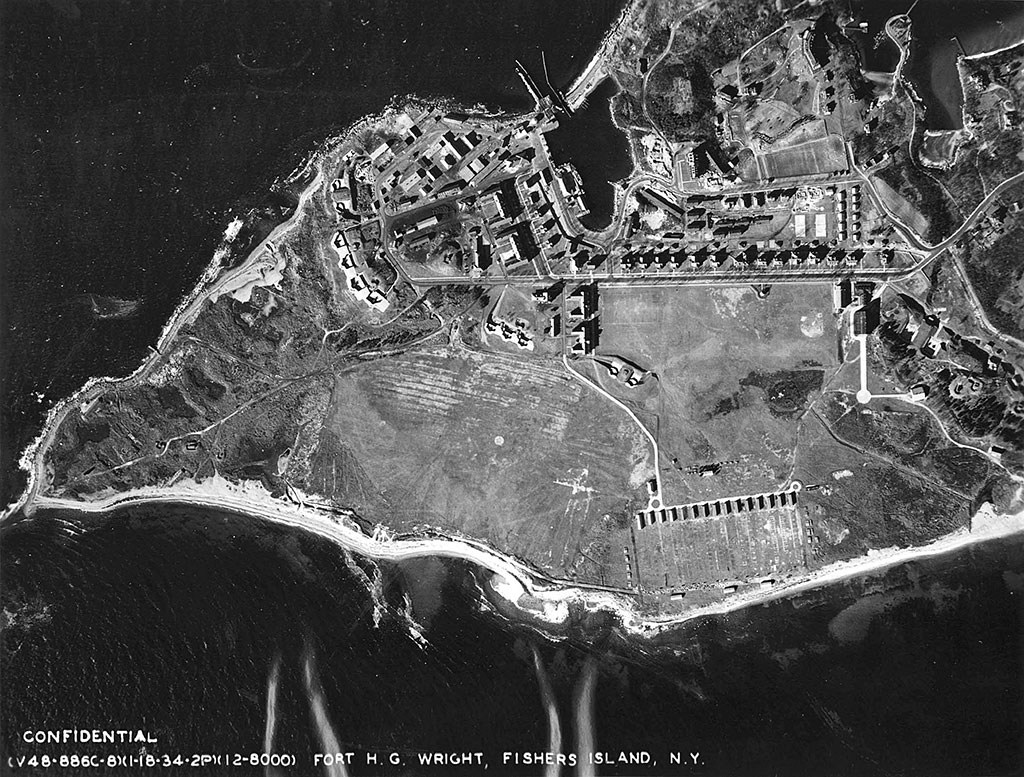
The Habitat Committee identified approximately 123 acres of grassland habitat on Fishers Island, with 51 acres considered high-priority restoration areas.
Key sites included:
Airport areas
Parade Ground
Middle Farms
Pickett Landfill
Land across from the Ball Field
Restoration strategies included controlled burns, invasive species removal, and reseeding with native warm-season grasses such as Big Bluestem, Little Bluestem, Switchgrass, and Indiangrass, which provide critical habitat for pollinators, birds, and other wildlife.
Today
Today the Fishers Island Conservancy continues to protect and restore the island’s natural resources through habitat management, wildlife monitoring, invasive species control, water quality work, and environmental education.
What began in 1985 as a small group responding to immediate environmental threats has grown into a long-term stewardship organization dedicated to protecting Fishers Island’s ecosystems for generations to come.