
Shorebird Monitoring

Fishers Island is home to some of the most important remaining beach habitat for nesting shorebirds in New York. Quiet shorelines, intact dune systems, and relatively low disturbance make the island a rare refuge for species that have been pushed out of more developed coastal areas.

Federally endangered piping plovers and New York State listed threatened least terns rely on open sand beaches to nest and raise their young. These birds nest directly on the ground with no shelter, making them especially vulnerable to foot traffic, pets, predators, weather events, and habitat loss. Protecting these species is a critical part of maintaining healthy coastal ecosystems.

When piping plovers choose to nest on Fishers Island, it is a strong indicator that our beaches are functioning as healthy ecosystems. Their presence tells us that the habitat conditions they need still exist here, something that is becoming increasingly rare across the region.

The Piping Plover Recovery Plan

The shorebird monitoring work on Fishers Island is guided by a larger, science based conservation effort known as the 1996 U.S. Atlantic Coast Piping Plover Recovery Plan. This plan was created in response to steep population declines caused by coastal development, habitat loss, and increasing human disturbance along beaches.

The goal of the recovery plan is to rebuild a stable, self sustaining population of piping plovers along the Atlantic coast.

The recovery plan sets a long term objective of increasing and maintaining approximately 2,000 breeding pairs of piping plovers along the Atlantic coast.

Rather than relying on a single year of data, the plan emphasizes consistency over time. Success is measured using both population size and nesting success across multiple years.

A key part of the recovery plan is productivity, which is defined as the number of chicks that survive long enough to fledge, meaning they are able to fly.

To be considered stable or recovering, each region must average at least 1.5 fledged chicks per breeding pair over a five year period. This benchmark reflects the minimum number needed to offset natural losses and allow the population to persist over time.

If productivity falls below this level, populations are likely to decline even if adult birds continue to return.

To account for regional differences in habitat, development, and disturbance, the Atlantic Coast population is divided into four recovery units, each with its own population goal.

  1. Atlantic Canada, with a goal of approximately 400 breeding pairs
  2. New England, with a goal of approximately 625 breeding pairs
  3. New York and New Jersey, with a goal of approximately 575 breeding pairs
  4. Southern Atlantic Coast, including Delaware, Maryland, Virginia, and North Carolina, with a goal of approximately 400 breeding pairs

Fishers Island falls within the New York and New Jersey recovery unit, a region that faces some of the greatest challenges due to heavily developed and highly used beaches.

Because the New York and New Jersey recovery unit has historically struggled to meet productivity goals, successful nesting sites within this region are especially important.

Fishers Island’s quieter beaches, intact dune systems, and active monitoring help provide the conditions piping plovers need to nest and raise chicks successfully. The work done here contributes directly to meeting regional and Atlantic wide recovery goals.

What happens on Fishers Island is part of a much larger conservation picture!

What We Are Doing

Turning a recovery plan into real progress depends on what happens on individual beaches each spring and summer. On Fishers Island, that work is carried out by Fishers Island Conservancy through consistent monitoring, protection measures, and community outreach.

Since 2024, the Conservancy has partnered officially with the New York State Department of Environmental Conservation to monitor piping plovers and least terns on the island as part of the Long Island Colonial Waterbird Survey. This partnership provides the statewide framework and standardized protocols, while Fishers Island Conservancy conducts the on-the-ground monitoring across our beaches.

Each season, Conservancy staff track nesting activity throughout the breeding period. We document where birds are nesting, how nests progress, and what factors influence success. This includes recording nest counts, hatch timing, chick survival, predator activity, and human disturbance, along with site conditions that may affect nesting outcomes.

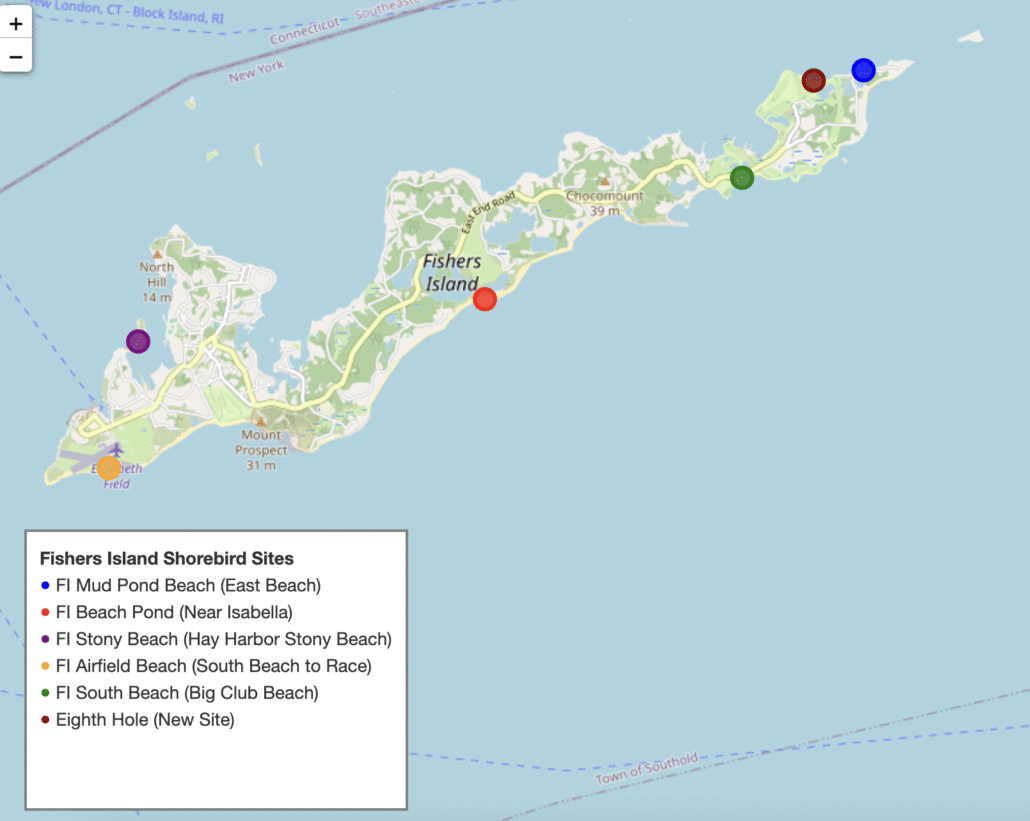
Monitoring takes place across established survey sites around the island so we can compare results between beaches and identify which areas consistently provide strong nesting habitat. These long term records allow us to see patterns over time, adapt protection strategies, and share accurate data that contributes to regional recovery efforts.

This is careful, ongoing work that happens quietly in the background, but it is essential. By keeping consistent records and actively protecting nesting habitat, Fishers Island Conservancy helps ensure that our beaches remain a safe place for shorebirds to return year after year.

Shorebird Monitoring Results: 2024 Season

This recovery framework is why Fishers Island Conservancy formally partnered with the New York State Department of Environmental Conservation in 2024 to begin coordinated shorebird monitoring through the Long Island Colonial Waterbird Survey.

Through this partnership, Conservancy staff follow standardized state protocols to monitor piping plovers and least terns across six established sites on the island. Monitoring includes regular site visits throughout the breeding season to document nesting attempts, eggs, chicks, fledging success, disturbances, and habitat conditions.

This work allows Fishers Island to contribute reliable data to statewide conservation efforts while also informing local management decisions.

The 2024 season marked the first formal year of state coordinated shorebird monitoring on Fishers Island. Much of the focus that year was on establishing protocols, identifying active nesting sites, and understanding how birds were using island beaches.

5 piping plover pairs nested across the island in 2024. A total of 12 eggs were laid, and 8 chicks successfully fledged. This resulted in an overall productivity rate of 2.0 fledglings per pair, exceeding the regional recovery benchmark.

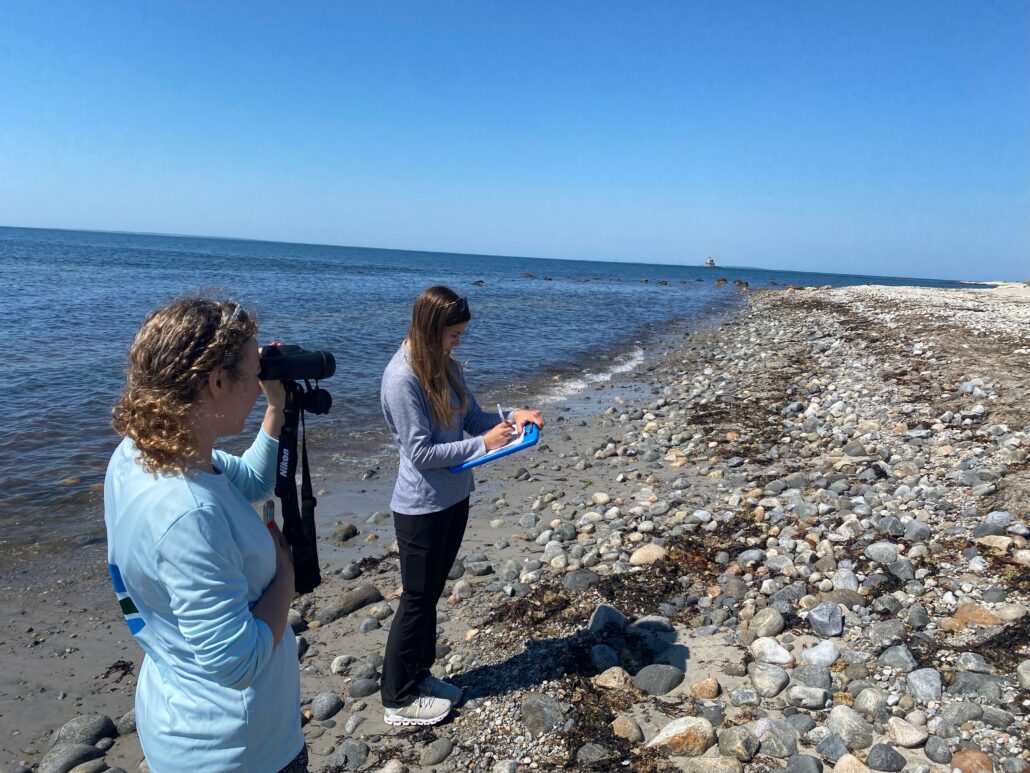
NYSDEC Casey Pendergast training Anna W.
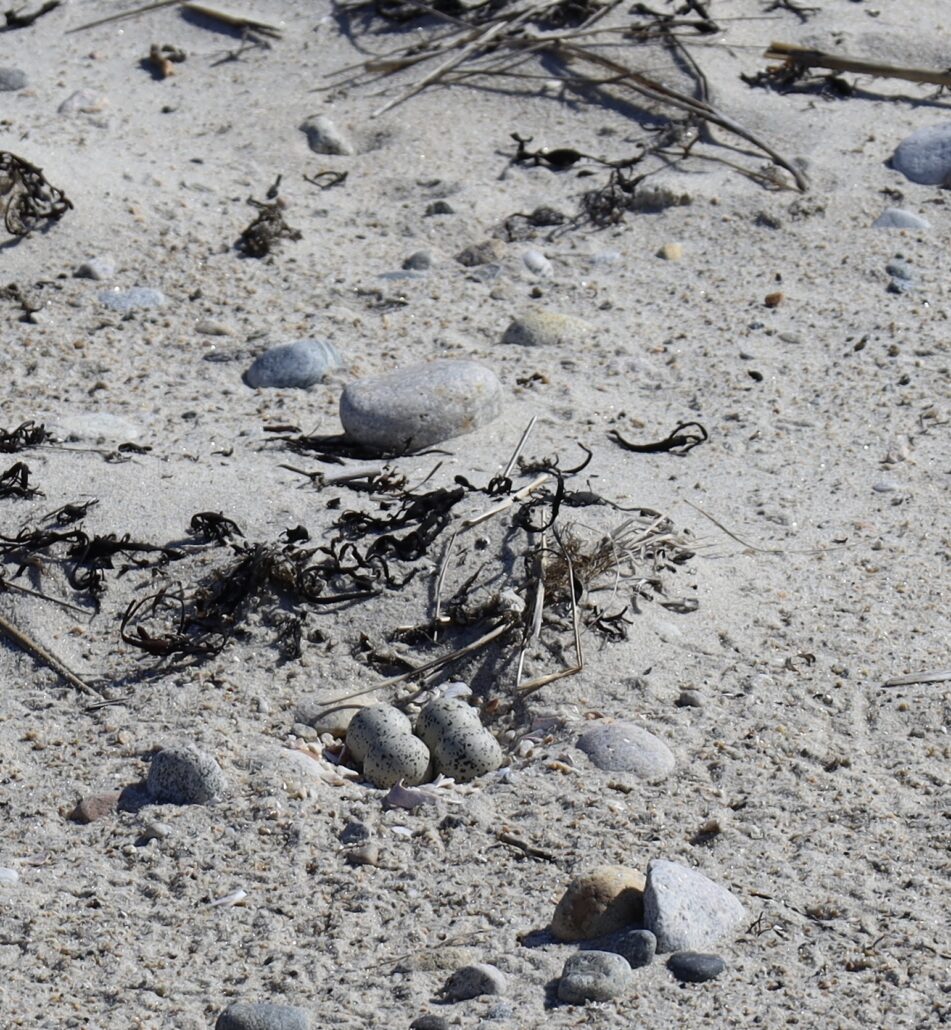
Piping Plover Eggs Photo by Anna White

Several sites stood out for their success. Eighth Hole was particularly productive, with one pair successfully fledging all four chicks. Airfield Beach also supported strong nesting success, while South Beach saw limited but positive outcomes.

At the same time, some sites showed no activity or unclear outcomes, underscoring the natural variability of shorebird nesting and the importance of continued monitoring. Overall, the 2024 season provided a strong baseline and confirmed that Fishers Island plays an important role within the New York and New Jersey recovery unit.

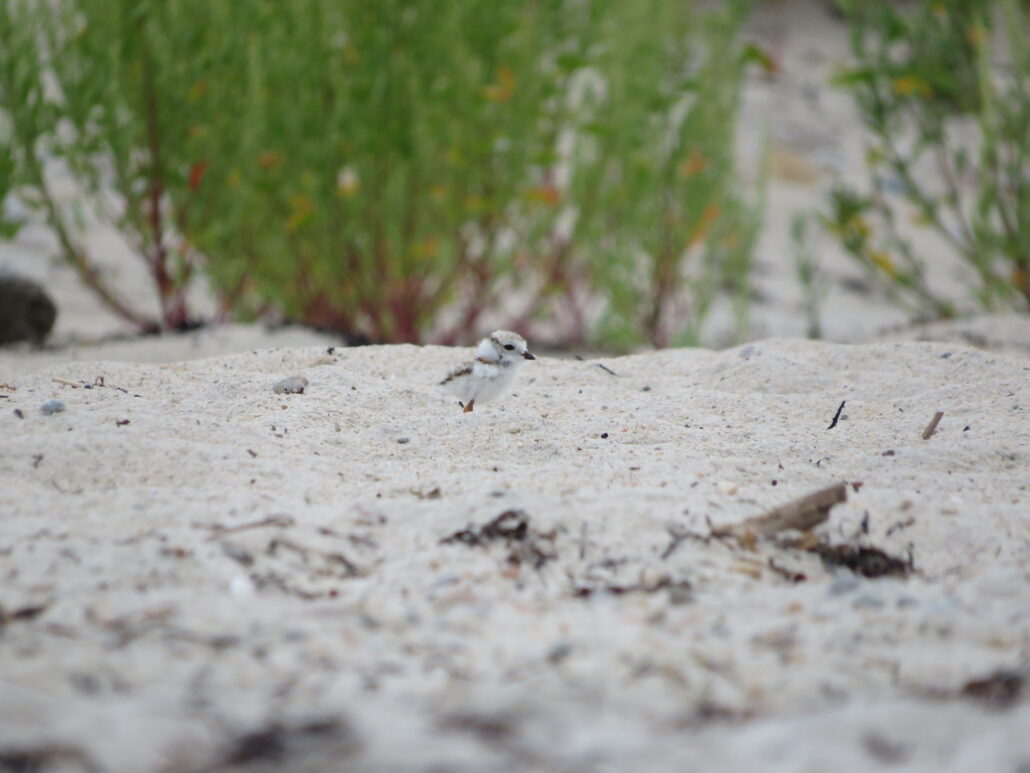
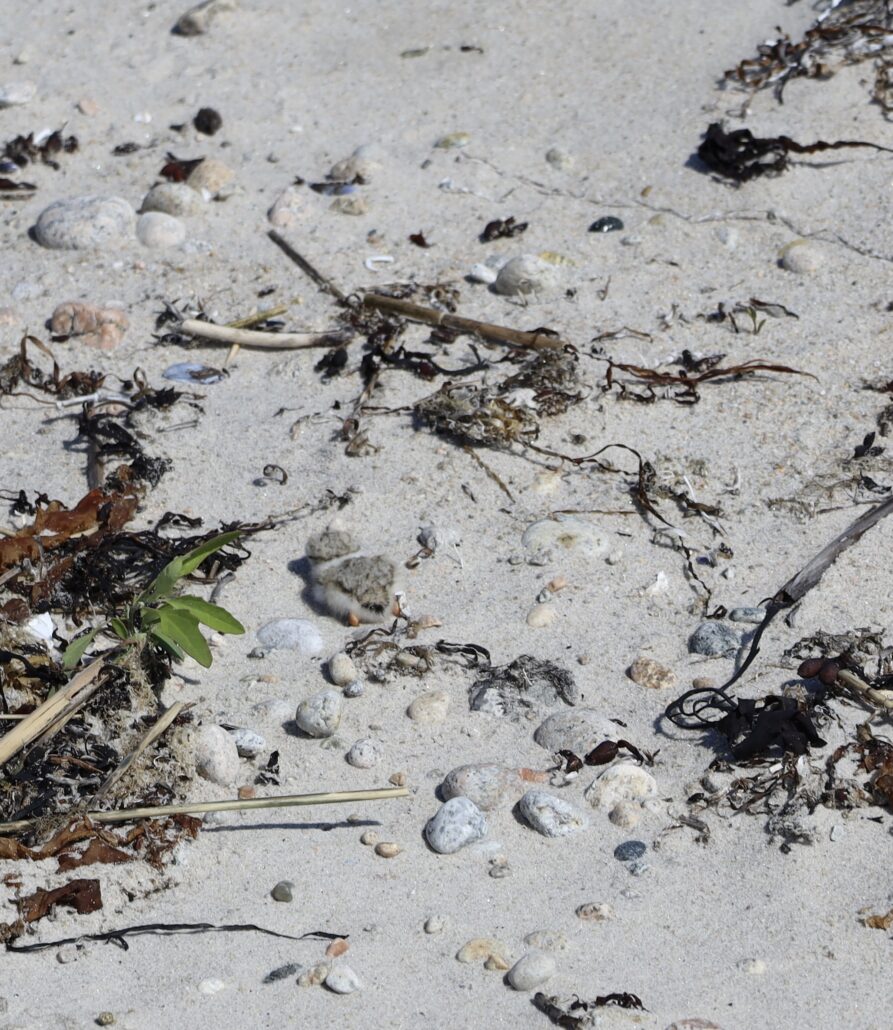
Piping Plover chick Photo by Elsie Harrington
Piping Plover chick Photo by Anna White
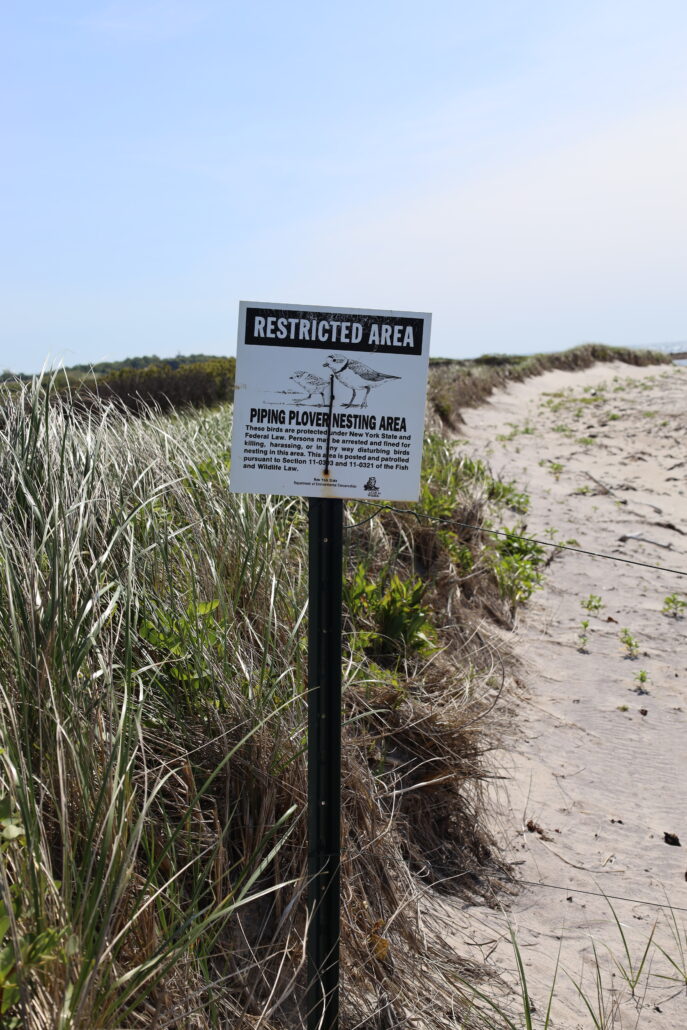
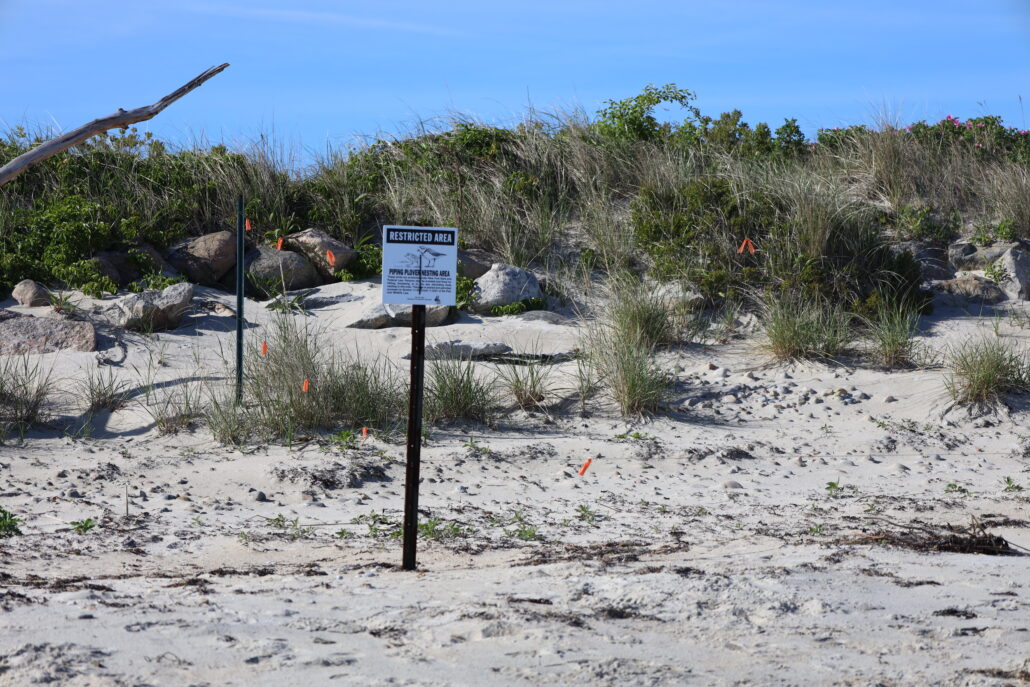
Symbolic Fencing

Shorebird Monitoring Results: 2025 Season

The 2025 season built directly on the foundation established in 2024 and introduced new management tools, including the use of symbolic fencing at select sites for the first time.

5 piping plover pairs nested on Fishers Island again in 2025. At least 12 eggs were laid, 10 chicks hatched, and 7 successfully fledged. This resulted in an overall productivity rate of 1.4 fledglings per pair, slightly below the regional benchmark but still within the range considered stable for this recovery unit!

Eighth Hole and Airfield Beach continued to be the most productive sites, though productivity was slightly lower than in 2024. Other sites showed mixed results. Some beaches that were active in 2024 saw no nesting in 2025, while previously inactive sites experienced new nesting attempts that were not successful.

These shifts highlight how shorebird nesting outcomes can change from year to year due to weather, disturbance, predator pressure, and habitat conditions.

The 2025 season was also the first year that symbolic fencing was installed at select nesting sites on Fishers Island. Fencing was used only in areas with higher levels of human activity, while quieter or more remote beaches were left unfenced.

Symbolic fencing is an important protection tool, but it can also introduce new dynamics. While fencing helps reduce trampling and off leash dog interactions, it can sometimes draw attention to nesting areas or influence predator behavior. Because 2025 was the first season fencing was used on the island, it is too early to determine how much it influenced nesting success on its own.

This is where long term monitoring becomes essential.

As additional seasons of data are collected, patterns will become clearer. Over time, this information will help guide where fencing is most effective, where alternative protection strategies may be more appropriate, and how management approaches can be refined.

Shorebird conservation is not built on a single season. It requires patience, consistency, and a willingness to learn from both successes and challenges. With each year of monitoring, Fishers Island Conservancy is strengthening the data needed to protect shorebirds and ensure that Fishers Island remains a safe haven for these species well into the future.
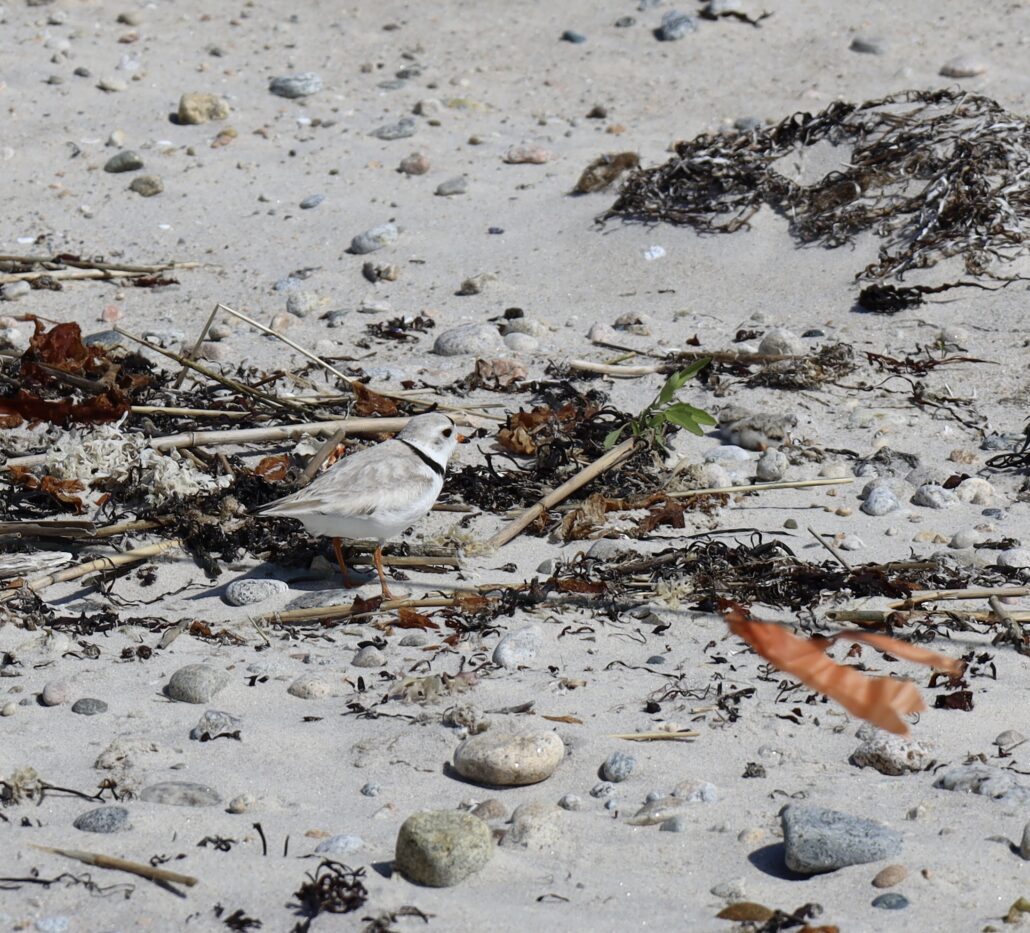
Adult Piping Plover Photo by Anna White